Effect of Hemoadsorption of Cytokines on �Cardiopulmonary Bypass Induced Acute Organ Injury
Abstract
Abstract:
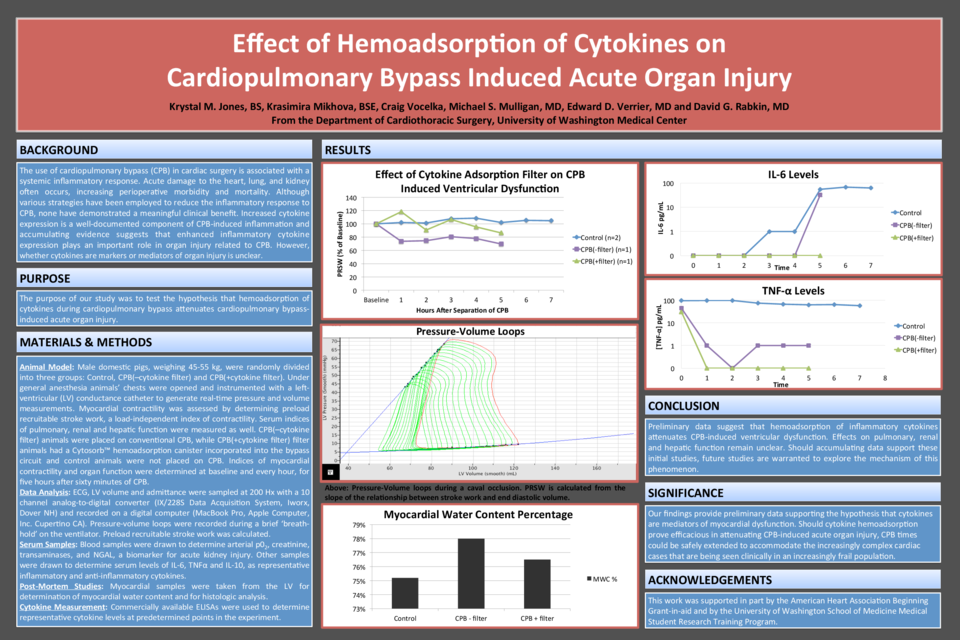
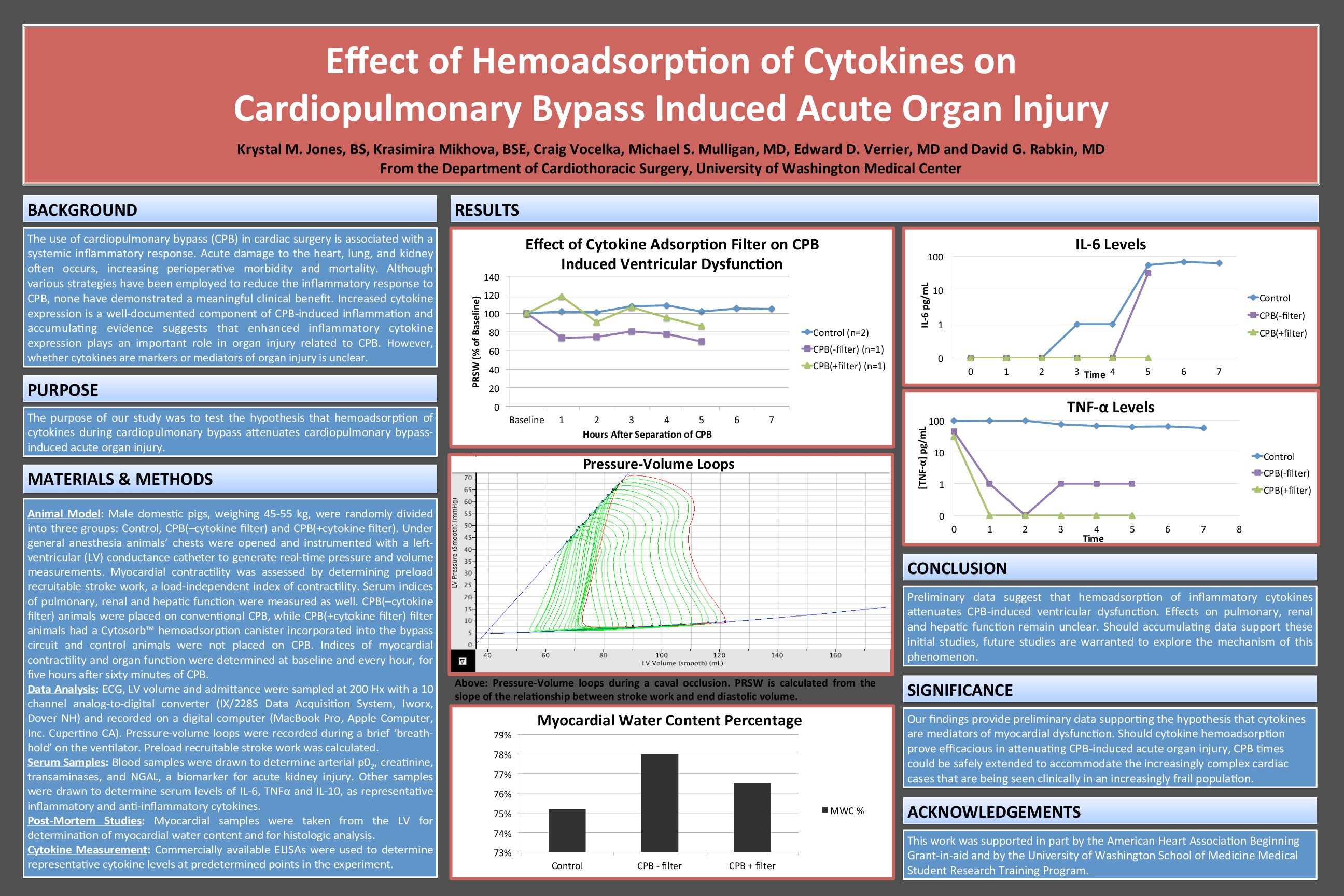
Background: Surprisingly little is known about the effect of cardiopulmonary bypass alone on cardiac function; in an attempt to illuminate this relationship and test a possible mechanism we used Cytosorb™, a device capable of removing virtually all circulating cytokines to test the hypothesis that hemoadsorption of cytokines during bypass attenuates bypass-induced acute organ dysfunction.
Methods: Twelve Yorkshire pigs (50-65 kg) were instrumented with a left ventricular conductance catheter. Baseline mechanics and cytokine expression were measured before, and hourly after, one hour of normothermic cardiopulmonary bypass. Animals underwent bypass without (CPB, n=6) or with (CPB+HA, n=6) the Cytosorb™ device. Data were compared to ‘Historical’ Controls (n=6) that were similarly instrumented but underwent observation instead of bypass. Five hours after separation from bypass (or observation) animals were sacrificed. Myocardial water content was determined postmortem.
Results: Neither TNF or IL-6 was significantly elevated in either experimental group vs. Controls at any time point. Preload recruitable stroke work and dP/dtmax were significantly depressed immediately after separation from bypass in both CPB+HA and CPB and remained depressed for the duration of the experiment. Although Tau remained unchanged, dP/dTmin was significantly diminished in both bypass groups at all time points after separation from bypass. Cytokine hemoadsorption had no effect on any measurable index of function. Differences in postmortem data were not evident between groups.
Conclusions: One hour of normothermic cardiopulmonary bypass results in a significant and sustained decline in left ventricular function that appears unrelated to changes in cytokine expression.
Related articles