Lifestyle Intervention & Primary Care Integration: A Feasibility Study
Abstract
Chung, Christopher
Washington University in St. Louis School of Medicine
Mentor: Amy Eyler, PhD
Lifestyle Intervention & Primary Care Integration: a Feasibility Study
Chung C; Eyler A
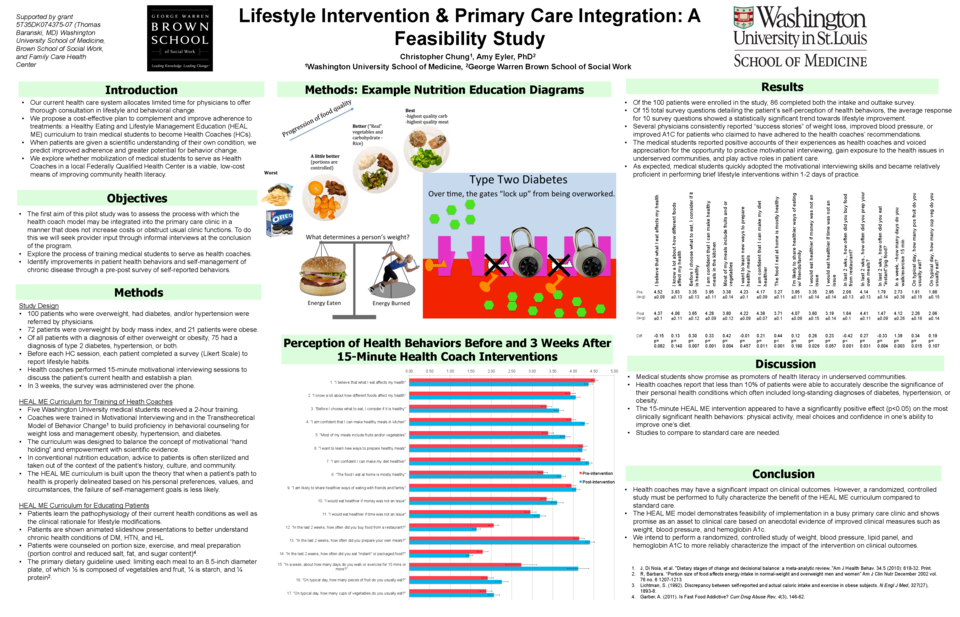
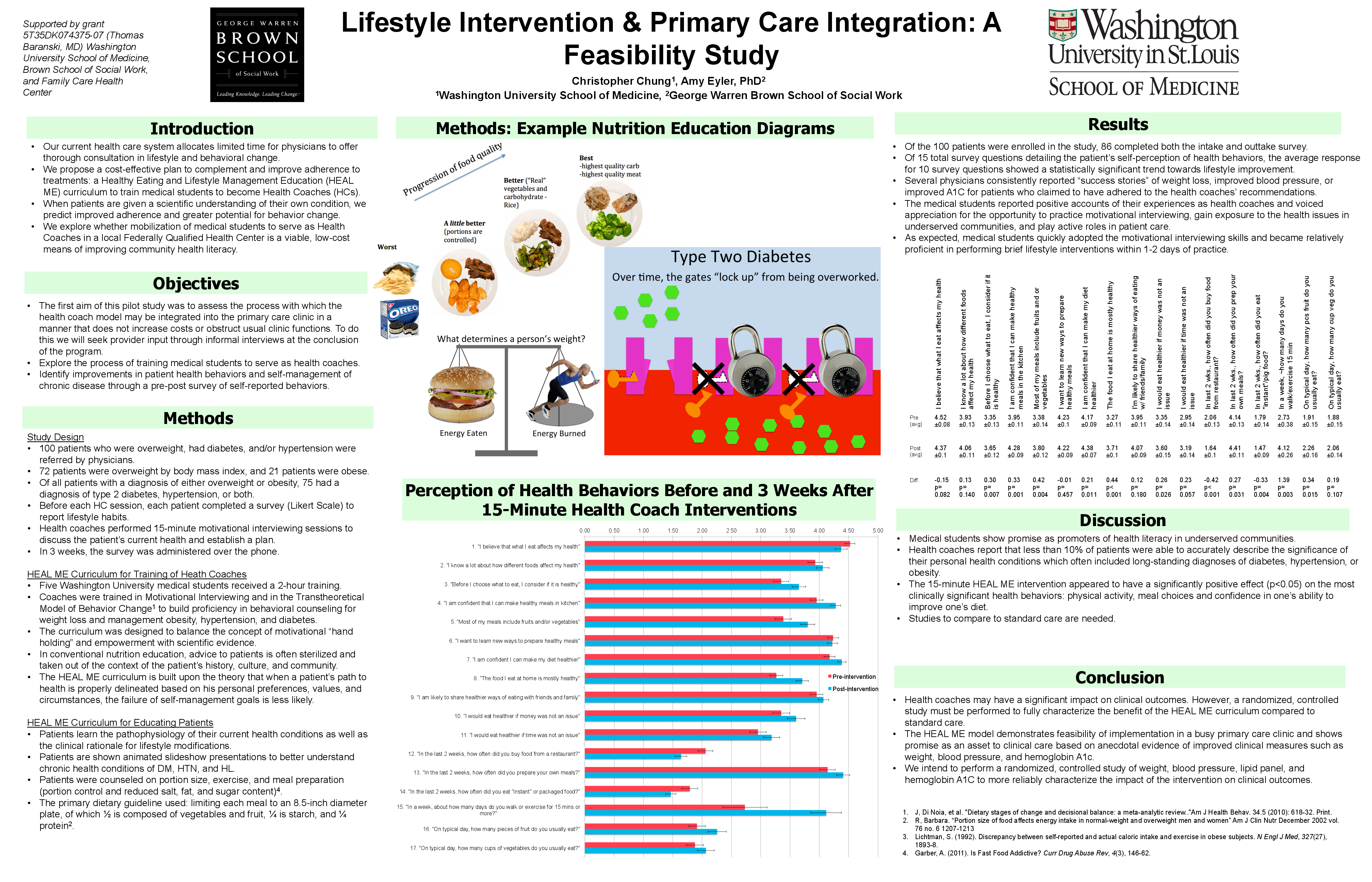
Introduction: Our current health care system allocates limited time for physicians to offer thorough consultation in lifestyle and behavioral change. Even more difficult is providing consistent follow-up to ensure adherence to plans and goals. We propose a cost-effective plan to complement and improve adherence to treatments by using a Healthy Eating and Lifestyle Management Education (HEAL ME) curriculum to train medical students to become Health Coaches (HCs).
Methods: Five Washington University medical students were trained in Motivational Interviewing and in the Transtheoretical Model of Behavior Change to build proficiency in behavioral counseling for weight loss and chronic disease management. The training focused on behavioral modification of medication adherence, exercise, portion control, and diet. Patients with overweight, diabetes, and/or hypertension were referred by physicians to HCs immediately following their appointment. Before a 15-minute HC session, each patient completed a survey (Likert scale) to describe habits such as cooking frequency, exercise, and fruit and vegetable intake. Three weeks later, the same survey was administered over the phone.
Results: Of 100 patients enrolled, 86 completed both pre and post survey. 14 were lost to follow-up. The average response for 10 of the total 17 health behavior questions showed a significantly positive trend towards lifestyle improvement. Physicians expressed satisfaction in offering this service to patients, and also relayed their patients’ resoundingly positive reviews. Physicians report the potential of the Health Coach to improve patient satisfaction by providing a useful service to patients if the physician runs behind schedule. Health coaches report a generally appreciative sentiment from the patients whom they follow up with over the phone.
Conclusion: The HEAL ME model demonstrates feasibility of implementation in a busy primary care clinic and shows promise as an asset to clinical care. The survey results tentatively suggest a positive impact of the Health Coach intervention on health habits. We intend to perform a randomized, controlled study of weight, blood pressure, lipid panel, and hemoglobin A1C to more reliably characterize the impact of the intervention on clinical outcomes.
Related articles