Abstract
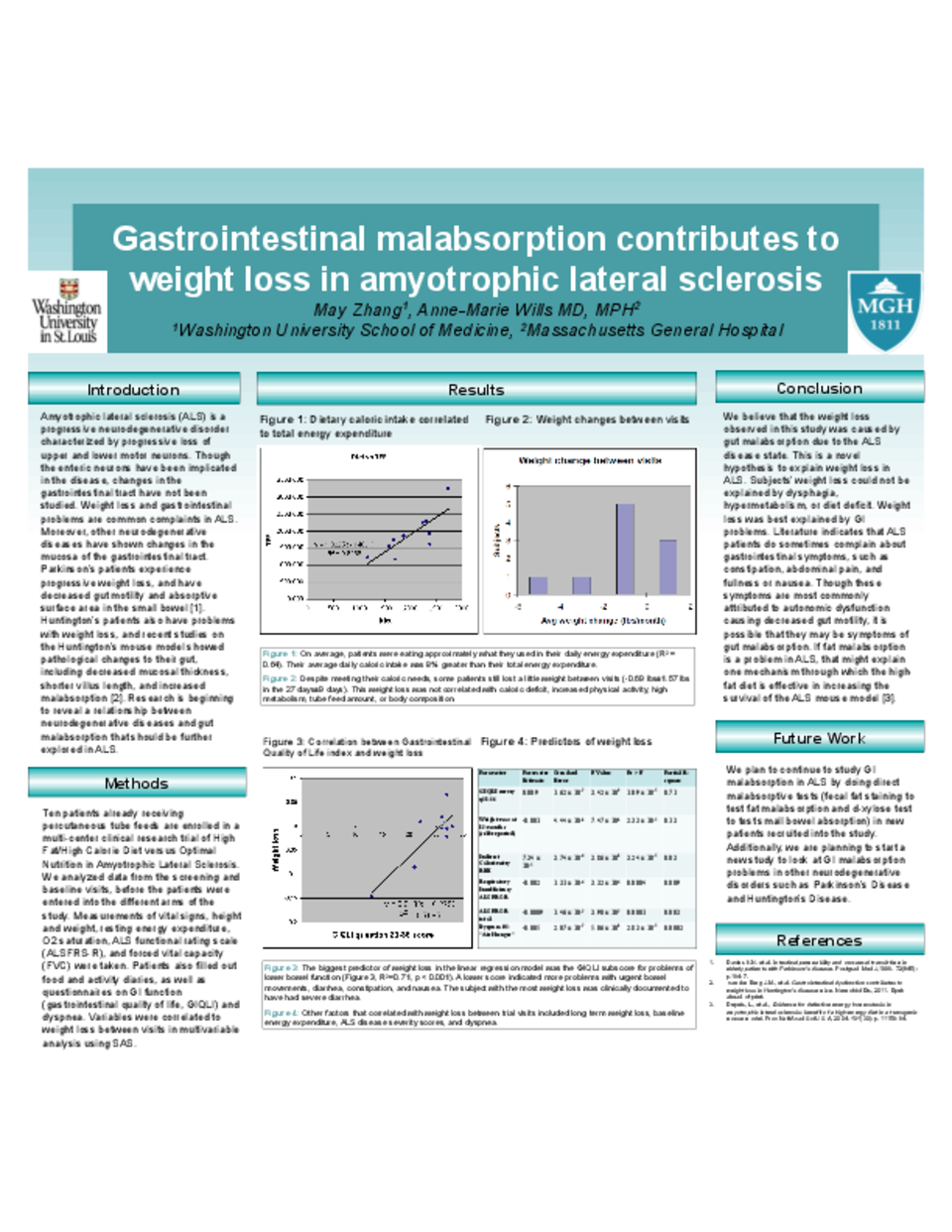
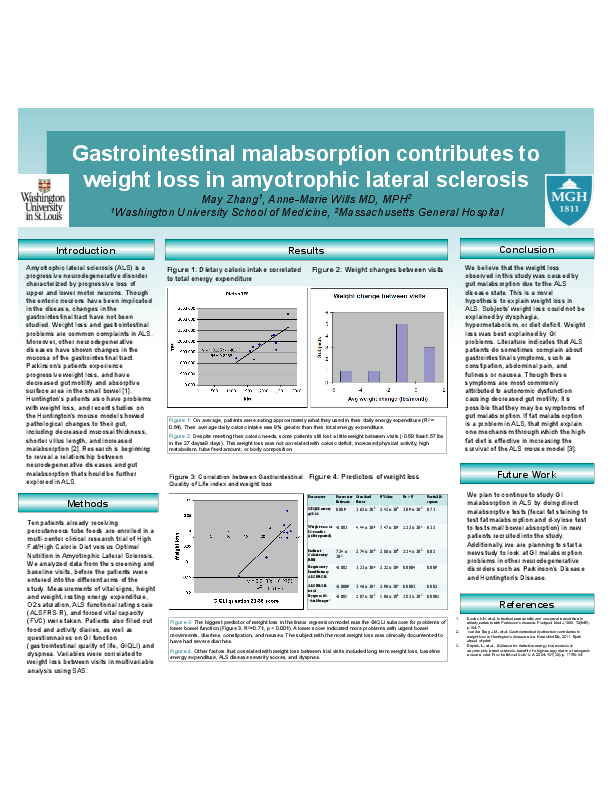
Introduction: Amyotrophic lateral sclerosis (ALS) is a neurodegenerative disease characterized by the progressive loss of upper and lower motor neurons. Weight loss is a common problem in ALS, and is usually attributed to dysphagia, muscle atrophy, hypermetabolism, and increased respiratory function. Patients using enteral nutrition bypass several of these problems and are more weight stable. The purpose of this study is to examine whether ALS patients continue to lose weight while using EN, and which factors contribute to those weight changes.
Methods: We performed measurements on energy expenditure, body composition, disease severity, respiratory dysfunction, dietary intake, and gastrointestinal function on 10 ALS patients using enteral nutrition (EN) to evaluate what factors contribute to weight changes while using tube feeding.
Results: Patients on average ate 8% more than their caloric need, and 70% patients had positive energy balances. Nevertheless, patients lost on average -0.69 lbs±1.57 lbs between visits (27 days±9 days). In a multivariable regression model, weight loss was highly correlated with patient-reported gastrointestinal problems (R2 = 0.71, p < 0.001). Weight, resting metabolic rate, ALS disease severity, and respiratory function also predicted weight changes to a lesser degree.
Conclusions: The results of this study suggest that ALS patients on EN are well managed by dietitians. Despite that, many do continue to display problems with weight loss, with the greatest contributing factor being gut malabsorption. This hypothesis has not been well studied in the literature. Our preliminary analysis indicate that direct testing on GI function should be done to explore the possible role of gut malabsorption in the unexplained weight loss displayed in ALS.