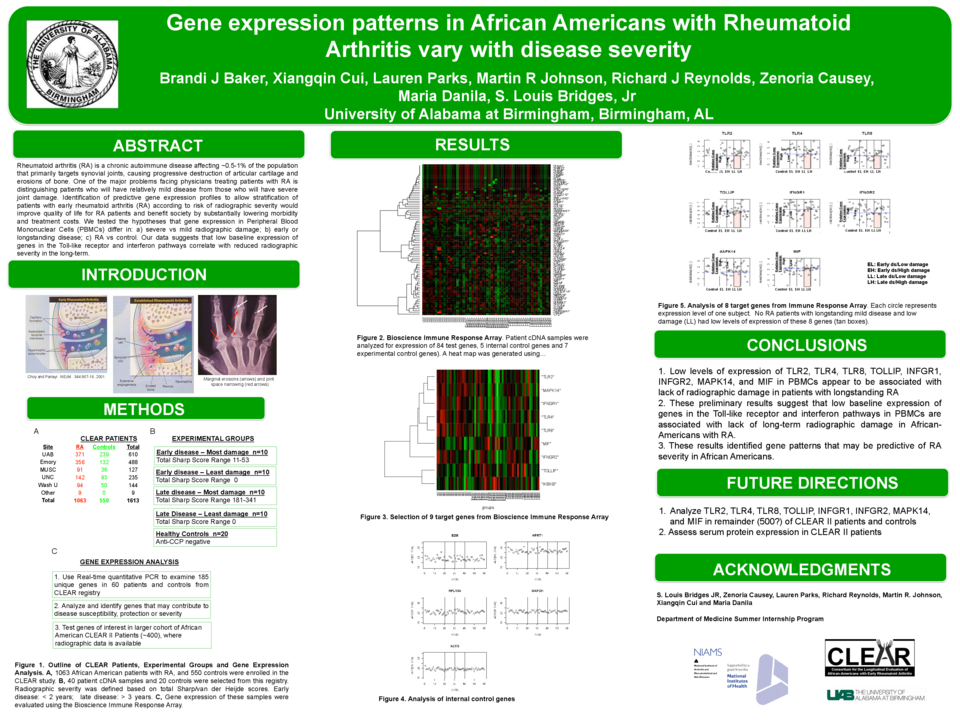
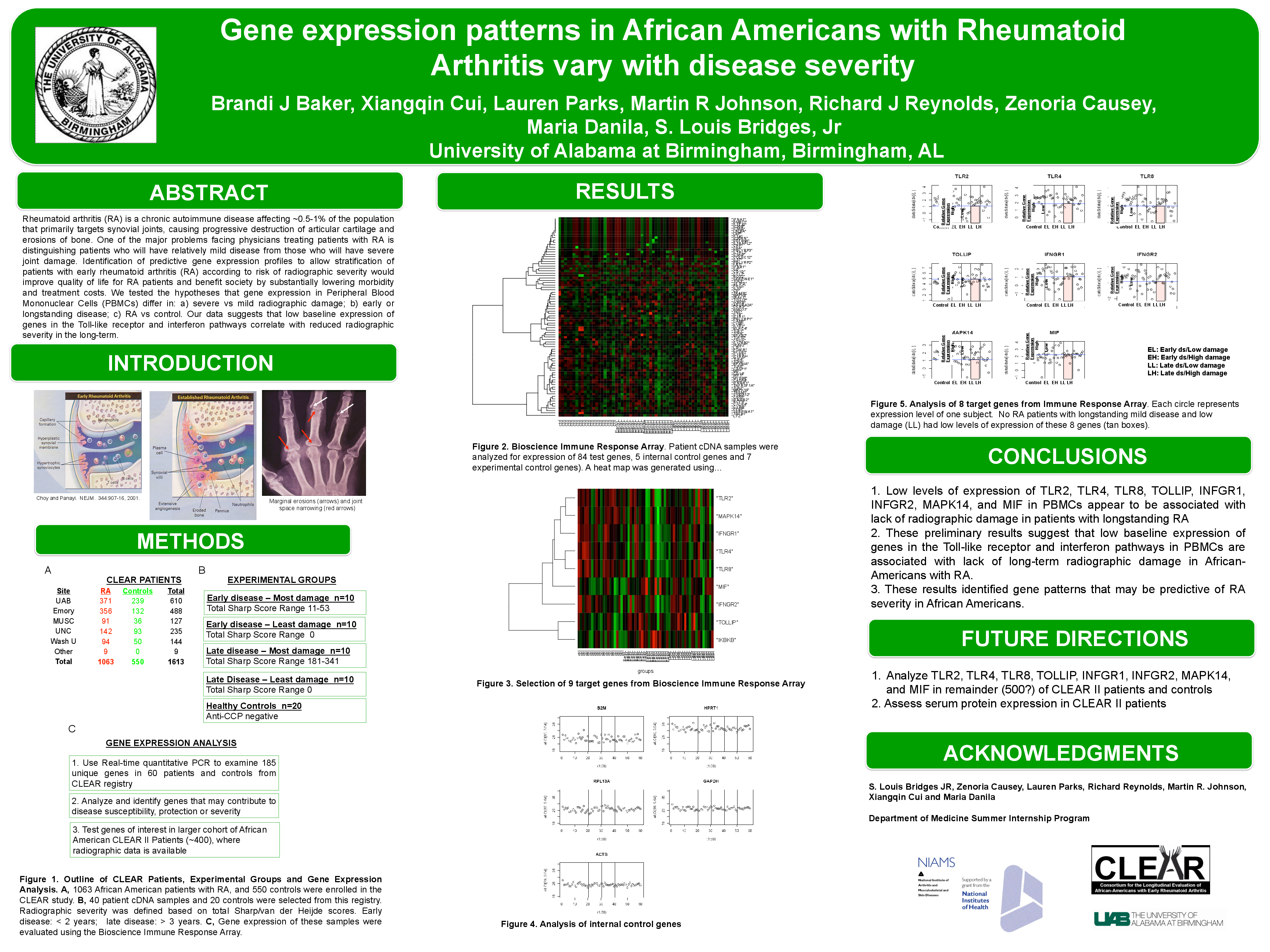
Gene Expression Patterns in African Americans with Rheumatoid Arthritis Vary with Disease Severity
Abstract
Rheumatoid arthritis (RA) is a chronic autoimmune disease affecting ~0.5-1% of the population that primarily targets synovial joints, causing progressive destruction of articular cartilage and erosions of bone. One of the major problems facing physicians treating patients with RA is distinguishing patients who will have relatively mild disease from those who will have severe joint damage. Identification of predictive gene expression profiles to allow stratification of patients with early rheumatoid arthritis (RA) according to risk of radiographic severity would improve quality of life for RA patients and benefit society by substantially lowering morbidity and treatment costs. We tested the hypotheses that gene expression in Peripheral Blood Mononuclear Cells (PBMCs) differ in: a) severe vs mild radiographic damage; b) early or longstanding disease; c) RA vs control. Our data suggests that low baseline expression of genes in the Toll-like receptor and interferon pathways correlate with reduced radiographic severity in the long-term.
Related articles