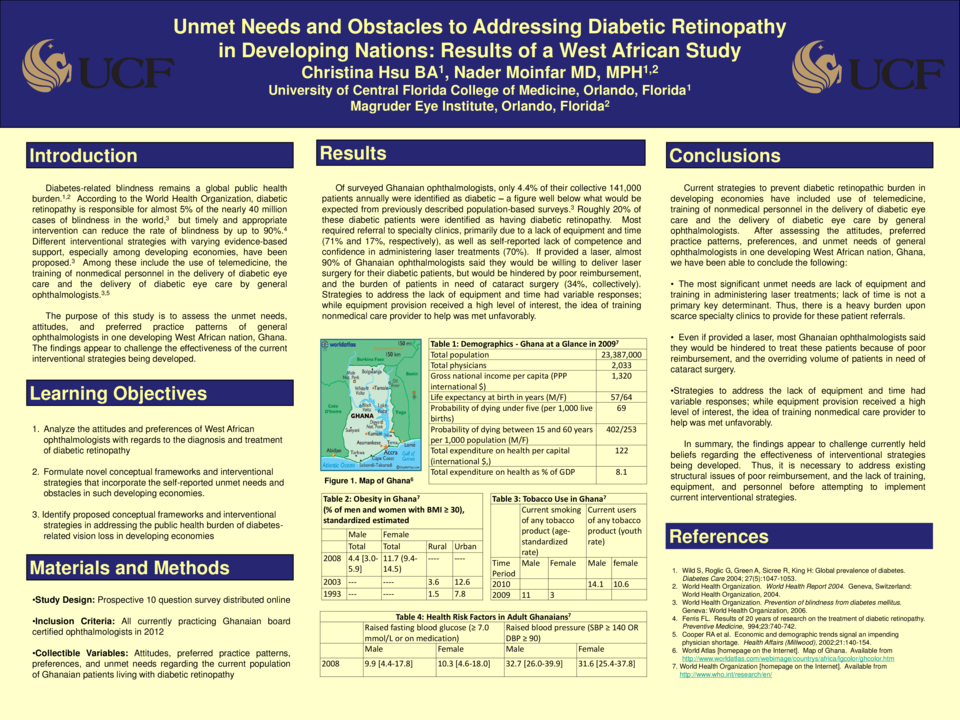
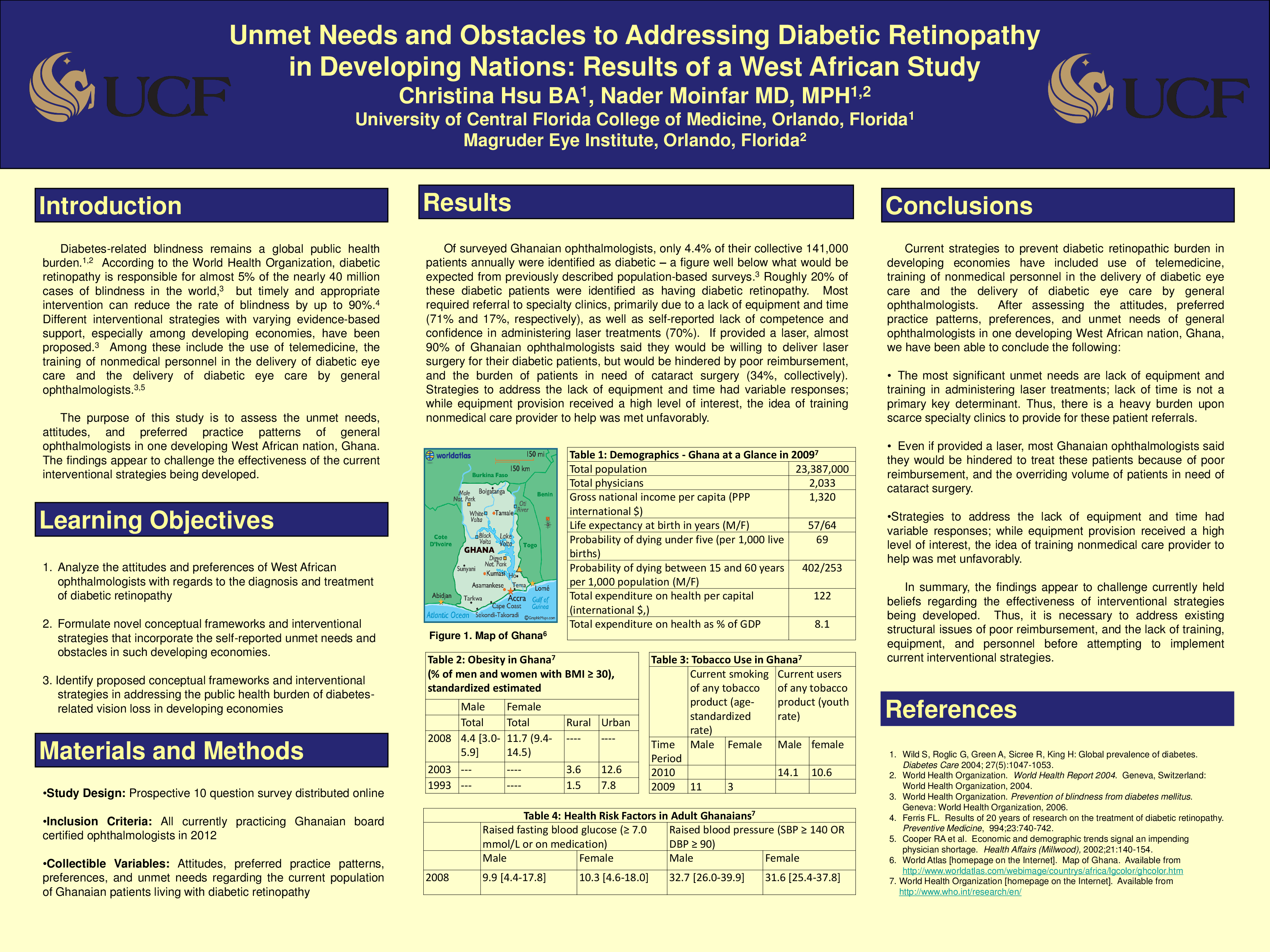
Unmet Needs and Obstacles to Addressing Diabetic Retinopathy in Developing Nations: Results of a West African Study
Abstract
Purpose: Current strategies to prevent diabetic retinopathic burden in third world countries have included use of telemedicine, training of nonmedical personnel in the delivery of diabetic eye care and the delivery of diabetic eye care by general ophthalmologists.
Methods: We surveyed all 46 Ghanaian ophthalmologists in one developing West African nation, Ghana, assessing their attitudes, preferred practice patterns, preferences, and unmet needs.
Results: 4.4% of their patients annually were identified as diabetic; roughly 20% were identified as having diabetic retinopathy. Most required referral to specialty clinics, primarily due to a lack of equipment and time (71% and 17%, respectively), as well as self-reported lack of competence and confidence in administering laser treatments (70%). If provided a laser, almost 90% of Ghanaian ophthalmologists said they would be willing to deliver laser surgery for their diabetic patients, but would be hindered by poor reimbursement, and the burden of patients in need of cataract surgery (34%, collectively). Strategies to address the lack of equipment and time had variable responses; while equipment provision received a high level of interest, the idea of training nonmedical care provider to help was met unfavorably.
Conclusion: The findings appear to challenge currently held beliefs regarding the effectiveness of interventional strategies being developed.
Related articles