The Hormone-Like Candidate Tumor Suppressor Gene Esophageal Cancer Related Gene-4 (ECRG4) in Skin
Abstract
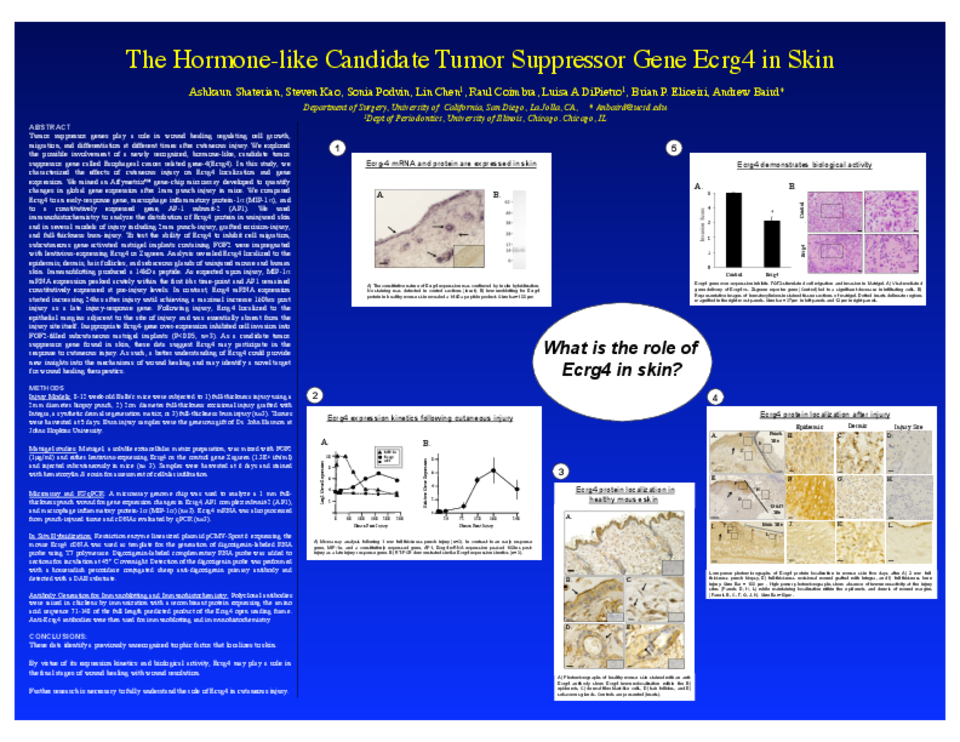
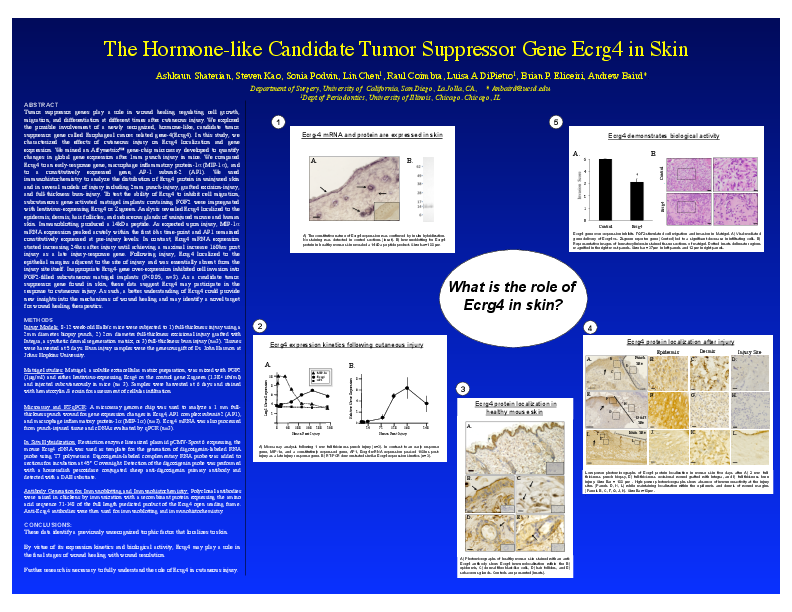
Tumor suppressor genes play a role in wound healing regulating cell growth, migration, and differentiation at different times after cutaneous injury. We explored the possible involvement of a newly recognized, hormone-like, candidate tumor suppressor gene called Esophageal cancer related gene-4(Ecrg4). In this study, we characterized the effects of cutaneous injury on Ecrg4 localization and gene expression. We mined an Affymetrix™ gene-chip microarray developed to quantify changes in global gene expression after 2mm punch injury in mice. We compared Ecrg4 to an early-response gene, macrophage inflammatory protein-1α(MIP-1α), and to a constitutively expressed gene, AP-1,subunit-2 (AP1S2). We used immunohistochemistry to analyze the distribution of Ecrg4 protein in uninjured skin and in several models of injury including 2mm punch-injury, grafted excision-injury, and 2nd-degree burn-injury. To test the ability of Ecrg4 to inhibit cell migration, subcutaneous gene-activated matrigel implants containing FGF2 were impregnated with lentivirus-expressing Ecrg4 or Zsgreen. Analysis revealed Ecrg4 localized to the epidermis and dermis of uninjured mouse and human skin and to the epidermis of rat skin. Immunoblotting produced a 14kDa peptide. As expected upon injury, MIP-1α mRNA expression peaked acutely within the first 6hr time-point and AP1S2 remained constitutively expressed at pre-injury levels. In contrast, Ecrg4 mRNA expression started increasing 24hrs after injury until achieving a maximal increase 160hrs post injury as a late injury-response gene. Following injury, Ecrg4 localized to the epithelial margins adjacent to the site of injury and was essentially absent from the injury site itself. Inappropriate Ecrg4-gene over-expression inhibited cell invasion into FGF2-filled subcutaneous matrigel implants(P<0.05,n=3). As a candidate tumor suppressor gene found in skin, these data suggest Ecrg4 may participate in the response to cutaneous injury as a wound terminating factor that functions to down-regulate the cellular responses active in early wound healing. As such, a better understanding of Ecrg4 could provide new insights into the mechanisms of wound healing and may identify a novel target for wound healing therapeutics.
Related articles