Bone Scan Overuse in the Staging of Men with Prostate Cancer
Abstract
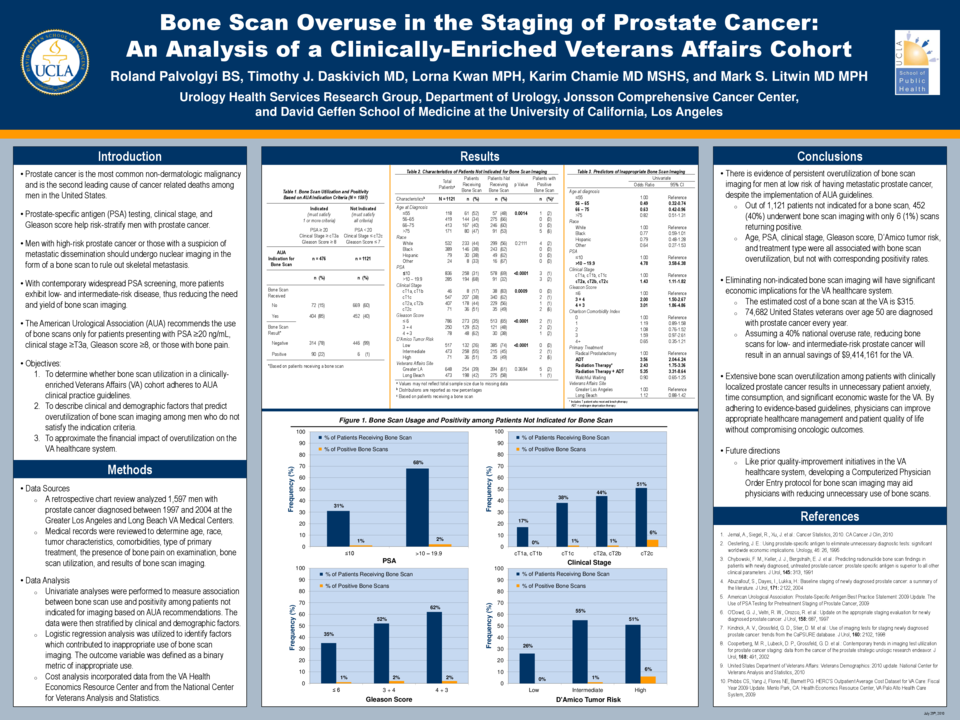
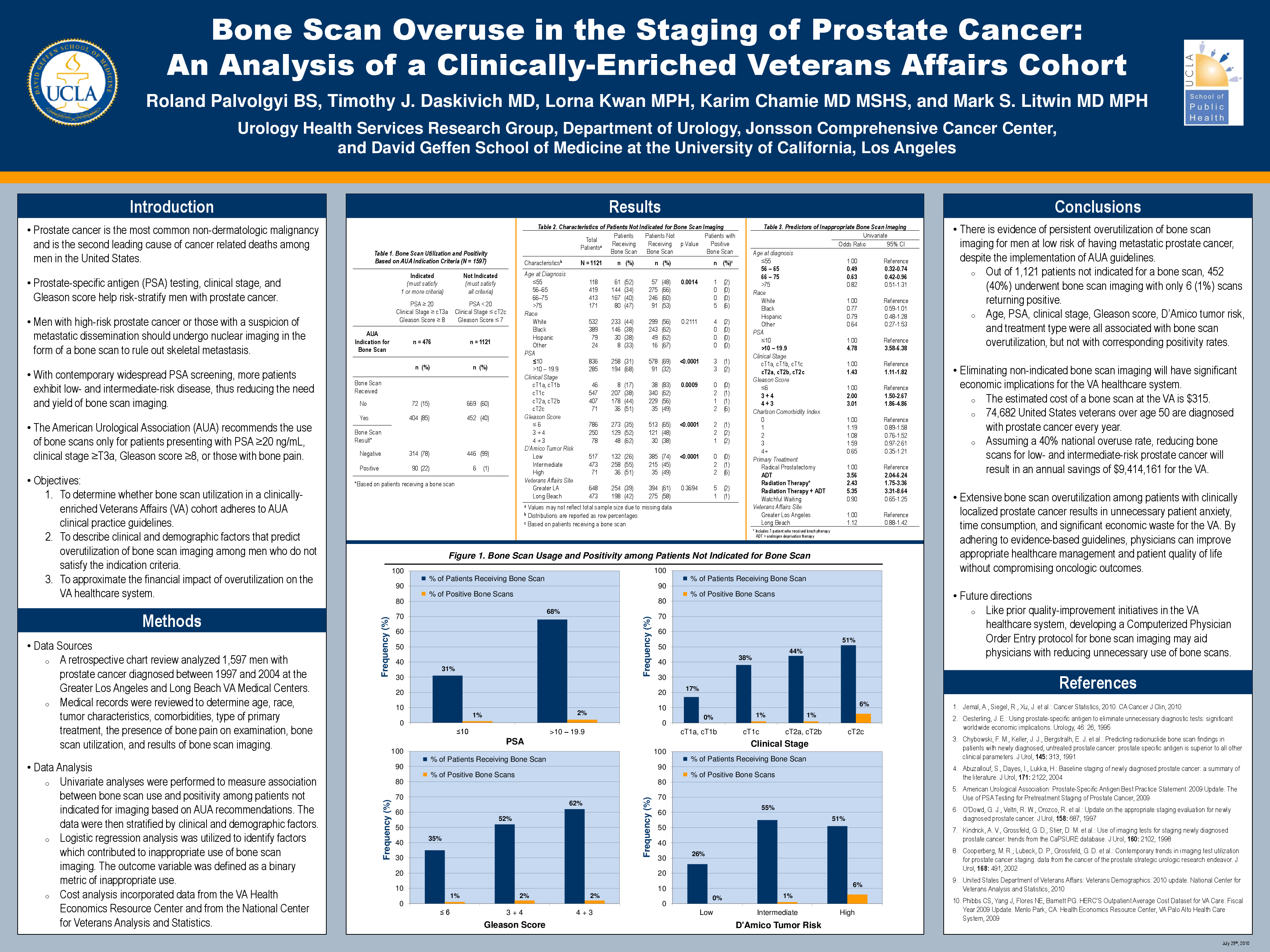
BACKGROUND: Bone scanning is the gold standard for detecting skeletal metastasis in newly diagnosed prostate cancer. With contemporary widespread PSA screening, more patients exhibit low and intermediate risk disease, reducing the incidence of positive bone scans. Therefore, the American Urological Association (AUA) recommends eliminating bone scans for patients presenting with PSA < 20 ng/mL, clinical stage < T3a, and Gleason score < 8.
OBJECTIVES: This study aims to determine whether bone scan utilization in a clinically-enriched Veterans Affairs (VA) cohort follows AUA guidelines. It describes clinical factors that predict bone scan overuse among non-indicated patients. Cost analysis aims to demonstrate the financial impact of these excessive procedures on the VA healthcare system.
METHODS: A retrospective analysis compared 1,597 men with prostate cancer diagnosed between 1997 and 2004 from 2 VA medical centers. Chi-square analysis and univariate logistic regression assessed bone scan overuse among non-indicated patients.
RESULTS: There was 40% bone scan overuse with only 1% positivity. When stratified by clinical factors, overutilization was found across all low and intermediate risk groups. Chi-square analysis revealed overuse occurring more often in patients with PSA of 10 - 19.9 ng/mL, clinical stage T2a - T2c, and Gleason scores of 3+4 and 4+3. Since a bone scan costs $315.51, the VA could potentially save $9,414,161 annually if nonessential bone scans were eliminated.
CONCLUSIONS: Extensive bone scan overutilization among patients with clinically localized prostate cancer results in unnecessary patient anxiety, time consumption, and significant economic waste for the VA. By adhering to evidence-based guidelines, physicians can improve appropriate healthcare management and patient quality of life
Related articles