Abstract
Introduction
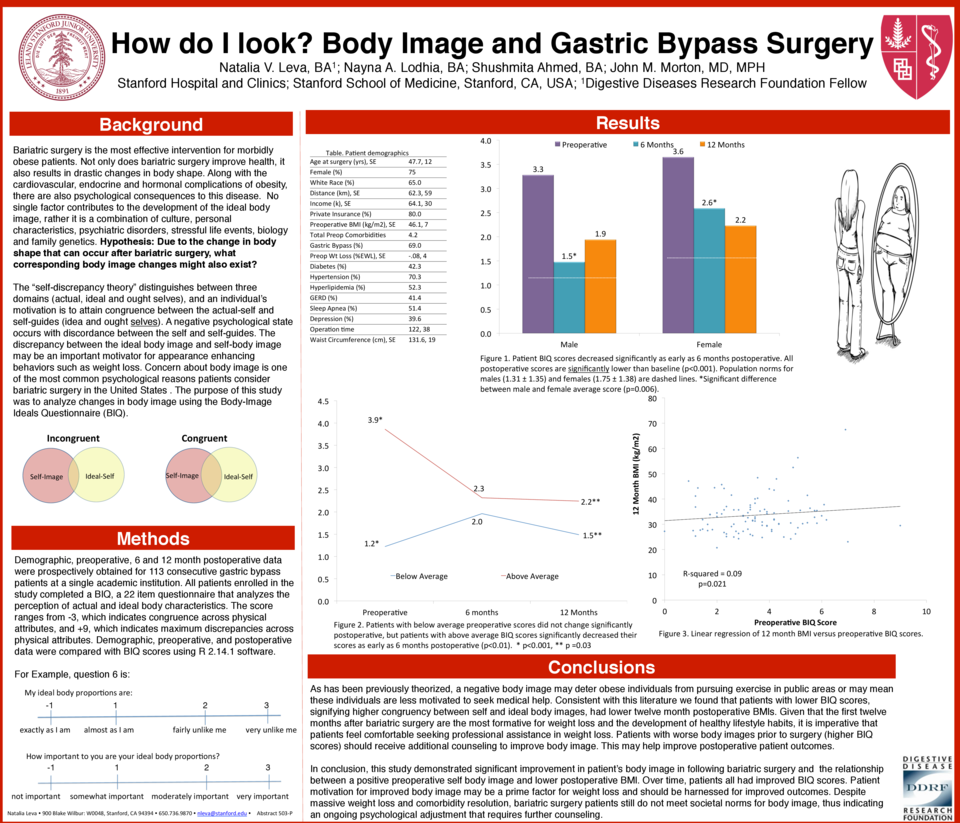
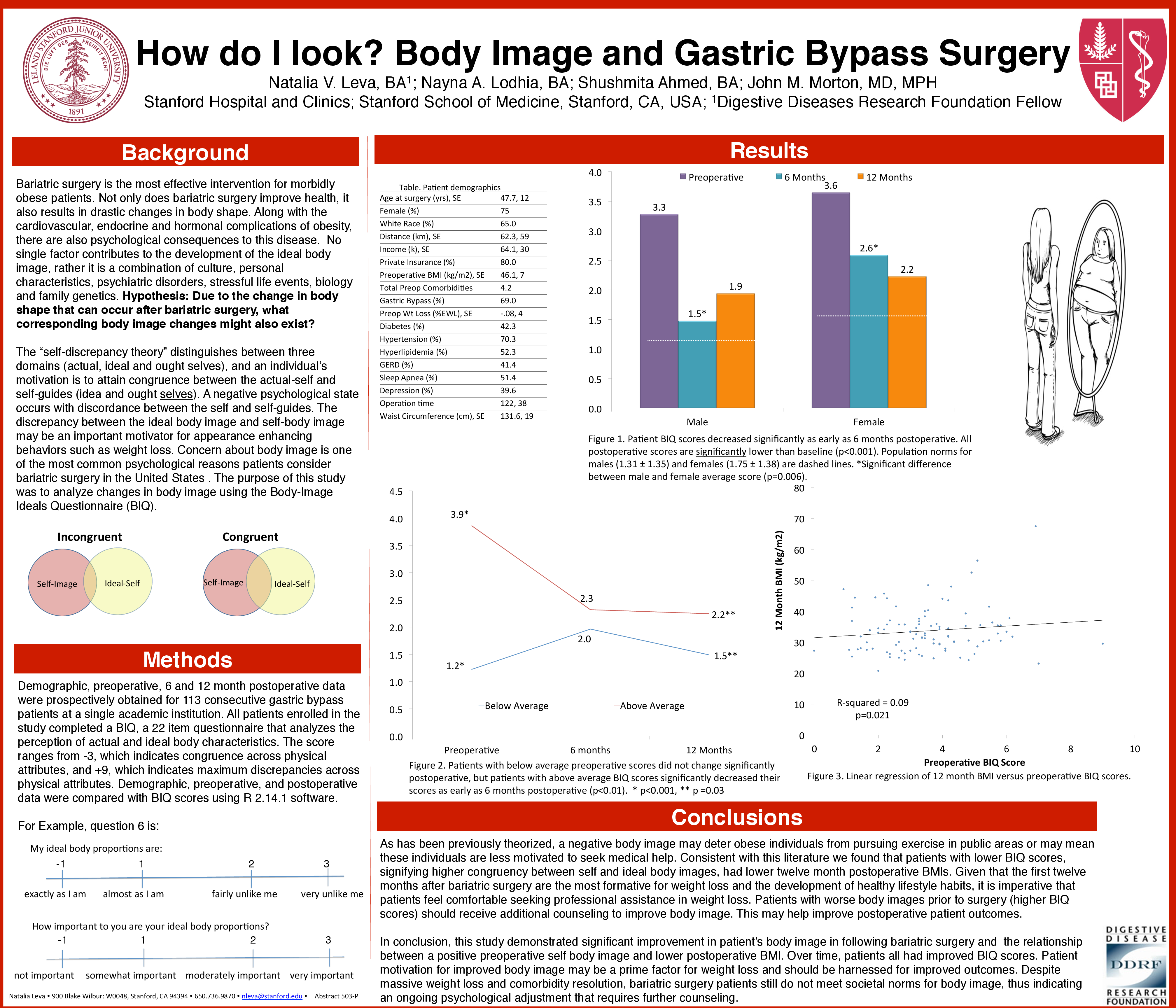
Bariatric surgery is the most effective intervention for morbidly obese patients. Not only does bariatric surgery improves health, it also results in drastic changes in body shape. The purpose of this study was to analyze changes in body image using the Body-Image Ideals Questionnaire (BIQ).
Methods
Demographic, preoperative, 6 and 12 month postoperative data were prospectively obtained for 113 consecutive gastric bypass patients at a single academic institution. All patients enrolled in the study completed a BIQ, a 22 item questionnaire that analyzes the perception of actual and ideal body characteristics. The score ranges from -3, which indicates congruence across physical attributes, and +9, which indicates maximum discrepancies across physical attributes. Demographic, preoperative, and postoperative data were compared with BIQ scores using R 2.14.1 software.
Results
113 patients were enrolled in the study. Patient demographics included an average BMI 46, age 47, 65% white, income $64,100, 80% with private insurance, and 4 total preoperative comorbidities. Major comorbidities were diabetes (42%), hypertension (70%), hyperlipidemia (52%), GERD (48%), sleep apnea (51%), and depression (40%). BIQ scores for all patients averaged 3.6, 1.5 and 1.9 at preoperative, 6 and 12 months postoperative, respectively, with all postoperative scores significantly different from the preoperative score (p<0.01). Women had average scores of 3.6, 2.6, 2.2, and men had average scores of 3.3, 1.5, and 1.9 at preoperative, six and twelve months postoperative (p=0.46, p=0.006, p=0.78). Men and women reached population norms as early as six months post operative (male norm = 1.31 ± 1.35; female norm = 1.75 ± 1.38). Lower preoperative BIQ scores were correlated with a lower 12 month postoperative BMI (R-squared=0.09, p=0.021).
Conclusions
This study demonstrates that weight loss surgery increases patient body image as early as 6 months postoperative.