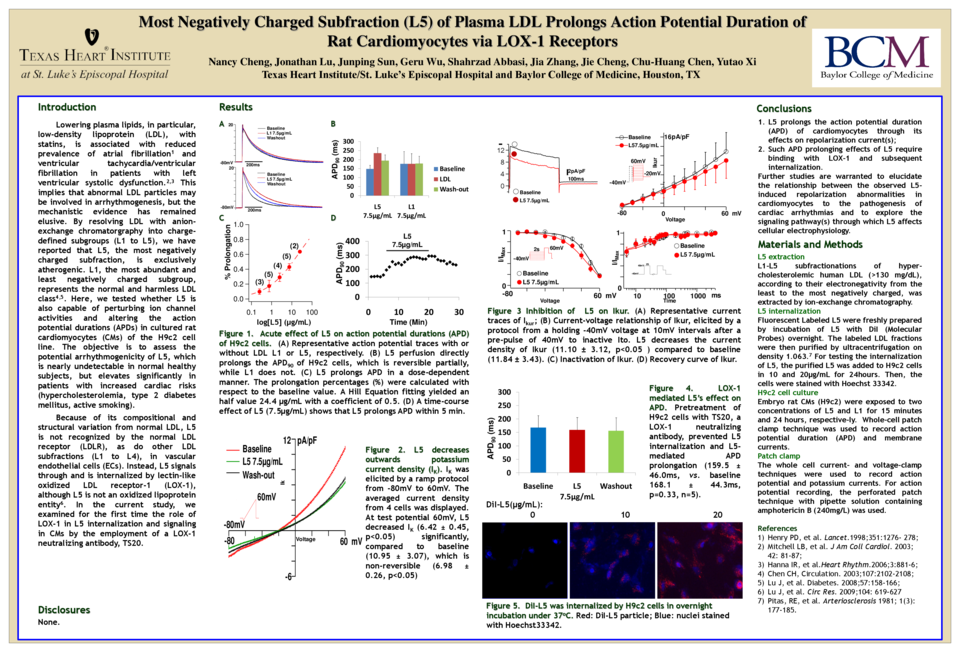
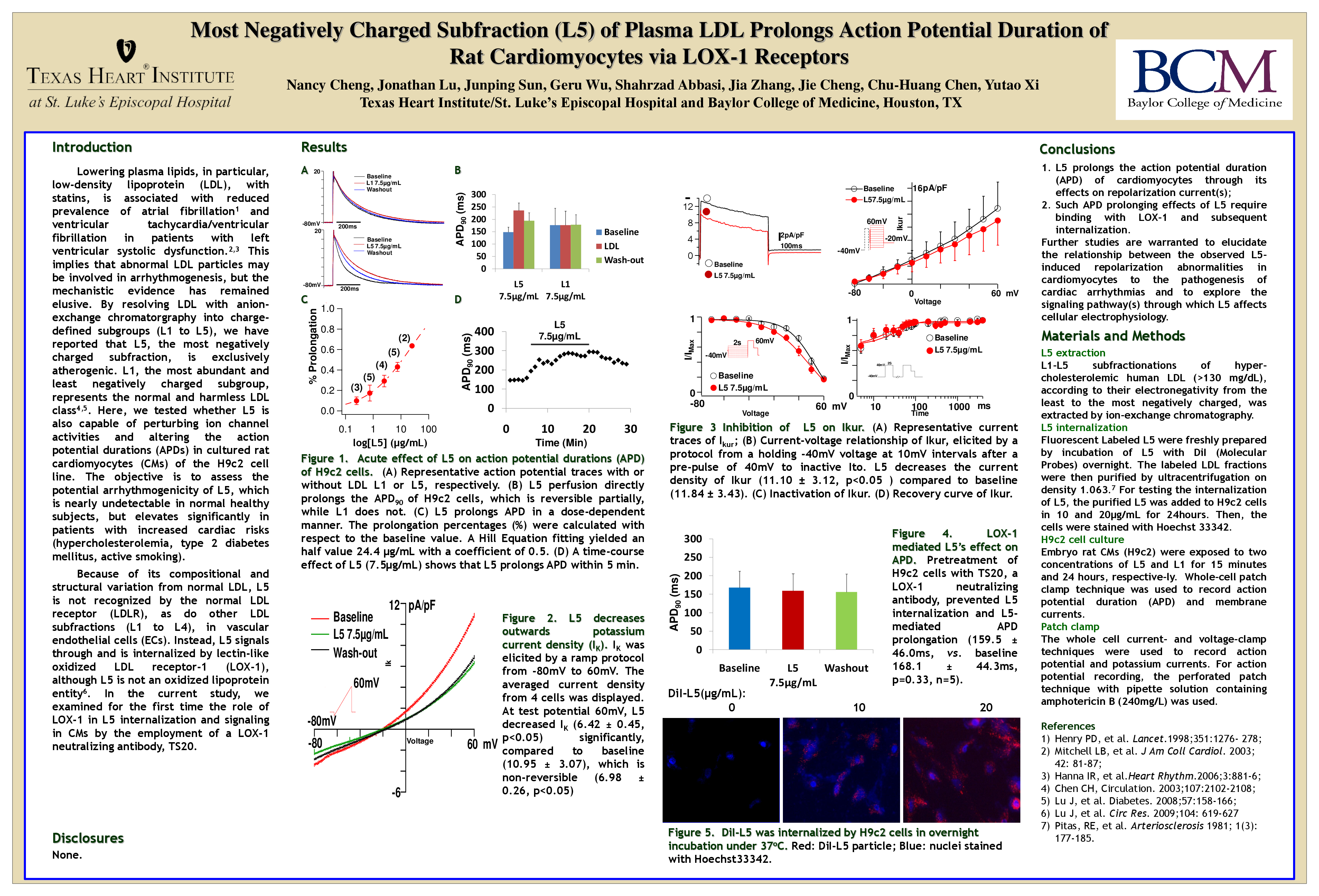
Most Negatively Charged Subfraction (L5) of Plasma LDL Prolongs Action Potential Duration of �Rat Cardiomyocytes via LOX-1 Receptors
Abstract
BACKGROUND
Increased levels of low-density lipoproteins (LDL) have been associated with higher incidences of cardiac arrhythmias that can lead to increased morbidity and mortality. Effective treatment of dyslipidemia proves to significantly reduce the risks for such rhythm disturbances. However, the mechanisms underlying the proarrhythmic effects of LDL remain unexplored.
METHODS AND RESULTS
Subfractions of LDL were extracted from patients with hypercholesterolemia by ion-exchange chromatography. Isolated embryonic rat cardiomyocytes (CM) were exposed to the least and most negatively charged LDL subfractions (L1 and L5, respectively). Whole-cell patch-clamp technique was used to record action potential duration (APD) and transmembrane ionic currents. Internalization of labeled L5 was observed in CM by fluorescence microscopy. Clinically relevant concentrations of L5 prolonged APD in a dose-dependent manner (p<0.05 and p<0.01, respectively). Furthermore, APD was similarly prolonged with acute (3 minutes) and chronic (24 hours) exposure to L5. The transient outward current, the primary repolarizing current (Ito) in rat CM, was significantly reduced by L5 perfusion. Pretreatment of CM with TS20, a LOX-1 receptor antibody, prevented L5 internalization and L5-mediated APD prolongation. In contrast, L1 did not affect APD nor Ito.
CONCLUSIONS
L5, the most negatively charged LDL subfraction, may cause arrhythmiogenic electrophysiological changes through an internalization-dependent process. Our data suggests a novel mechanism by which dyslipidemia may contribute to the pathogenesis of cardiac arrhythmias.
Related articles