Abstract
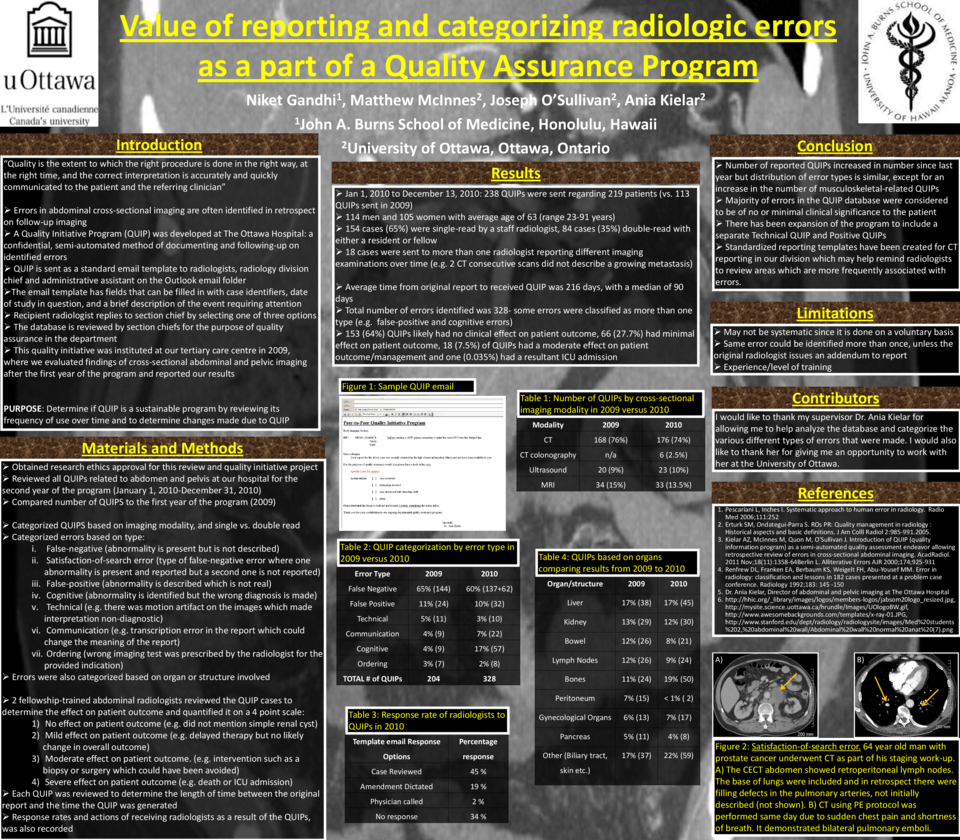
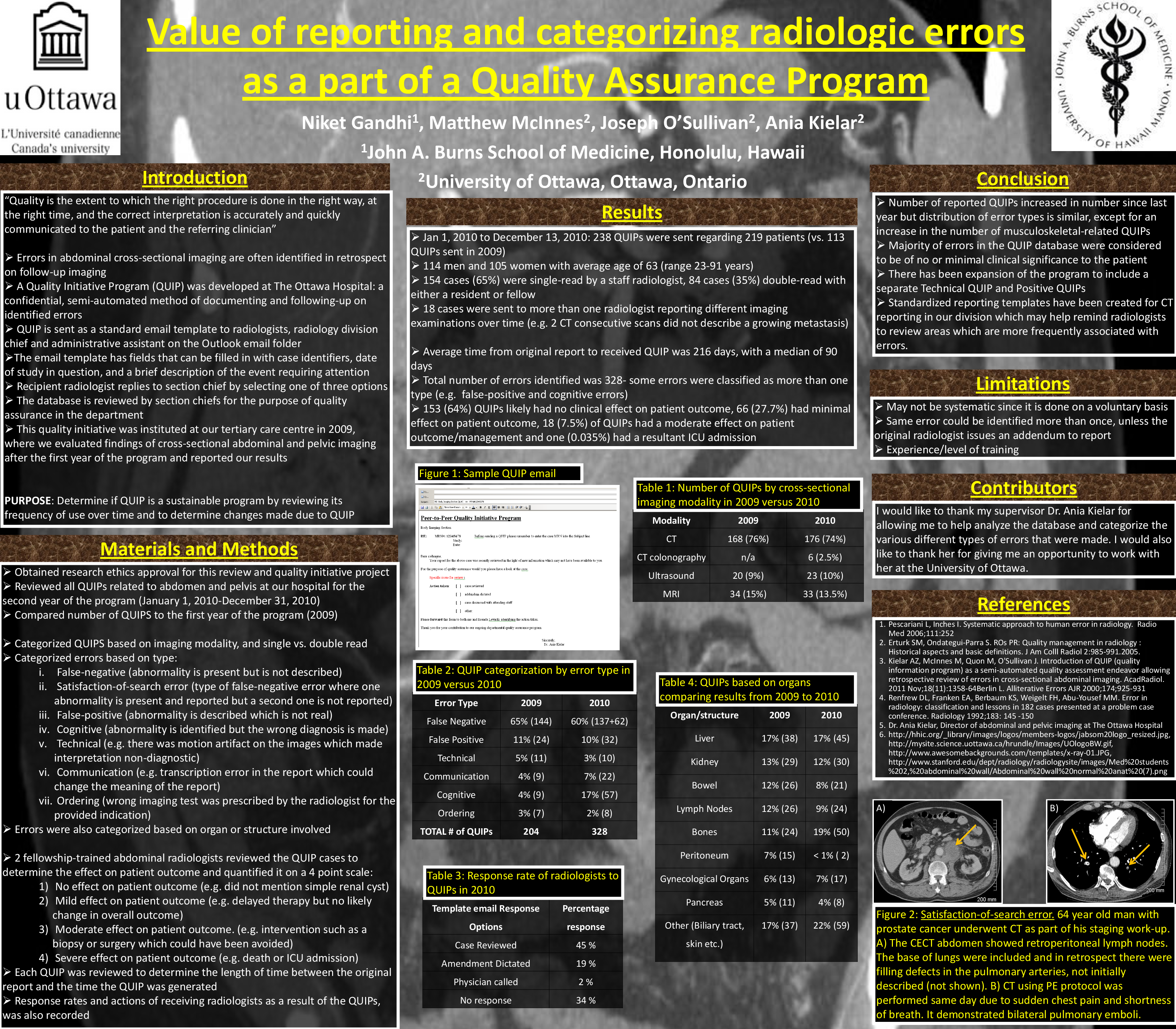
Introduction: A Quality Initiative Program (QUIP) was introduced in 2009 at the Ottawa Hospital, which is a process which uses a Microsoft Outlook template to contact radiologists who have made reporting errors so that they can review and rectify the errors. The purpose was to determine if QUIP is a sustainable program by reviewing its frequency of use over time and to determine changes made due to QUIP.
Methods: Research ethics board approval was obtained and abdominal-pelvic QUIPs were reviewed for 2010. Errors were classified by type, imaging modality, organ involved, severity of error based on patient outcome, and radiologist response to the QUIP. Standard responses included case reviewed, addendum dictated, clinician notified of change. (“no response” was also recorded).
Results: 238 QUIPs were documented in 2010 (113 in 2009). In 2010, 73% were related to CT, 2% to CT colonography, 10% to ultrasound and 15% to MRI. The errors were classified as: 23 false positive errors, 133 false negative errors, 44 satisfaction of search errors (subtype of false negative), 48 cognitive errors, 20 communication errors, 7 technical errors, and 37 errors related to ordering or performing the wrong test for the patient. Overall, error type distribution was similar between 2009 and 2010.
Conclusion: QUIP continues to be used to improve patient care and the number of reported QUIPs has more than doubled since 2009. Although the distribution of types of errors was similar, there has been better response from radiologists to QUIPs this year.