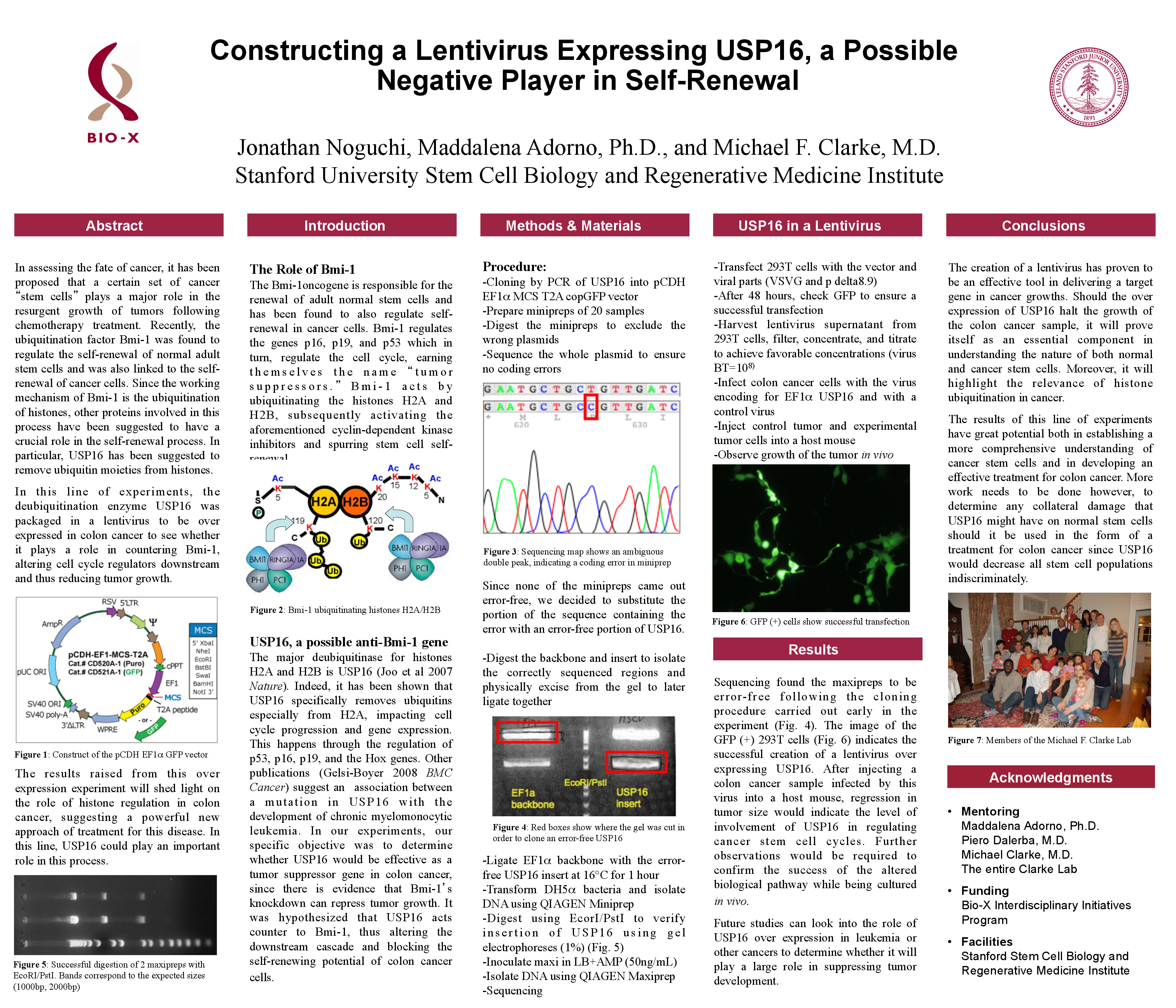
Constructing a lentivirus expressing USP16, a possible negative player in self-renewal
Abstract
In assessing the fate of cancer, it has been proposed that a certain set of cancer “stem cells” plays a major role in the resurgent growth of tumors following chemotherapy treatment. Recently, the ubiquitination factor Bmi-1 was found to regulate the self-renewal of normal adult stem cells and was also linked to the self-renewal of cancer cells. Since the working mechanism of Bmi-1 is the ubiquitination of histones, other proteins involved in this process have been suggested to have a crucial role in the self-renewal process. In particular, USP16 has been suggested to remove ubiquitin moieties from histones.
In this line of experiments, the deubiquitination enzyme USP16 was packaged in a lentivirus to be over expressed in colon cancer to see whether it plays a role in countering Bmi-1, altering cell cycle regulators downstream and thus reducing tumor growth.
The results raised from this over expression experiment will shed light on the role of histone regulation in colon cancer, suggesting a powerful new approach of treatment for this disease. In this line, USP16 could play an important role in this process.
Related articles