Nanoparticle Drug Delivery to Retinal Ganglion Cells in Glaucoma
Abstract
Purpose:
The leading risk factor for glaucoma is age, yet elevated IOP is the only modifiable risk factor
and the major therapeutic target. Current IOP-reducing treatments in the form of eyedrops
have proven only marginally effective, notably due to lack of patient compliance. To explore
other potentially more effective methods of administering drugs to the eye, we examined the
feasibility of nanoparticle-encapsulated brimonidine in mice with elevated IOP.
Methods:
Nanoparticle distribution was examined in C57BL/6 retina after intravitreal injection of
DiO-infused nanoparticles. Retinal ganglion cell (RGC) uptake of DiO was quantified by
counting phosphorylated heavy-chain neurofilament (SMI31)+ RGCs also positive for DiO.
To determine the efficacy of brimonidine-loaded nanoparticles, C57BL/6 mice underwent
microbead injection into the anterior chamber of both eyes to induce IOP elevation. Mice then
received a single intravitreal injection of brimonidine nanoparticles into one eye and PBS in
the other. IOP was measured in both eyes up to 10 days post-injection.
Results:
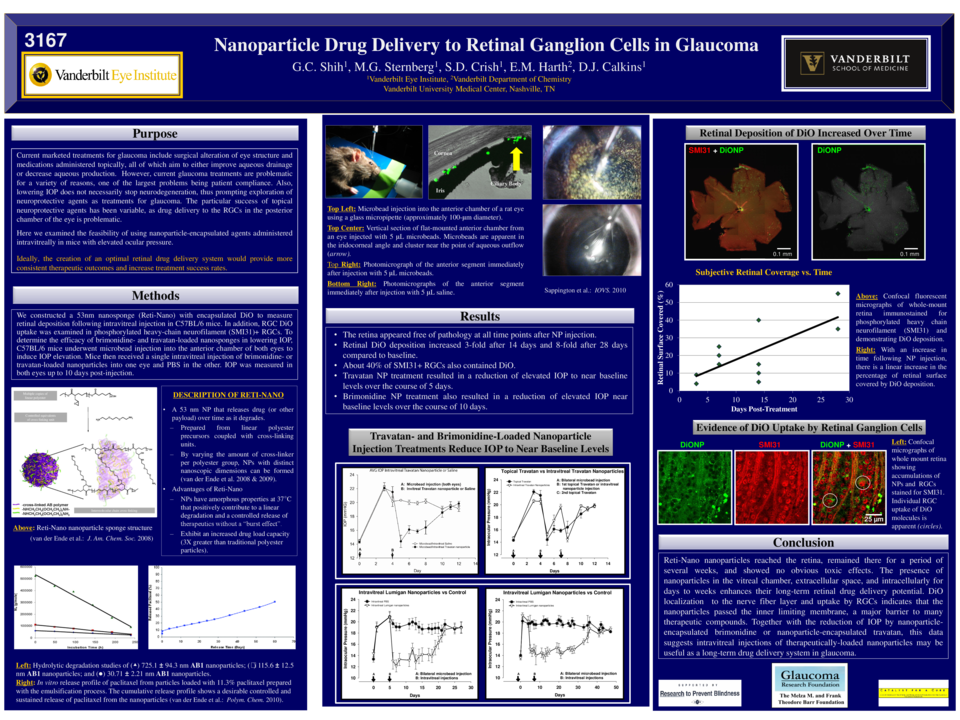
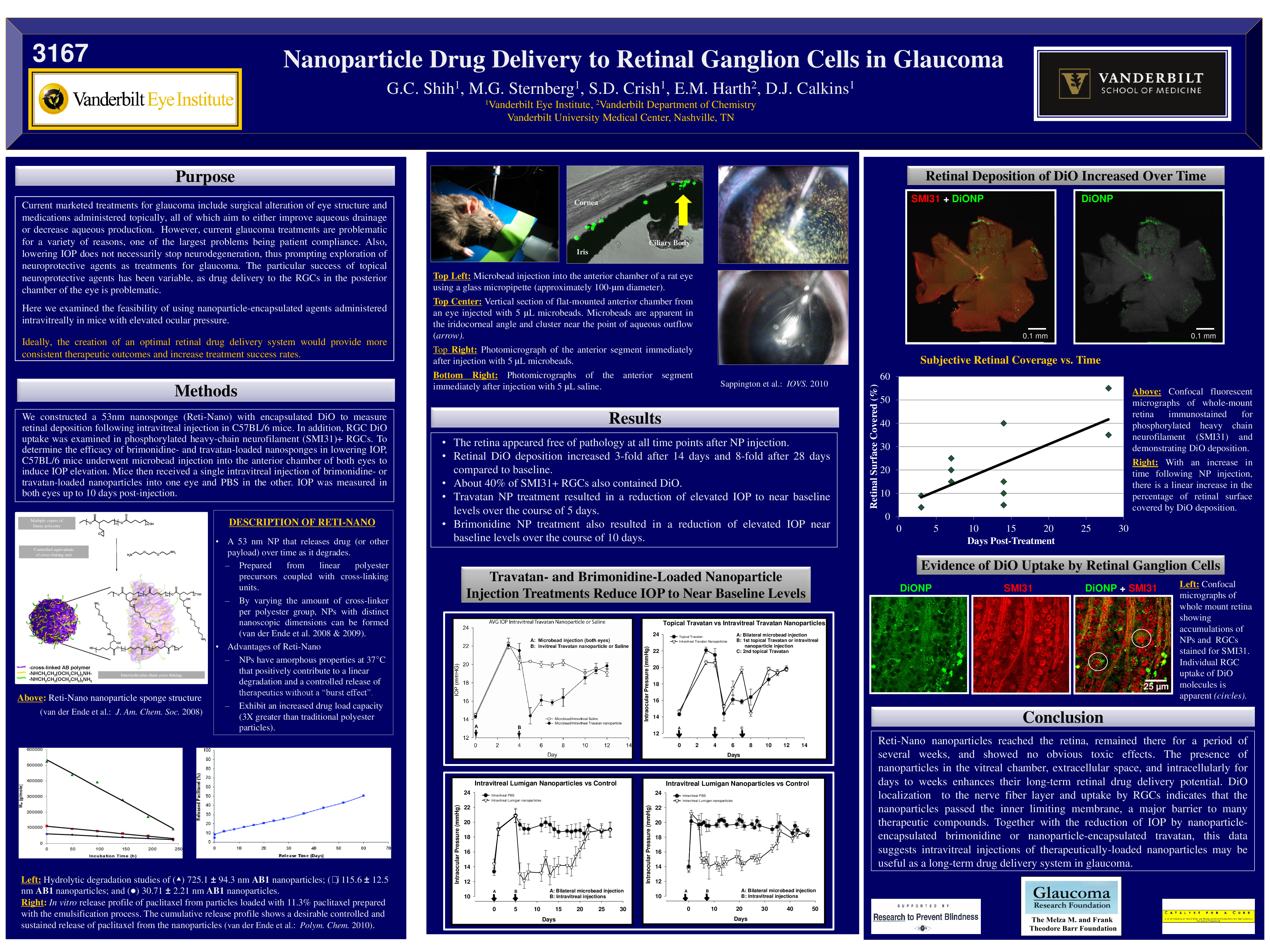
With increasing time of exposure to DiO-infused nanoparticles, retinas exhibited an
increasing amount of DiO deposition. Retinal area stained by DiO increased 3.1-fold by 14
days and 8.1-fold by 28 days compared to the 3 day timepoint. RGC uptake of DiO was
observed as on average 40% of SMI31+ cells in the ganglion cell layer also contained DiO.
In mice with elevated IOP, brimonidine nanoparticle treatment resulted in a reduction of
IOP to near baseline levels over the course of 10 days, whereas the IOP of the control eyes
remained elevated.
Conclusions:
The increasing deposition of DiO on the retina with time implies nanoparticles were retained
in the vitreal chamber for a period of weeks. DiO uptake by RGCs indicates that the
nanoparticles passed the inner limiting membrane, a major barrier to many therapeutic
compounds. Finally, the reduction of IOP by nanoparticle-encapsulated brimonidine suggests
that intravitreal injections of therapeutically-loaded nanoparticles may be an ideal vehicle for
long-term drug delivery to the eye in glaucoma.
Related articles