Functional Analysis of Networks Underlying Colon Cancer Driver Genes
Abstract
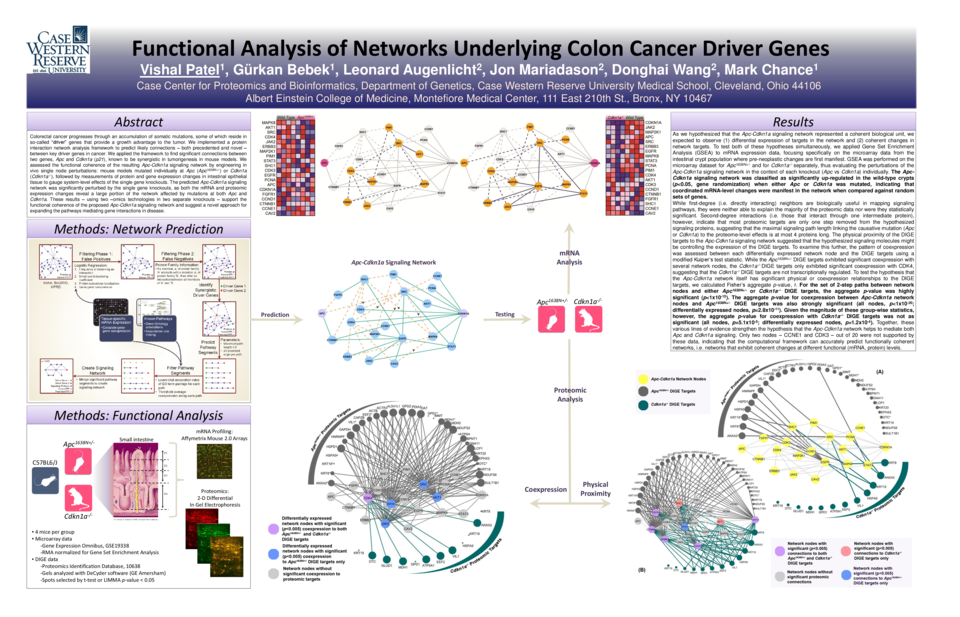
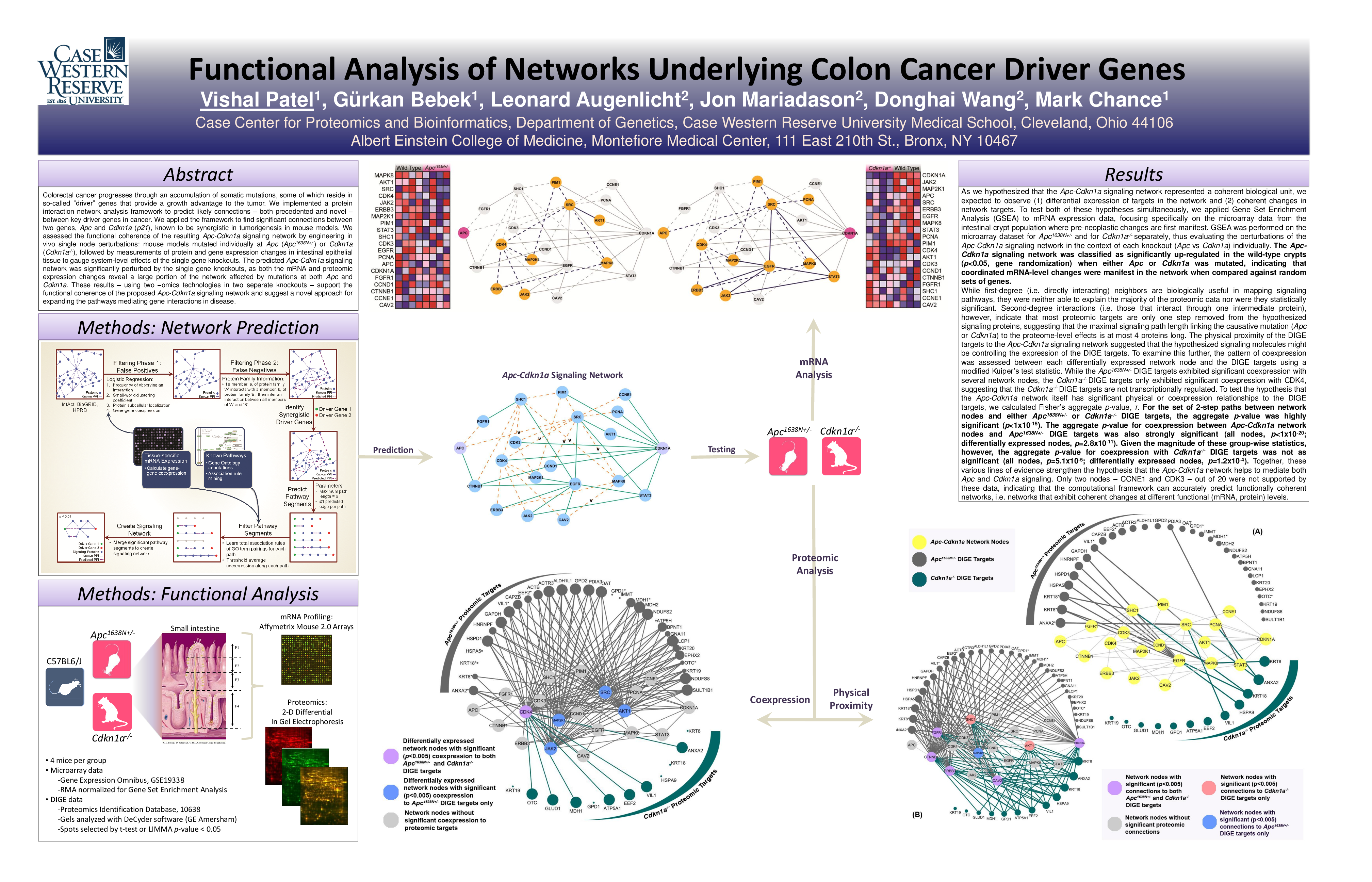
Colorectal cancer progresses through an accumulation of somatic mutations, some of which reside in so-called “driver” genes that provide a growth advantage to the tumor. We implemented a protein interaction network analysis framework to predict likely connections – both precedented and novel – between key driver genes in cancer. We applied the framework to find significant connections between two genes, Apc and Cdkn1a (p21), known to be synergistic in tumorigenesis in mouse models. We assessed the functional coherence of the resulting Apc-Cdkn1a signaling network by engineering in vivo single node perturbations: mouse models mutated individually at Apc (Apc1638N+/-) or Cdkn1a (Cdkn1a-/-), followed by measurements of protein and gene expression changes in intestinal epithelial tissue to gauge system-level effects of the single gene knockouts. The predicted Apc-Cdkn1a signaling network was significantly perturbed by the single gene knockouts, as both the mRNA and proteomic expression changes reveal a large portion of the network affected by mutations at both Apc and Cdkn1a. These results – using two –omics technologies in two separate knockouts – support the functional coherence of the proposed Apc-Cdkn1a signaling network and suggest a novel approach for expanding the pathways mediating gene interactions in disease.
Related articles