The Role of Increased Amyloid ß Burden in the Pathogenesis of Age-related MacularDegeneration
Abstract
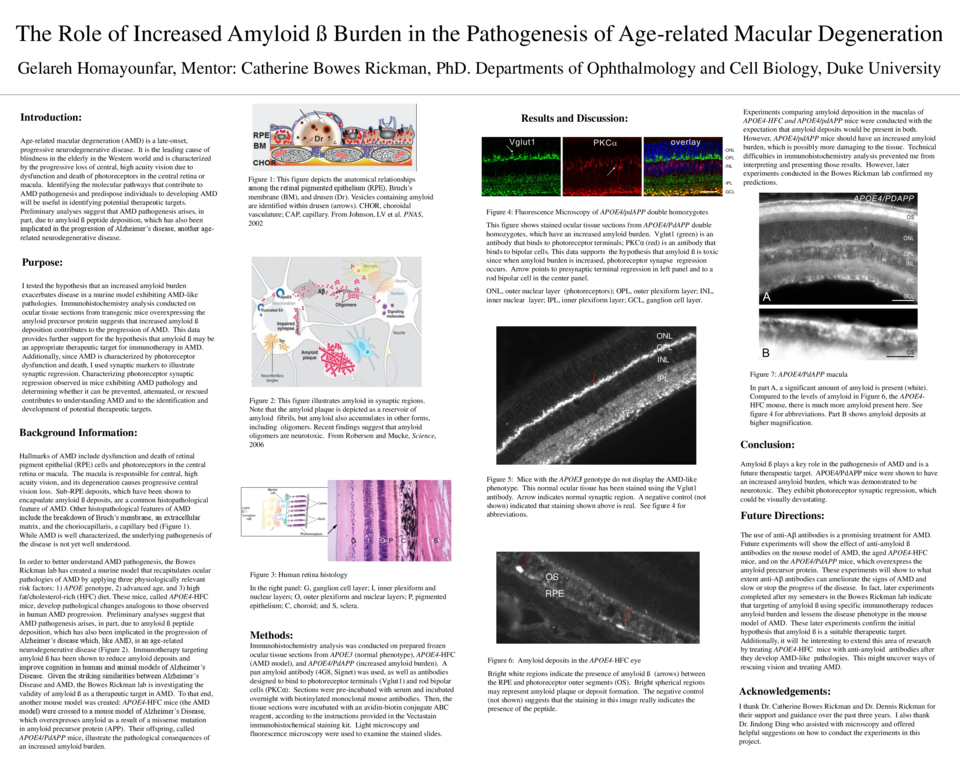
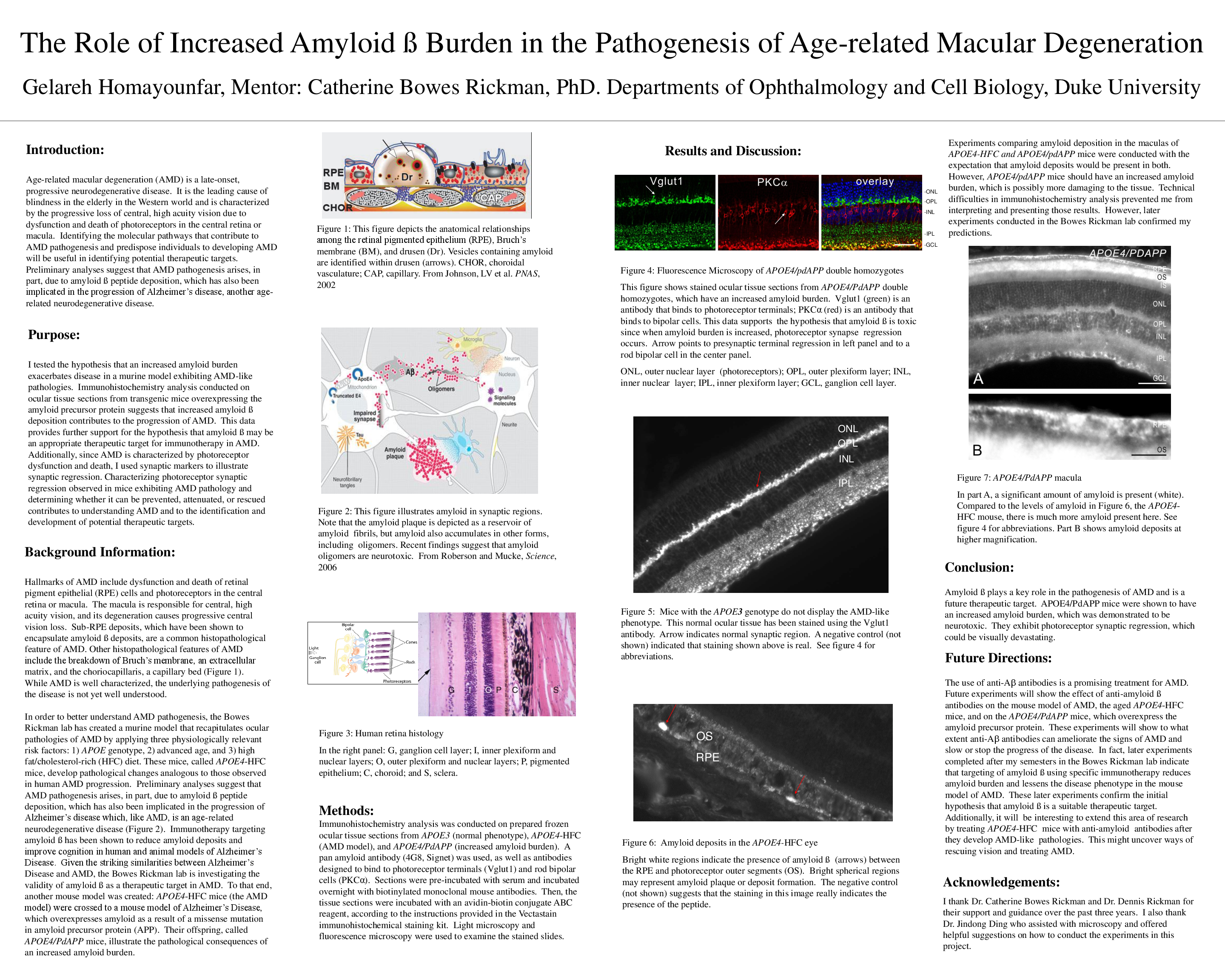
Age-related macular degeneration (AMD) is a late-onset, progressive neurodegenerative disease. It is the
leading cause of blindness in the elderly in the Western world and is characterized by the progressive loss of
central, high acuity vision due to dysfunction and death of photoreceptors in the central retina or macula.
Identifying the molecular pathways that contribute to AMD pathogenesis and predispose individuals to
developing AMD will be useful in identifying potential therapeutic targets. Preliminary analyses suggest that
AMD pathogenesis arises, in part, due to amyloid ß peptide deposition, which has also been implicated in the progression of Alzheimer’s disease, another age-related neurodegenerative disease. I sought to test the
hypothesis that increased amyloid burden exacerbates disease in a murine model exhibiting AMD-like
pathologies. Immunohistochemistry analysis conducted on ocular tissue sections from transgenic mice
overexpressing the amyloid precursor protein suggests that increased amyloid ß deposition contributes to the progression of AMD. This data provides further support for the hypothesis that amyloid ß may be an
appropriate therapeutic target for immunotherapy in AMD. Additionally, since AMD is characterized by
photoreceptor dysfunction and death, I used synaptic markers to illustrate synaptic regression. Characterizing photoreceptor synaptic regression observed in mice exhibiting AMD pathology and determining whether it can be prevented or attenuated contributes to understanding AMD and to the identification and development of potential therapeutic targets.
Related articles