In the Peruvian Amazon, Plasmodium falciparum isolate growth in vitro is associated with malaria infection severity in vivo and parasite genetic variability
Abstract
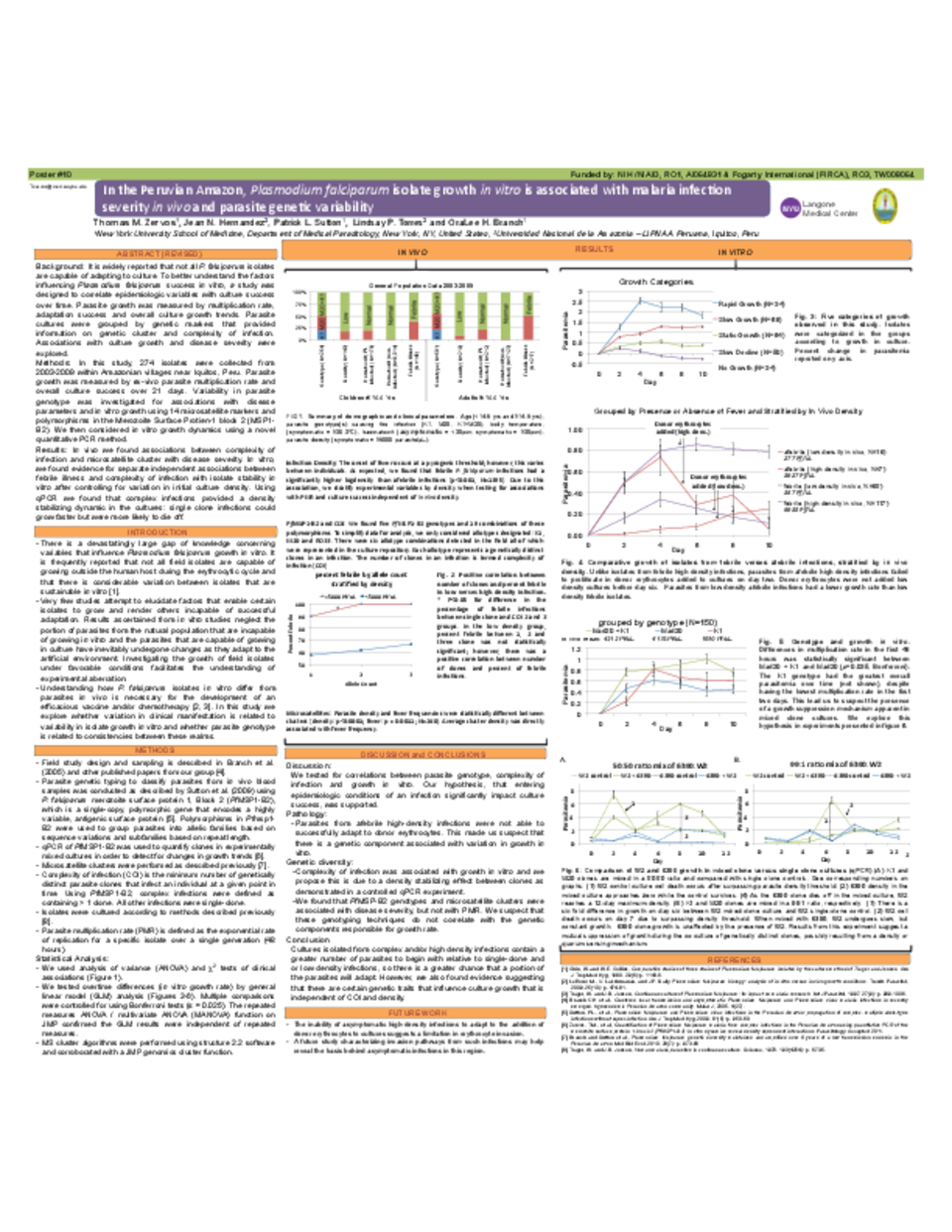
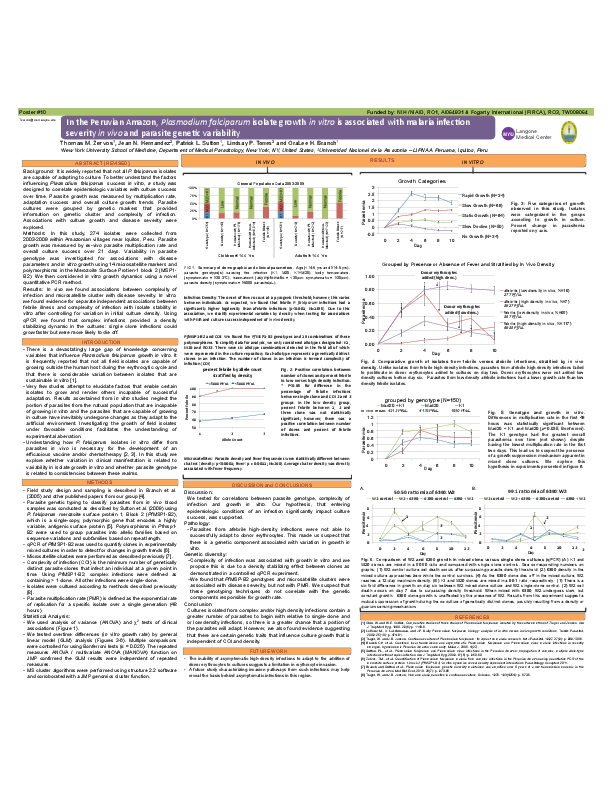
Background: It is widely reported that not all P. falciparum isolates are capable of adapting to culture. To better understand the factors influencing Plasmodium falciparum success in vitro, a study was designed to correlate epidemiologic variables with culture success over time. Parasite growth was measured by multiplication rate, adaptation success and overall culture growth trends. Parasite cultures were grouped by genetic markers that provided information on genetic cluster and complexity of infection. Associations with culture growth and disease severity were explored.
Methods: In this study, 274 isolates were collected from 2003-2009 within Amazonian villages near Iquitos, Peru. Parasite growth was measured by ex-vivo parasite multiplication rate and overall culture success over 21 days. Variability in parasite genotype was investigated for associations with disease parameters and in vitro growth using 14 microsatellite markers and polymorphisms in the Merozoite Surface Protien-1 block 2 (MSP1-B2). We then considered in vitro growth dynamics using a novel quantitative PCR method.
Results: In vivo we found associations between complexity of infection and microsatellite cluster with disease severity. In vitro, we found evidence for separate independent associations between febrile illness and complexity of infection with isolate stability in vitro after controlling for variation in initial culture density. Using qPCR we found that complex infections provided a density stabilizing dynamic in the cultures: single clone infections could grow faster but were more likely to die off.
Related articles