Abstract
Introduction:
Duchenne Muscular Dystrophy (DMD) is hereditary muscular disease with known complications of progressive respiratory muscle weakness and cardiomyopathy, making patients highly susceptible to metabolic and respiratory stressors. While the respiratory risks of influenza are well established, there is a paucity of information on how infection with influenza can present as pseudomyocarditis in patients with DMD.
Case Description:
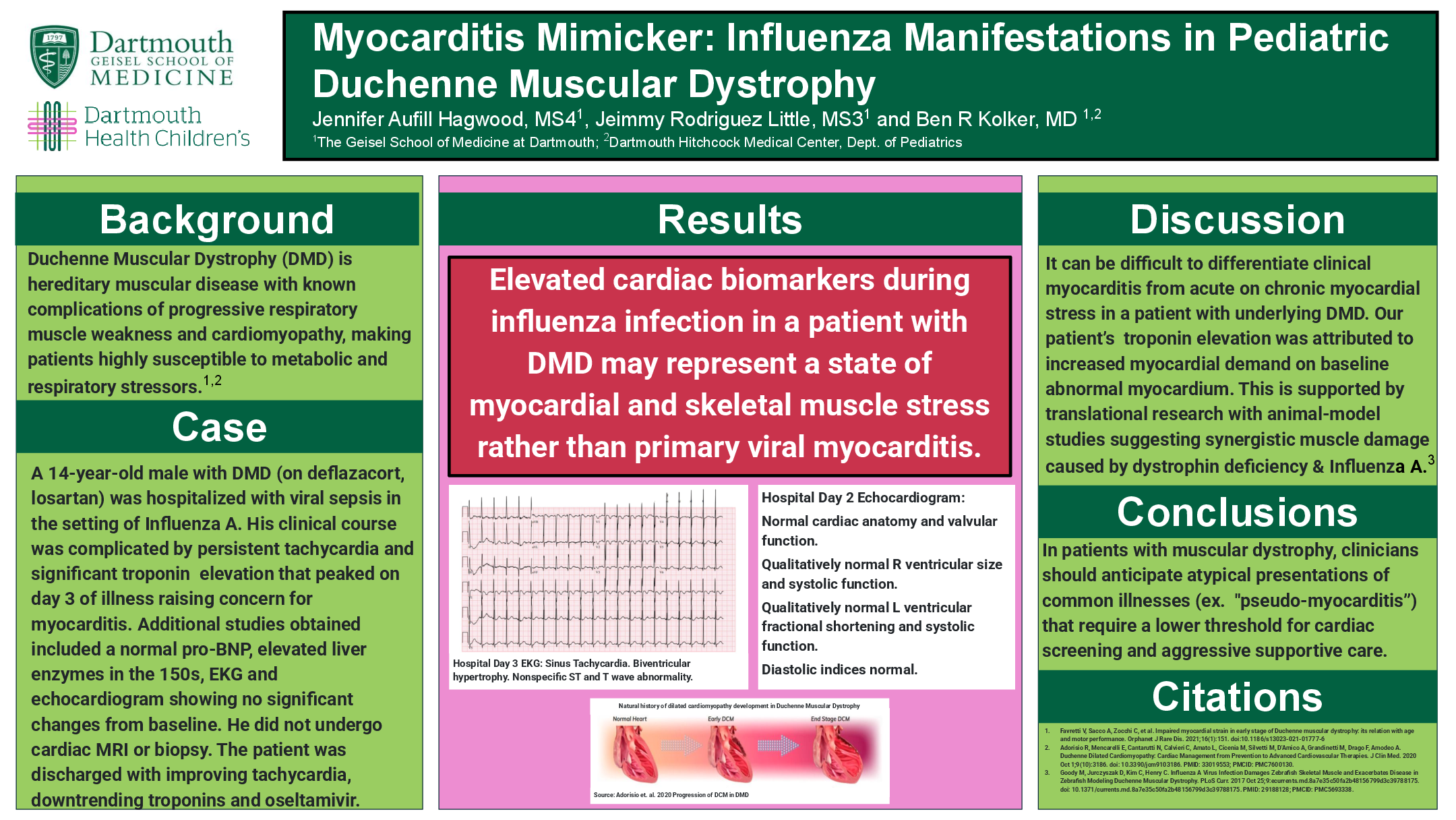
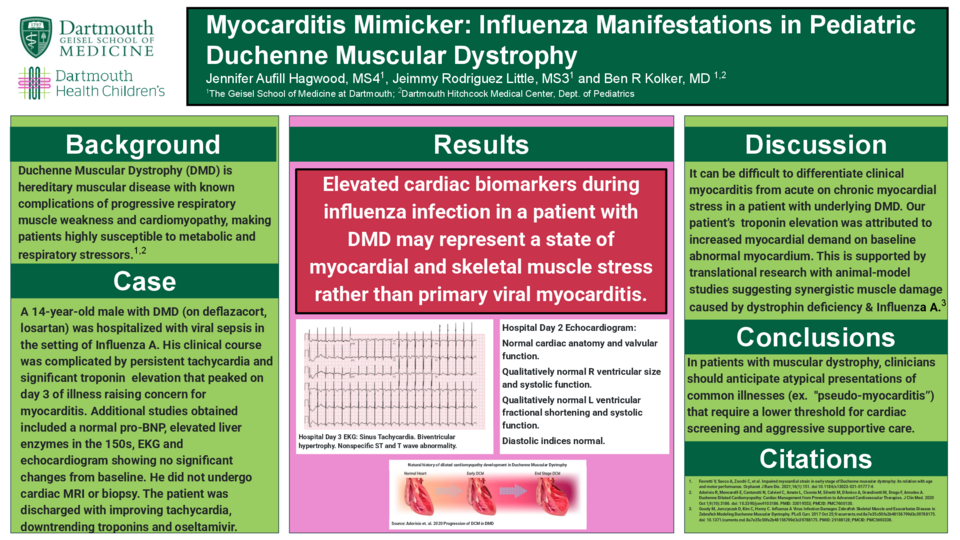
A 14-year-old male with DMD was hospitalized with viral sepsis in the setting of Influenza A. The clinical course was complicated by persistent tachycardia and significant troponin-T elevation that peaked at 258 ng/dL on day 3 of illness concerning for myocarditis. Additional studies obtained included a normal pro-BNP, transaminitis in the 150s, EKG showing sinus tachycardia with prolonged QTc that was baseline on admission, and echocardiogram showing baseline systolic dysfunction. A normal BNP and systolic function lessened suspicion for myocardial inflammation as the primary source of the troponinemia. The patient was discharged in stable condition with improving tachycardia and an outpatient course of oseltamivir.
Discussion:
The case illustrates that in DMD, Influenza A acts as a multi-system stressor that extends beyond the respiratory tract. Though isolated influenza A is not typically associated with troponinemia, we hypothesize that baseline skeletal troponin leak seen in DMD with secondary acute-on-chronic myocardial strain creates a state of decreased physiological reserve; thus, viral illness can precipitate cardiac biomarker efflux and metabolic derangements, prolonging hospitalization and complicating the standard of care. This case report is limited by the absence of prior troponin labs for the patient prior to the influenza infection.
Conclusion:
The clinical presentation of elevated cardiac biomarkers in this patient likely represents a state of myocardial and skeletal muscle stress rather than primary viral myocarditis. This phenomenon is increasingly supported by translational research with animal-model studies suggesting synergistic muscle damage caused by dystrophin deficiency and Influenza A. In the absence of functional dystrophin, the muscle cell membrane is more susceptible to the inflammatory and oxidative stress triggered by the viral infection causing troponin efflux. Clinicians should anticipate complex health outcomes—including "pseudo-myocarditis" presentations that require a lower threshold for cardiac screening and aggressive supportive care to ensure a return to baseline function.