Abstract
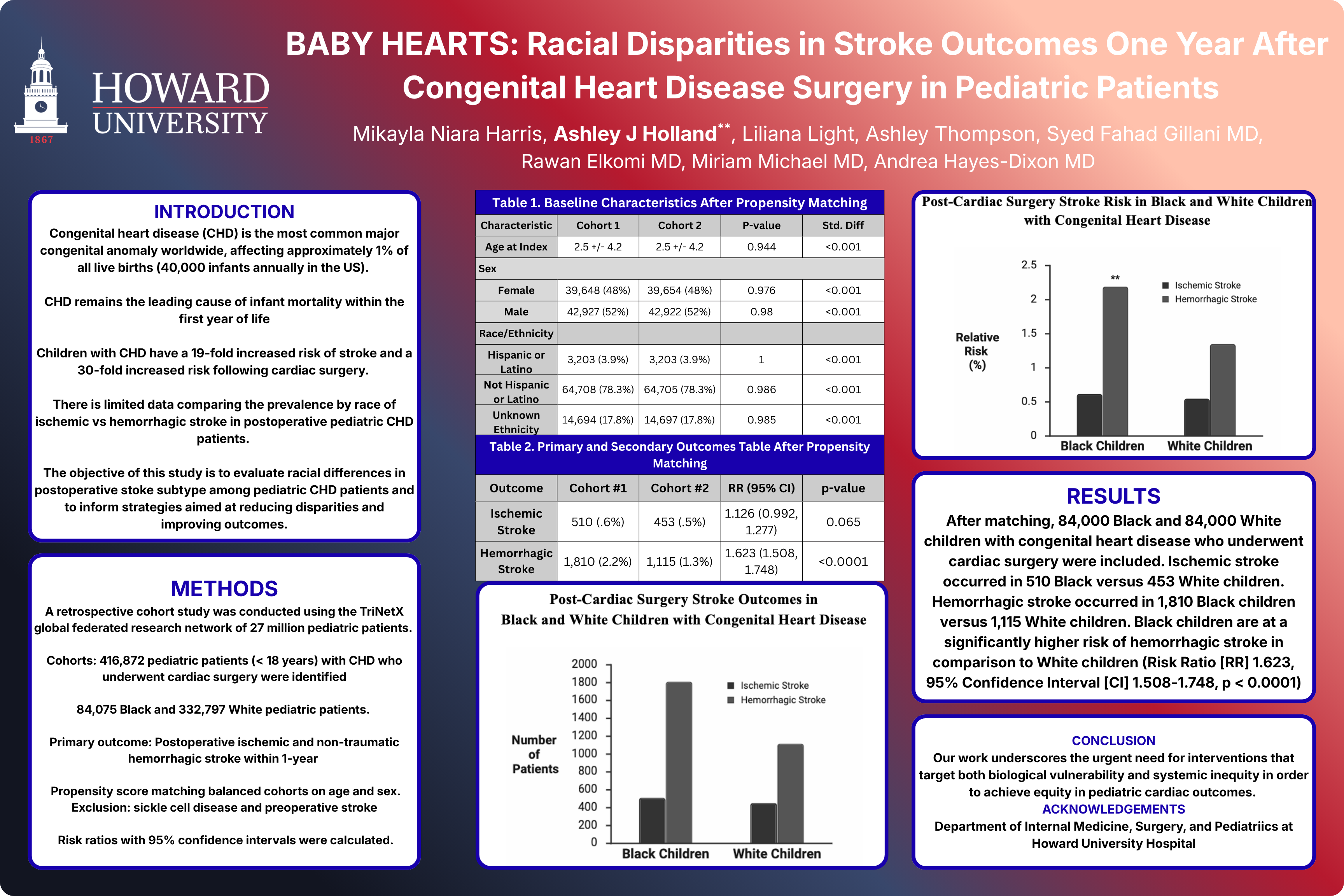
Background: Surgical intervention in the management of congenital heart disease (CHD) in pediatric patients has proven beneficial, yet a number of risks remain. Black and African American children with CHD experience disproportionately higher postoperative mortality and neurologic complications, including stroke, compared with White children. The prevalence of ischemic versus hemorrhagic postoperative stroke between racial groups remains unstudied. By understanding the current disparities in this patient population, there can be improvements in post-operative management and patient outcomes.
Methods: A retrospective cohort study was conducted using the TriNetX global federated research network of 27 million pediatric patients. A total of 416,872 pediatric patients (< 18 years) with a diagnosis of congenital heart disease who underwent cardiac surgery were identified; of this population there were 84,075 Black and 332,797 White pediatric patients. Postoperative ischemic and non-traumatic hemorrhagic stroke within one year was the primary outcome. Propensity score matching balanced cohorts on age, sex, comorbidities (hypertension, arrhythmia, coagulopathy), surgical complexity, socioeconomic proxies, and other postoperative risk factors. Patients with a sickle cell disease diagnosis and preoperative stroke were not included in this study. Risk ratios with 95% confidence intervals were calculated.
Results: After matching, 84,000 Black and 84,000 White children with congenital heart disease who underwent cardiac surgery were included. Ischemic stroke occurred in 510 Black versus 453 White children. Hemorrhagic stroke occurred in 1,810 Black children versus 1,115 White children. Black children are at a significantly higher risk of hemorrhagic stroke in comparison to White children (Risk Ratio [RR] 1.623, 95% Confidence Interval [CI] 1.508-1.748, p < 0.0001).
Conclusion: Black and African American children with congenital heart disease who underwent cardiac surgery have a significantly higher risk of postoperative hemorrhagic stroke within one year compared with their White counterparts. These findings highlight potential disparities in postoperative management which have life-long outcomes for this population.