Occupational Injury Among Orthopaedic Surgeons, A Lack Of Resources
Abstract
Background: Occupational injury is an important issue that has never been studied in orthopaedic surgeons. Orthopaedic surgery is a physically demanding profession which requires many hours per week in positions known to contribute to physical injury and pain. Demand for orthopaedic services is expected to grow at an exponential pace, and surgeon injury can affect the delivery of timely and sufficient care, placing a greater strain on the health care system and providers. Furthermore, physician injury can have large economic consequences to the health care system and providers due to the investments of training, personnel, and overhead in each surgeon.
Purpose: This is the first study of its kind to gather fundamental data and evaluate occupational injury among orthopaedic surgeons.
Methods: Electronic Surveys were distributed via email to all orthopaedic surgeons in Tennessee.
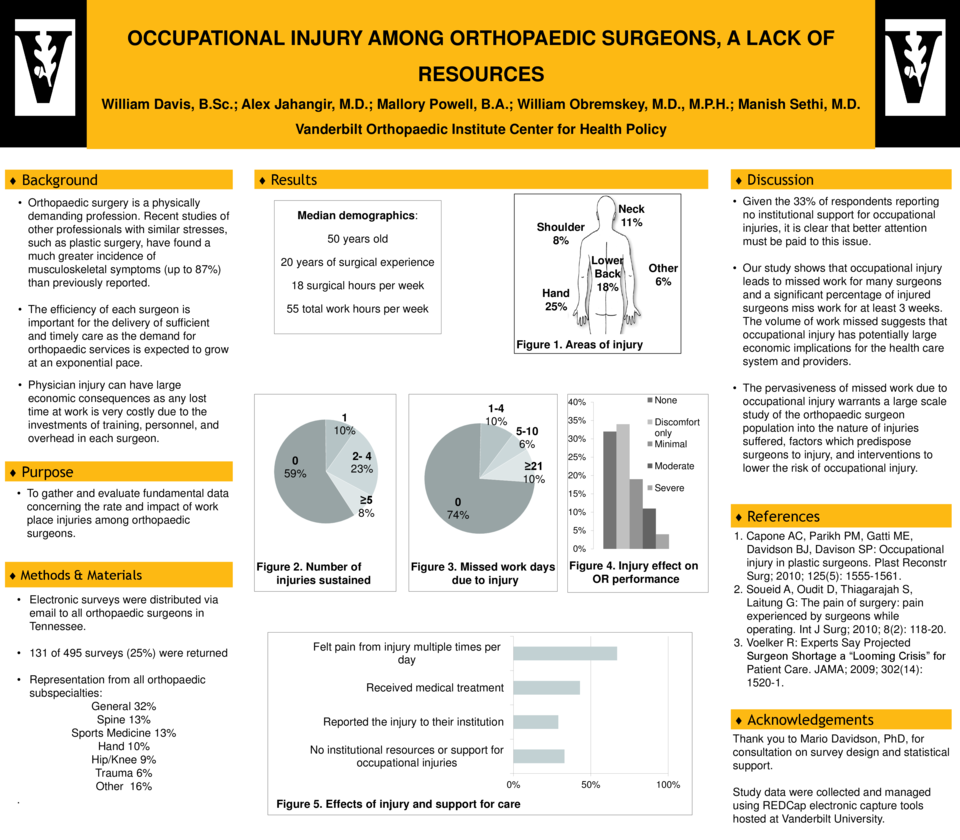
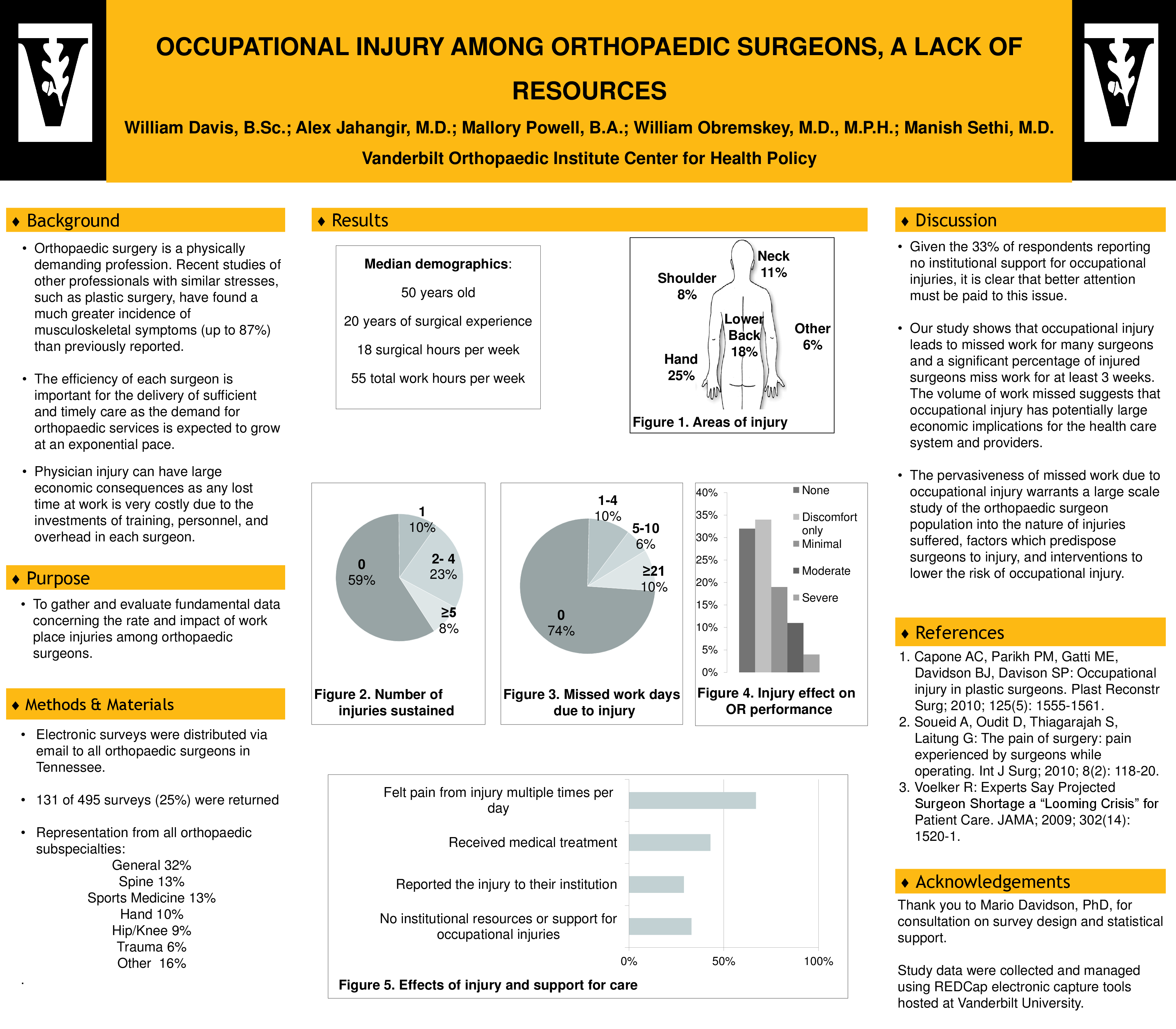
Results: 131 of 495 surveys (25%) were returned with representation from all orthopaedic subspecialties. On average, respondents were 50 years old, had 20 years of surgical experience, and performed surgery for 18 hours per week. 41% of respondents reported suffering one or more injuries in the operating room. Injuries were sustained in the following areas: hand (25%), lower back (18%), neck (11%), shoulder (8%), and other (6%). Among injured surgeons, 33% responded that they had no institutional resources or support for occupational injuries. 43% of individuals reporting an injury received medical treatment, 29% reported the injury to their institution, and 25% missed work due to injury, with 10% missing at least three weeks.
Conclusions: Our study is the first of its kind to demonstrate that occupational injury occurs at a high rate among orthopaedic surgeons. Given the 33% of respondents reporting no institutional support for occupational injuries, it is clear that better attention must be paid to this issue.
Our study shows that occupational injury leads to missed work in many surgeons and a significant percentage of injured surgeons miss work for at least 3 weeks. The volume of work missed suggests that occupational injury has potentially large economic implications for the health care system and providers. The pervasiveness of missed work due to occupational injury warrants a large scale study of the orthopaedic surgeon population into the nature of injuries suffered, factors which predispose surgeons to injury, and interventions to lower the risk of occupational injury.
Related articles