Abstract
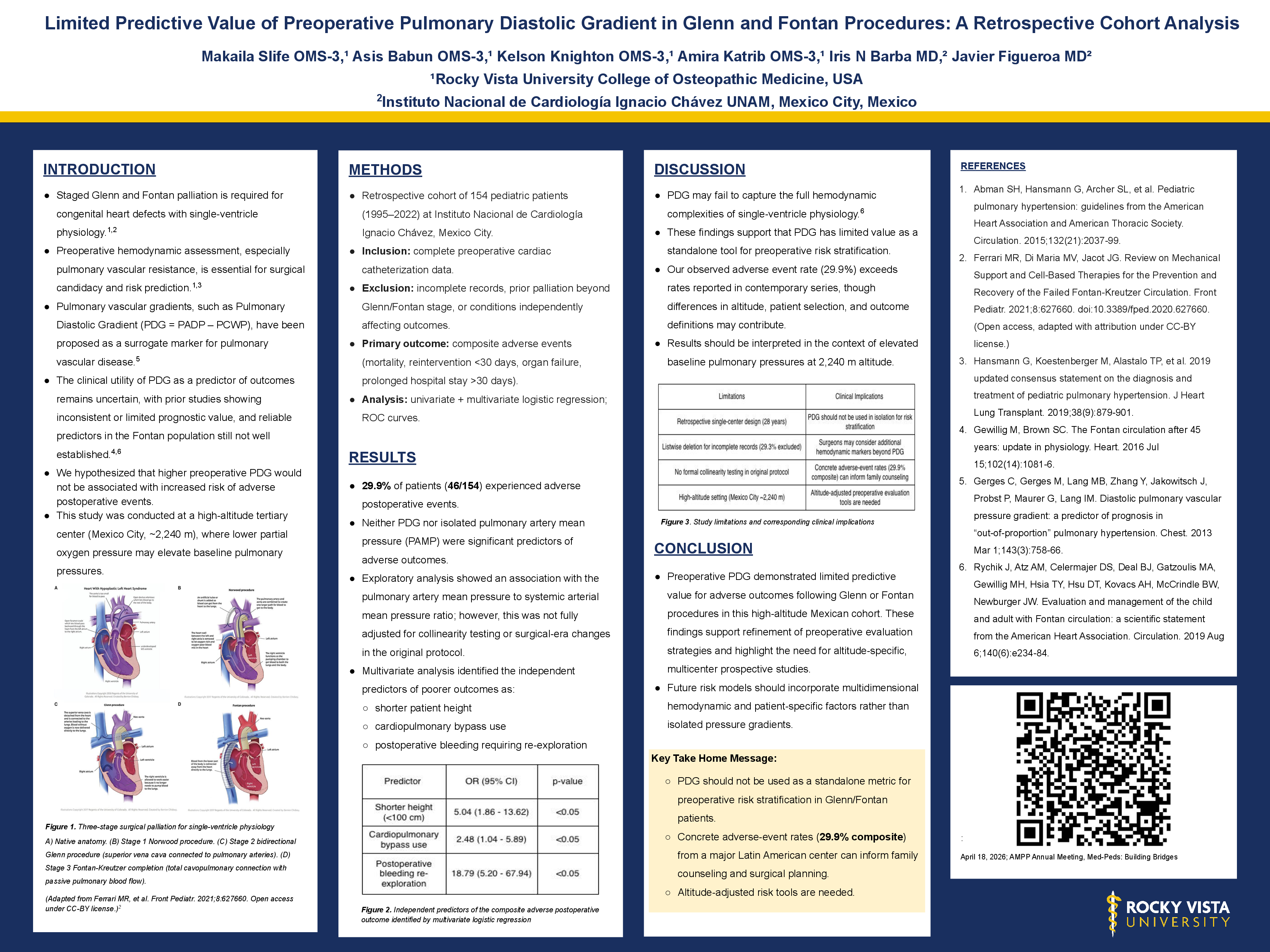
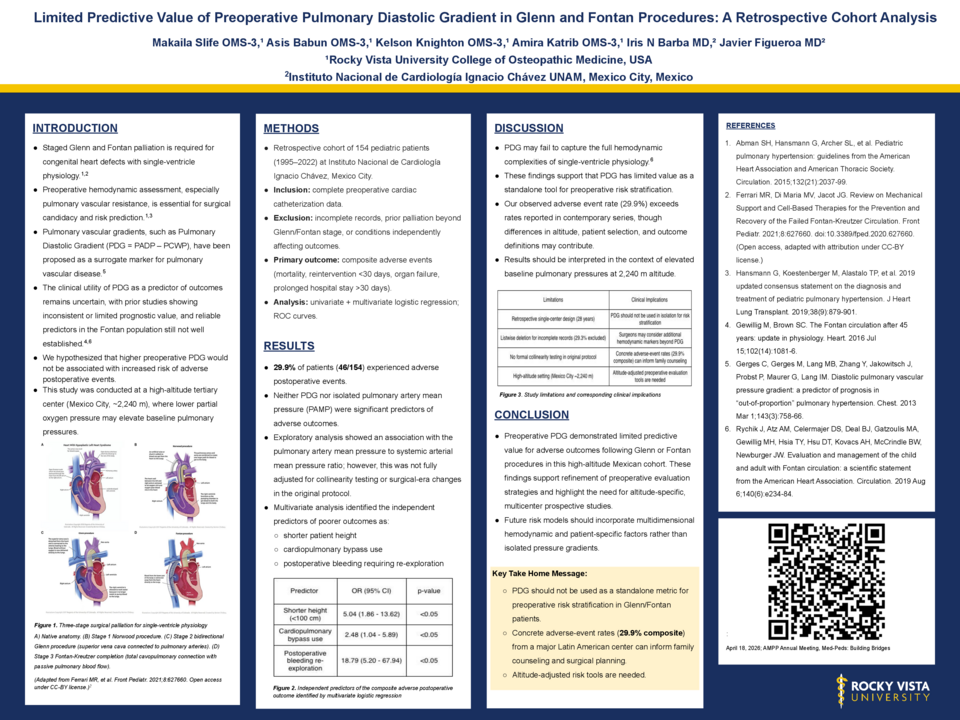
Limited Predictive Value of Preoperative Pulmonary Diastolic Gradient in Glenn and Fontan Procedures: A Retrospective Cohort Analysis
Authors: Makaila Slife OMS-3,1 Asis Babun OMS-3,1 Kelson Knighton OMS-3,1 Amira Katrib OMS-3,1 Iris N Barba MD,2 Javier Figueroa MD2
1Rocky Vista University College of Osteopathic Medicine, USA
2Instituto Nacional de Cardiología Ignacio Chávez UNAM, Mexico City, Mexico
Previous research on preoperative hemodynamic predictors in pediatric single-ventricle physiology has primarily focused on pulmonary vascular resistance. However, the utility of the Pulmonary Diastolic Gradient (PDG) remains uncertain. The present study hypothesizes that PDG, proposed as a surrogate marker for pulmonary vascular disease, does not reliably predict adverse postoperative outcomes in children undergoing Glenn or Fontan procedures.
A retrospective cohort of 154 pediatric patients who underwent initial Glenn (44.8%) or Fontan (55.2%) procedures between 1995 and 2022 at a single institution was analyzed. Preoperative PDG, defined as pulmonary artery diastolic pressure minus pulmonary capillary wedge pressure, was evaluated for its association with adverse outcomes, including mortality, reintervention, and organ failure, using logistic regression and receiver operating characteristic (ROC) analyses.
Neither PDG nor isolated pulmonary artery mean pressure (PAMP) predicted postoperative outcomes. In contrast, the ratio of PAMP to systemic arterial mean pressure (PAMP/TAM) demonstrated a significant association with adverse events. Multivariate analysis identified shorter patient height, use of cardiopulmonary bypass, and postoperative bleeding requiring reexploration as independent predictors of poorer outcomes.
These findings indicate that PDG does not adequately capture the hemodynamic complexities of single-ventricle physiology and therefore has limited value for preoperative risk stratification. This study clarifies the limitations of PDG and highlights the need for more comprehensive preoperative evaluation strategies. The results support refinement of clinical protocols and provide a foundation for future prospective studies aimed at improving patient selection and long-term outcomes in this high-risk population.