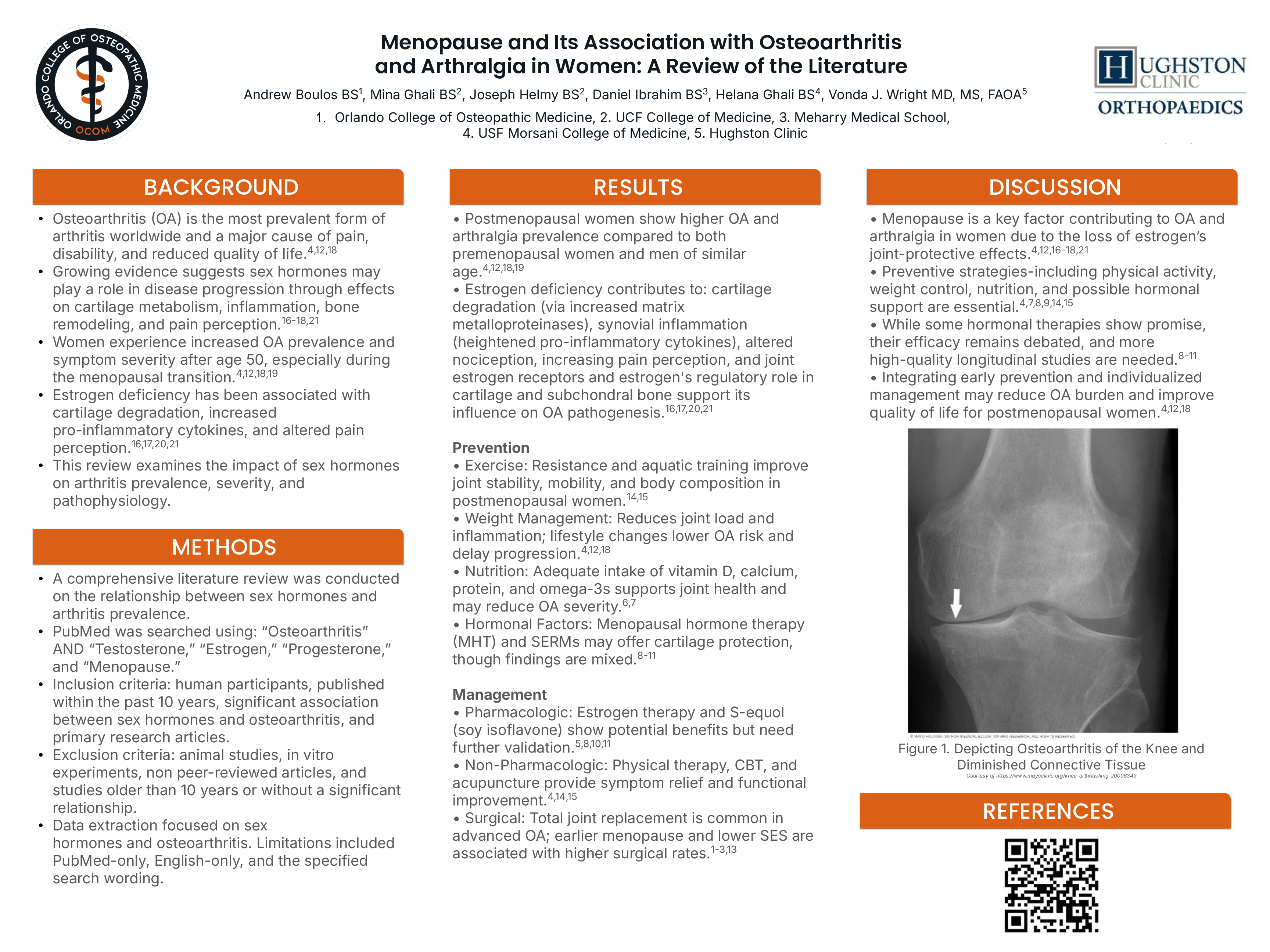
Abstract
BACKGROUND
Osteoarthritis (OA) is the most common form of arthritis worldwide and a major cause of pain, disability, and reduced quality of life. Evidence suggests sex hormones influence OA progression through effects on cartilage metabolism, inflammation, bone remodeling, and pain perception. Women experience increased OA prevalence and symptom severity after age 50, especially during the menopausal transition. Estrogen deficiency has been linked to cartilage degradation, increased pro-inflammatory cytokines, and altered pain perception. This review examines how sex hormones affect arthritis prevalence, severity, and pathophysiology.
METHODS
A literature review was conducted on the relationship between sex hormones and arthritis prevalence. PubMed was searched using the terms “Osteoarthritis” AND “Testosterone,” “Estrogen,” “Progesterone,” and “Menopause.” Inclusion criteria were human participants, publication within the past 10 years, significant association between sex hormones and osteoarthritis, and primary research articles. Exclusion criteria included animal studies, in vitro experiments, non-peer-reviewed articles, and studies older than 10 years or without a significant relationship. Data extraction focused on sex hormones and osteoarthritis. Limitations included PubMed-only, English-only, and the specified search terms.
RESULTS
Postmenopausal women show higher OA and arthralgia prevalence than premenopausal women and men of similar age. Estrogen deficiency contributes to cartilage degradation through increased matrix metalloproteinases, synovial inflammation through elevated pro-inflammatory cytokines, and altered nociception that increases pain perception. Estrogen receptors in joint tissues and estrogen’s regulatory role in cartilage and subchondral bone further support its influence on OA pathogenesis. Resistance and aquatic exercise improve joint stability, mobility, and body composition in postmenopausal women. Weight management reduces joint load and inflammation, while proper nutrition including vitamin D, calcium, protein, and omega-3s may support joint health. Menopausal hormone therapy and selective estrogen receptor modulators may provide cartilage protection, though findings remain mixed.
DISCUSSION
Menopause is a key factor contributing to OA and arthralgia in women because of the loss of estrogen’s joint-protective effects. Preventive strategies, including physical activity, weight control, nutrition, and possible hormonal support, are important. Although some hormonal therapies show promise, their effectiveness remains debated, and more high-quality longitudinal studies are needed. Early prevention and individualized management may reduce OA burden and improve quality of life for postmenopausal women.