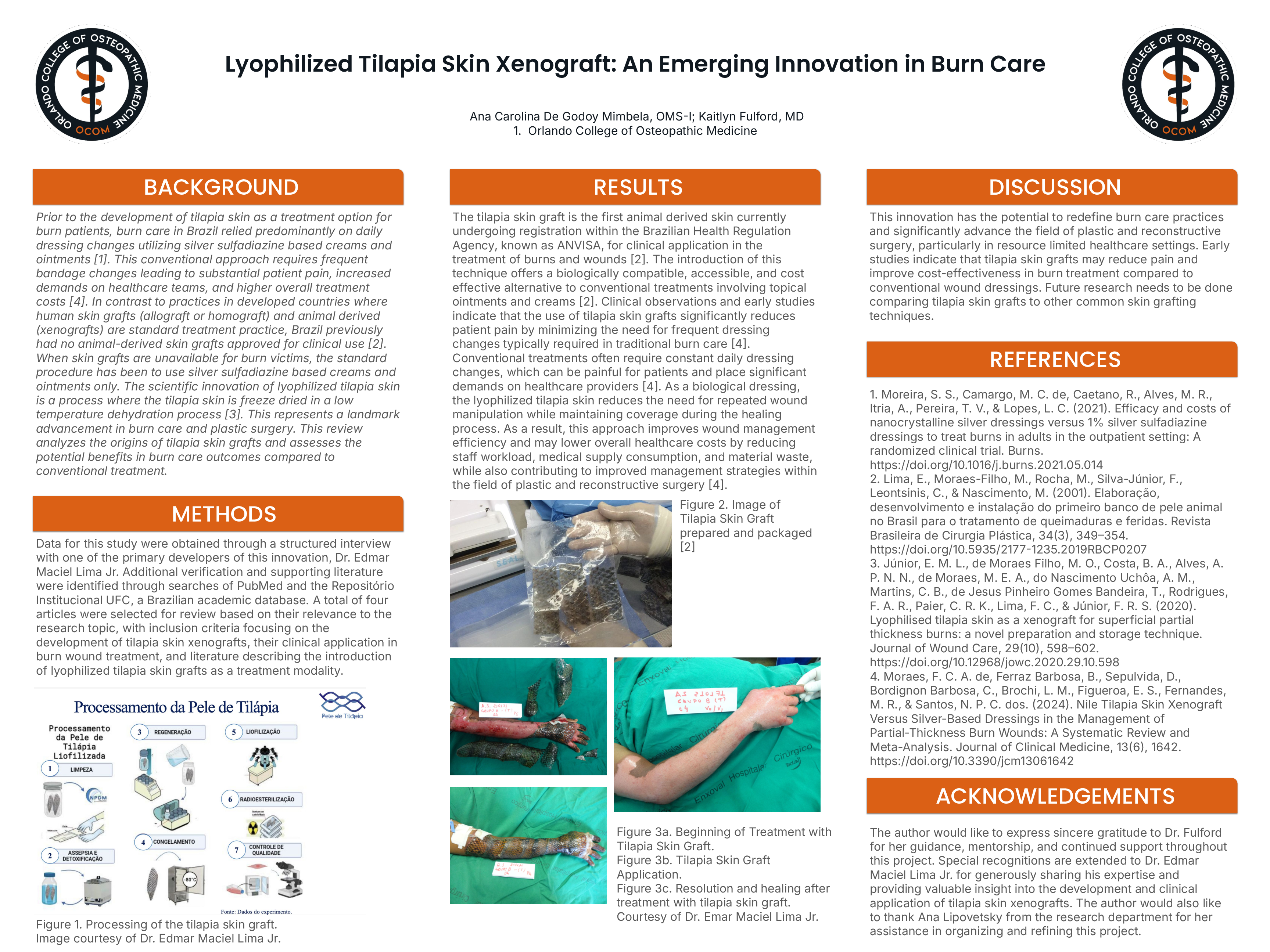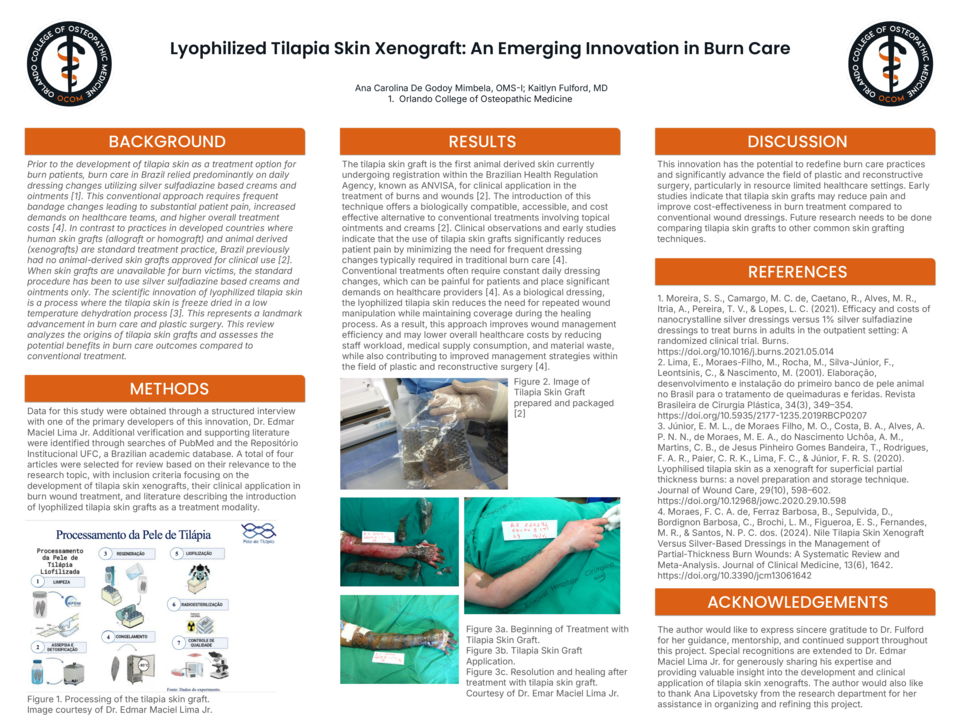
Abstract
Background: Prior to the development of tilapia skin as a treatment option for burn patients, burn care in Brazil relied predominantly on daily dressing changes utilizing silver sulfadiazine based creams and ointments [1]. This conventional approach requires frequent bandage changes leading to substantial patient pain, increased demands on healthcare teams, and higher overall treatment costs [4]. In contrast to practices in developed countries where human skin grafts (allograft or homograft) and animal derived (xenografts) are standard treatment practice, Brazil previously had no animal-derived skin grafts approved for clinical use [2]. When skin grafts are unavailable for burn victims, the standard procedure has been to use silver sulfadiazine based creams and ointments only. The scientific innovation of lyophilized tilapia skin is a process where the tilapia skin is freeze dried in a low temperature dehydration process [3]. This represents a landmark advancement in burn care and plastic surgery. This review analyzes the origins of tilapia skin grafts and assesses the potential benefits in burn care outcomes compared to conventional treatment.
Methods: Data for this study were obtained through a structured interview with one of the primary developers of this innovation, Dr. Edmar Maciel Lima Jr. Additional verification and supporting literature were identified through searches of PubMed and the Repositório Institucional UFC, a Brazilian academic database. A total of four articles were selected for review based on their relevance to the research topic, with inclusion criteria focusing on the development of tilapia skin xenografts, their clinical application in burn wound treatment, and literature on the introduction of lyophilized tilapia skin grafts as a treatment modality.
Results: The tilapia skin graft is the first animal derived skin currently undergoing registration within the Brazilian Health Regulation Agency, known as ANVISA, for clinical application in the treatment of burns and wounds [2]. The introduction of this technique offers a biologically compatible, accessible, and cost effective alternative to conventional treatments involving topical ointments and creams [2]. The tilapia skin graft greatly reduces patient pain by minimizing the need for frequent dressing changes [4]. As a result, this approach improves wound management efficiency and lowers costs by reducing staff workload and material waste, all while enhancing management strategies in plastic surgery [4].
Discussion: This innovation has the potential to redefine burn care practices and significantly advance the field of plastic and reconstructive surgery, particularly in resource limited healthcare settings. Early studies indicate that tilapia skin grafts may reduce pain and improve cost-effectiveness in burn treatment compared to conventional wound dressings. Future research needs to be done comparing tilapia skin grafts to other common skin grafting techniques.