Abstract
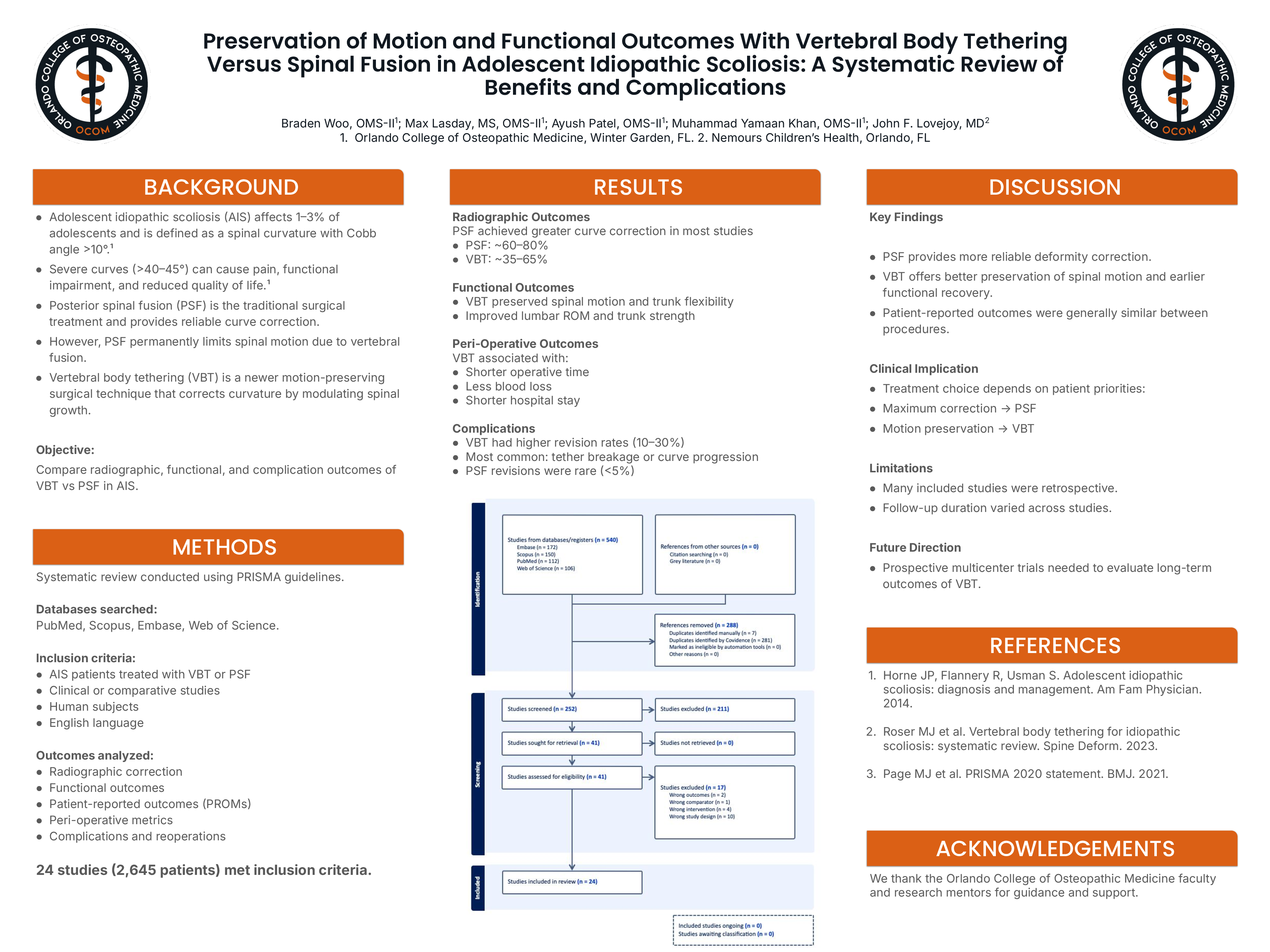
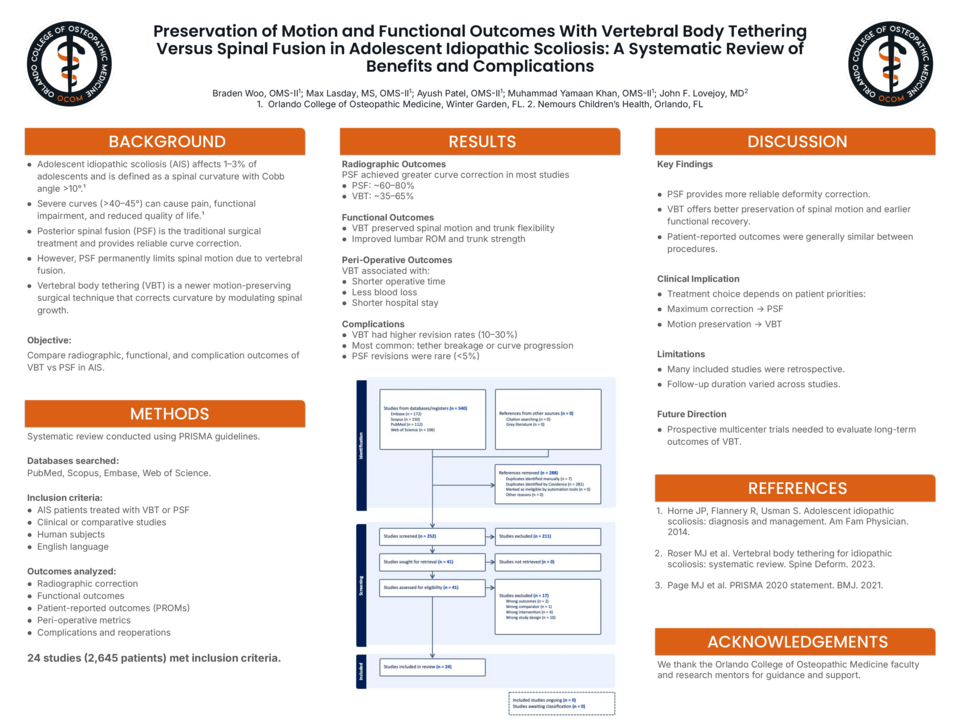
BACKGROUND: Adolescent idiopathic scoliosis (AIS) is the most common form of scoliosis and is diagnosed when the Cobb angle is greater than 10 degrees due to an unknown cause. When surgical intervention is indicated and desired, the gold standard approach is posterior spinal fusion (PSF). Vertebral body tethering (VBT) is a newer, motion-preserving, non-rigid alternative designed to modulate growth while maintaining spinal flexibility. This systematic review compares radiographic, functional, and patient-reported outcomes, peri-operative metrics, and complication profiles of VBT versus PSF in AIS correction.
METHODS: This systematic review was produced following the guidelines for the Preferred Reporting Items for Systematic Reviews and Meta-Analyses (PRISMA). Relevant studies included in our review were published between 2020 and 2025, and sourced from PubMed, Scopus, Embase, and Web of Science databases. An abstract and title screening was done by the two independent reviewers to determine which studies were relevant to be included in our review.
RESULTS: 24 studies comprising a total of 2,645 patients met inclusion criteria. Overall, our findings suggest a clear trade-off between motion preservation and correctional certainty. PSF demonstrated more reliable and greater curve correction, superior coronal alignment, and a lower revision rate. VBT consistently preserved spinal and trunk motion and was associated with decreased peri-operative time, blood loss, length of stay, and earlier functional recovery. Patient-reported outcomes were largely comparable between groups, although motion-sensitive domains generally favored VBT, whereas appearance-related satisfaction favored PSF. VBT was however, associated with higher complication and reoperation rates, most commonly due to tether breakage, over-correction, or insufficient curve correction.
DISCUSSION: Patient-reported outcomes are largely comparable between treatments. These findings highlight a clear trade-off between correctional certainty and motion preservation, supporting individualized, shared decision-making based on patient values, activity level, skeletal maturity, and curve characteristics. Further prospective research with standardized functional outcomes is needed to define the long-term role of VBT in AIS management.