Abstract
Background:
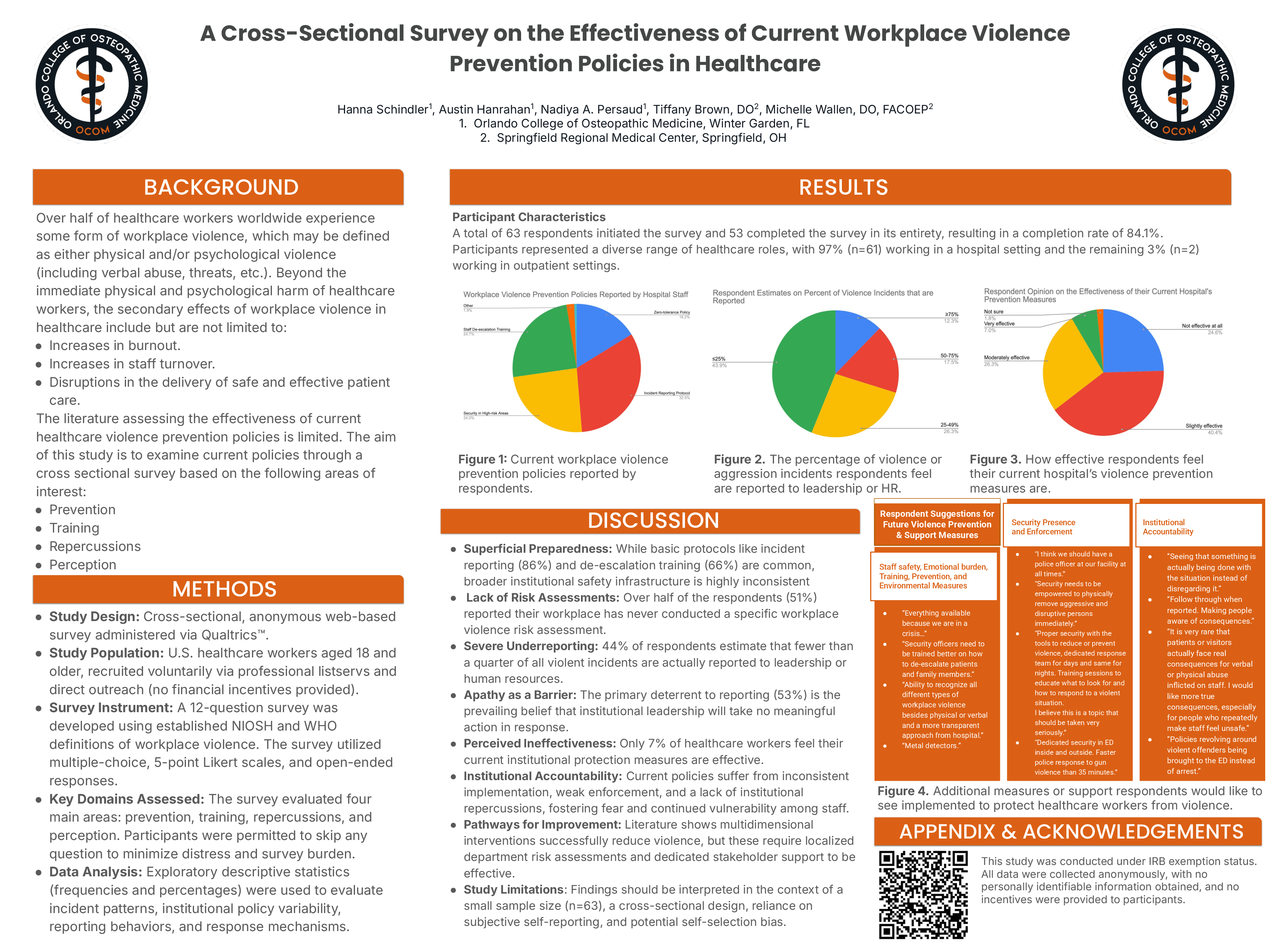
Workplace violence in healthcare is a widespread issue affecting over half of healthcare workers globally and is associated with increased burnout, staff turnover, and compromised patient care. Despite its prevalence, there is limited evidence evaluating the effectiveness of existing workplace violence prevention policies.
Methods:
A cross-sectional, anonymous web-based survey was conducted using Qualtrics™ among U.S. healthcare workers aged 18 years and older. A 12-question survey, developed using NIOSH and WHO definitions of workplace violence, assessed prevention strategies, training, institutional repercussions, and perceptions. Descriptive statistics were used to analyze incident patterns, reporting behaviors, and policy effectiveness.
Results:
A total of 63 participants initiated the survey, with 53 completing it (84.1% completion rate), predominantly from hospital settings. While common measures such as incident reporting protocols (86%) and de-escalation training (66%) were reported, broader institutional preparedness was inconsistent. Over half of respondents (51%) reported no formal workplace violence risk assessment at their institution. Significant underreporting was identified, with 44% estimating that fewer than 25% of incidents are reported. The primary barrier to reporting was the belief that no meaningful action would be taken (53%). Only 7% of respondents perceived current prevention measures as effective.
Conclusions:
Current workplace violence prevention policies in healthcare appear insufficient, with gaps in risk assessment, reporting systems, and institutional accountability. Addressing these shortcomings through comprehensive, multidimensional interventions and improved leadership engagement is critical to enhancing staff safety and healthcare delivery outcomes.