Abstract
Background:
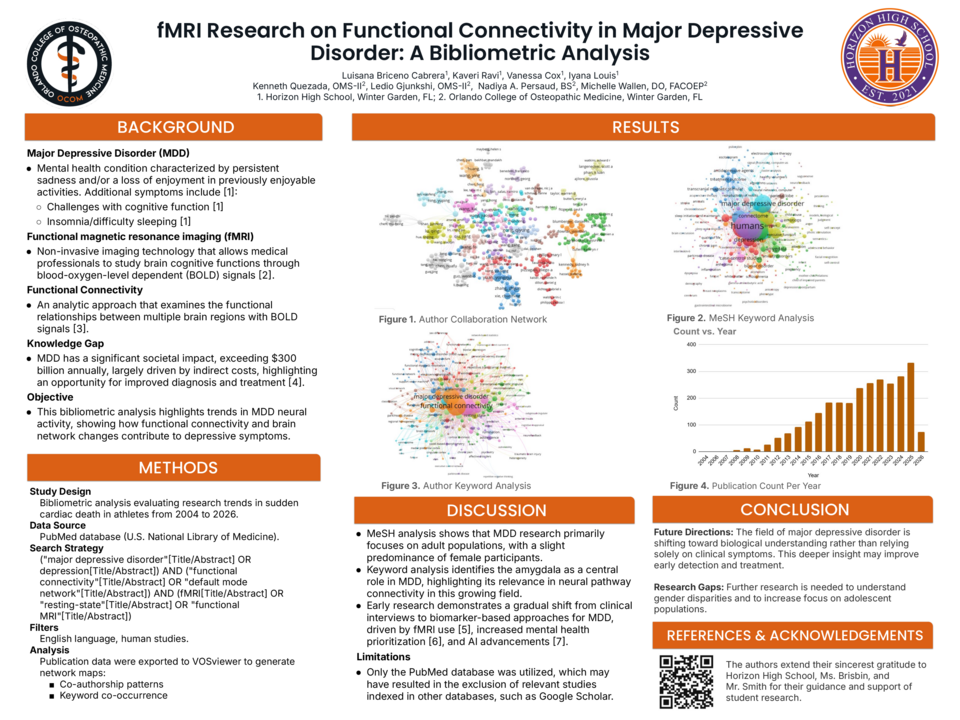
Major depressive disorder (MDD) is a prevalent mental health condition characterized by persistent low mood, anhedonia, and cognitive dysfunction. Functional magnetic resonance imaging (fMRI) has emerged as a key tool for studying functional connectivity and neural network alterations associated with MDD.
Objective:
To evaluate research trends, collaboration patterns, and key thematic areas in fMRI-based functional connectivity studies of MDD.
Methods:
A bibliometric analysis was conducted using the PubMed database, including English-language human studies published between 2004 and 2026. Search terms included “major depressive disorder,” “functional connectivity,” and related fMRI terms. Publication trends, co-authorship networks, and keyword co-occurrence were analyzed.
Results:
Publications increased steadily over time, reflecting growing interest in neuroimaging approaches to MDD. Collaboration networks revealed distinct research clusters, suggesting opportunities for broader interdisciplinary engagement. Keyword analysis identified the amygdala as a central structure in MDD-related functional connectivity, highlighting its role in emotional processing. MeSH term trends indicated a primary focus on adult populations, with a slight predominance of female participants. Over time, research has shifted from clinical assessments to biomarker-based approaches, driven by advances in fMRI and artificial intelligence.
Conclusions:
fMRI research in MDD is increasingly focused on understanding neural network dysfunction and identifying biomarkers for diagnosis and treatment. However, gaps remain in population diversity and representation. Future research should emphasize broader inclusion, integration of advanced analytic methods, and translation of neuroimaging findings into clinical practice.