Abstract
Background:
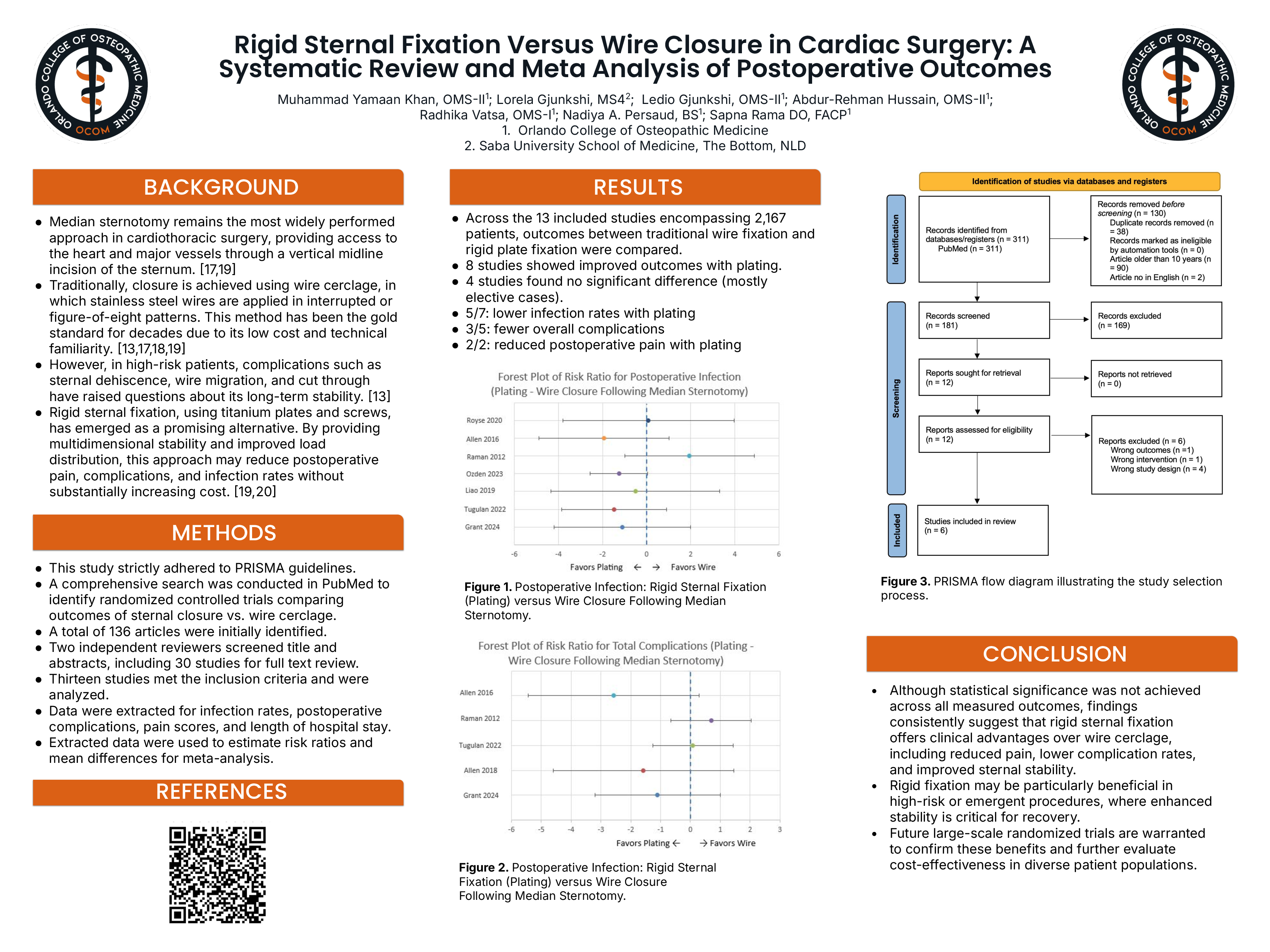
Median sternotomy, a procedure in which a vertical incision is made along the sternum and the sternum is manually divided to access the chest cavity organs, remains the most widely used approach in cardiothoracic surgery. This technique comprises stainless steel wires secured in interrupted or figure-of-eight fashions.
Rigid sternal fixation has emerged as an alternative to sternal closure via wire cerclage. Rigid sternal fixation includes using plates, screws, or alternative rigid constructs to provide two-dimensional stability along sternal edges. Studies have been suggestive that rigid sternal fixation reduces post-operative complications such as sternal dehiscence and infection rates at no additional cost as compared to wire cerclage closure.
Methods:
A PubMed search looking for studies where postoperative outcomes of sternotomy closure via plating vs wire cerclage were investigated. 136 articles were yielded as results of this search. Two independent reviewers conducted an abstract/title review, and 30 articles were sought to be included in the full-text review. 13 articles were selected to be included in the review after a full-text review. Data on complications, infection rates, pain, and length of hospital stay were extracted to be considered for meta-analysis.
Results:
The studies included in this review compared wire fixation with plate fixation, or wire and plate fixation, encompassing a total of 2167 patients undergoing median sternotomy for cardiac procedures. 8 articles concluded a statistically significant difference between wire fixation compared to plate fixation in terms of healing, union, complications, pain, ICU time, and infections. 4 studies concluded no statistically significant difference between wire and plate fixation, all of which included only elective surgery patients.
Extracted data were used to calculate risk ratios regarding postoperative infections and complications, and mean differences for numeric pain rating scores (NPRS). 5/7 studies reporting postoperative infection rates supported less infection with plating, but these findings were not statistically significant. 3/5 studies reporting complication rates supported fewer complications with plating, but again were not statistically significant. 2/2 studies reporting NPRS scores supported that plating resulted in less postoperative pain, but these findings were also not statistically significant.
Conclusion:
While included studies concluded a significant difference between wire closure and plate fixation, extracted data suggested the findings, when compared to each other, were not statistically significant. These findings can be attributed to differences in study design, patient population, and surgical indications, as some studies indicated elective procedures rather than emergent. Overall, studies indicate positive outcomes with plate fixation compared to wire closures, particularly in high-risk populations and emergency procedures.