Soluble Non-Aqueous Glucagon Formulations For The Treatment Of Severe Hypoglycemia
Abstract
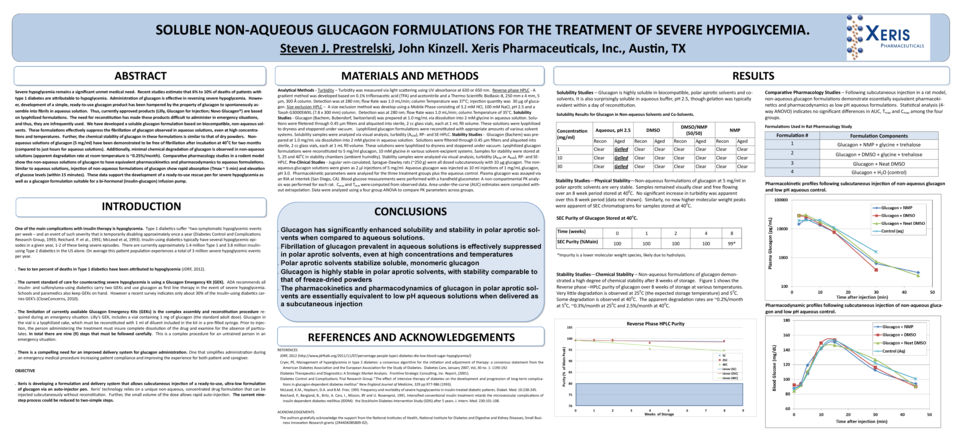
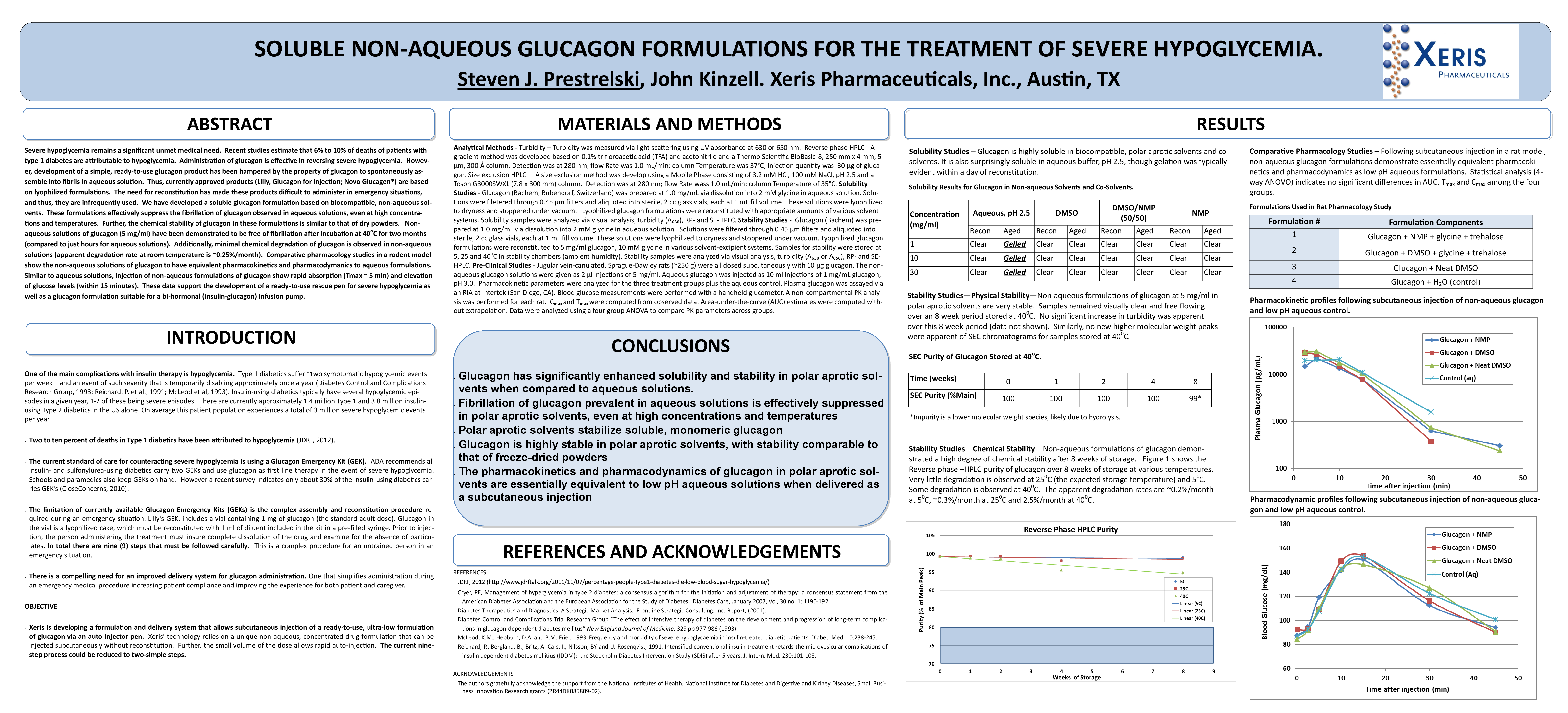
Severe hypoglycemia remains a significant unmet medical need. Recent studies estimate that 6% to 10% of deaths of patients with type 1 diabetes are attributable to hypoglycemia. Administration of glucagon is effective in reversing severe hypoglycemia. However, development of a simple, ready-to-use glucagon product has been hampered by the property of glucagon to spontaneously assemble into fibrils in aqueous solution. Thus, currently approved products (Lilly, Glucagon for Injection; Novo Glucagen®) are based on lyophilized formulations. The need for reconstitution has made these products difficult to administer in emergency situations, and thus, they are infrequently used. We have developed a soluble glucagon formulation based on biocompatible, non-aqueous solvents. These formulations effectively suppress the fibrillation of glucagon observed in aqueous solutions, even at high concentrations and temperatures. Further, the chemical stability of glucagon in these formulations is similar to that of dry powders. Nonaqueous solutions of glucagon (5 mg/ml) have been demonstrated to be free of fibrillation after incubation at 40oC for two months (compared to just hours for aqueous solutions). Additionally, minimal chemical degradation of glucagon is observed in non-aqueous solutions (apparent degradation rate at room temperature is ~0.25%/month). Comparative pharmacology studies in a rodent model show the non-aqueous solutions of glucagon to have equivalent pharmacokinetics and pharmacodymanics to aqueous formulations. Similar to aqueous solutions, injection of non-aqueous formulations of glucagon show rapid absorption (Tmax ~ 5 min) and elevation of glucose levels (within 15 minutes). These data support the development of a ready-to-use rescue pen for severe hypoglycemia as well as a glucagon formulation suitable for a bi-hormonal (insulin-glucagon) infusion pump.
Related articles