Abstract
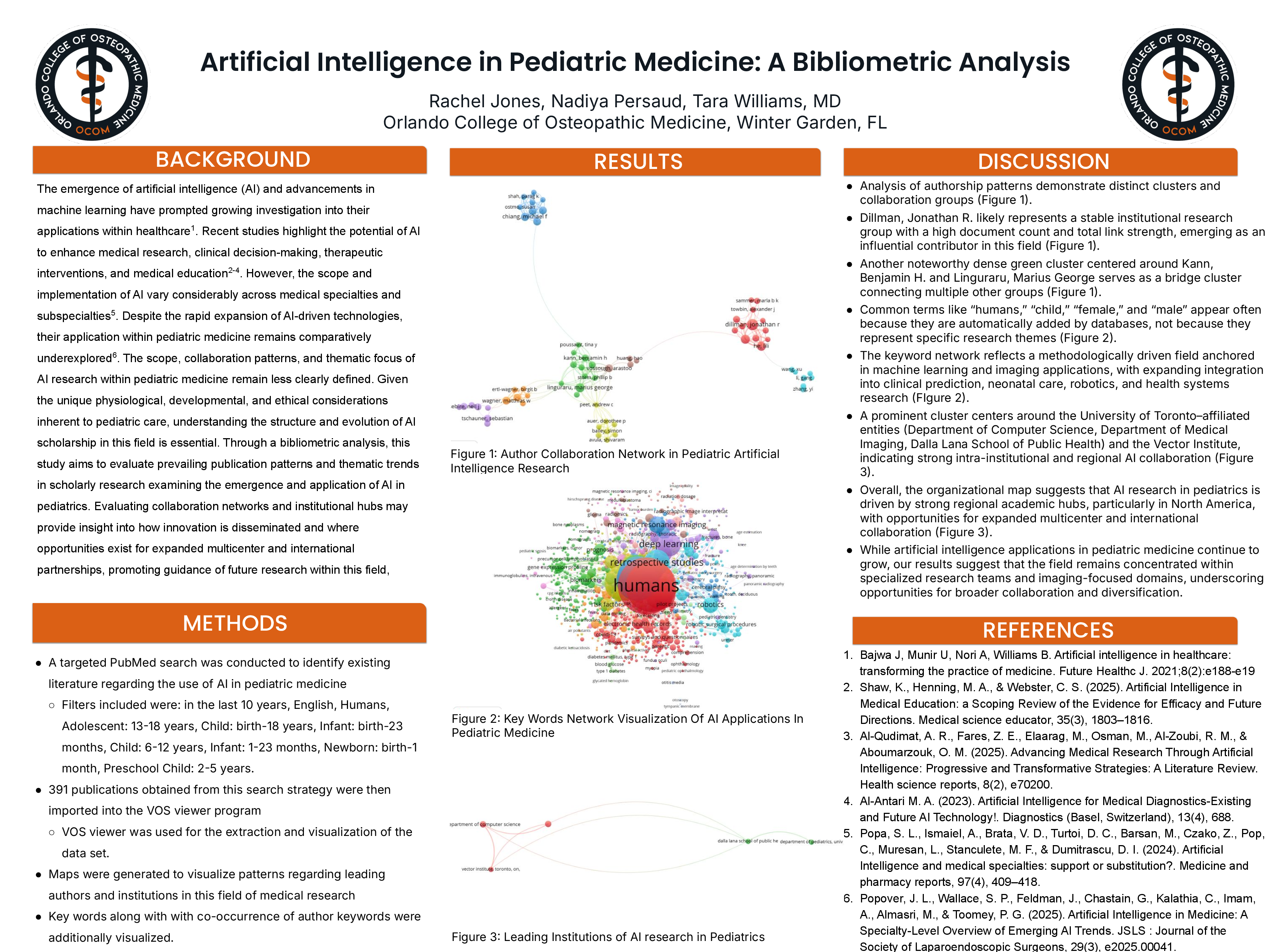
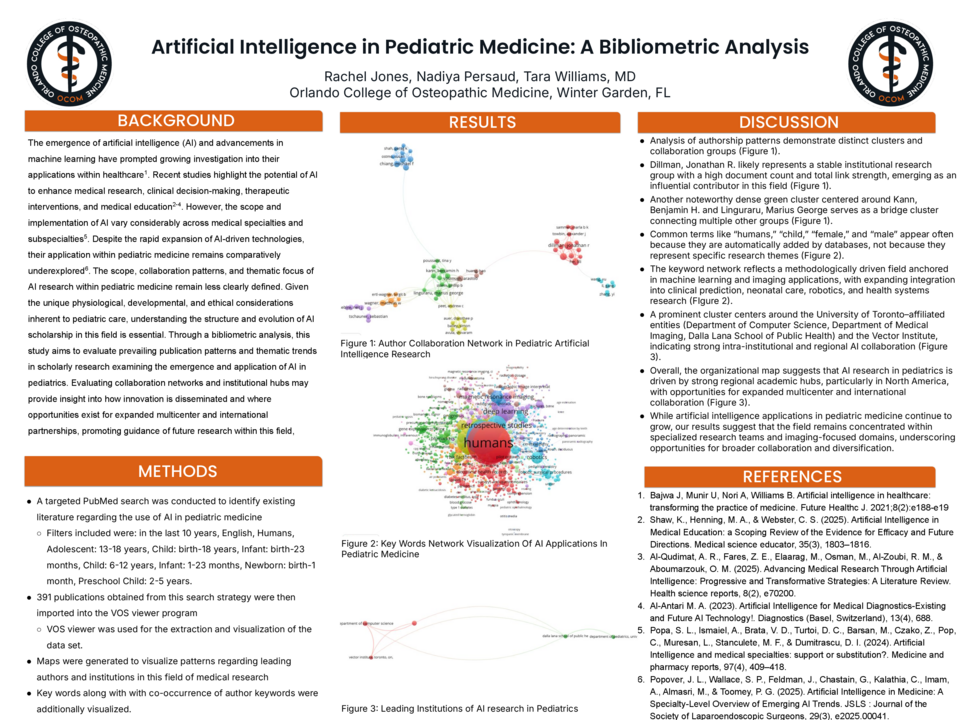
Introduction: The emergence of artificial intelligence (AI) and advancements in machine learning have prompted growing investigation into their applications within medicine. Recent studies highlight the potential of AI to enhance medical research, clinical decision-making, therapeutic interventions, and medical education. However, the scope and implementation of AI vary considerably across medical specialties and subspecialties. Despite the rapid expansion of AI-driven technologies, their application within pediatric medicine remains comparatively underexplored. This study aims to evaluate prevailing publication patterns and thematic trends in scholarly research examining the emergence and application of AI in pediatrics.
Methods: This bibliometric analysis evaluated 391 publications retrieved from the PubMed database which focused on the application of artificial intelligence in pediatrics. The dataset was subsequently imported into VOSviewer for network visualization and further analysis. Maps were generated based on institutional affiliations, co-authorship, keywords, and publication characteristics.
Results: Bibliometric mapping demonstrated that artificial intelligence research in pediatric medicine is increasing in volume, but remains distributed within discrete and specialized research clusters.The co-authorship network reveals several distinct collaboration groups rather than a single, highly integrated global network. Lastly, AI research in pediatrics appears to be driven by concentrated academic hubs with limited cross-institutional and international collaboration. Keyword analysis demonstrated a field centered on machine learning and imaging applications, with emerging integration into clinical prediction, neonatal care, robotics, and health systems research.
Conclusion: While AI scholarship in pediatrics is growing, collaboration remains concentrated within discrete institutional networks. Future research should thus prioritize greater collaboration and integration across institutions, which may improve innovation, enhance research impact, and promote more equitable clinical implementation of AI in pediatric medicine.