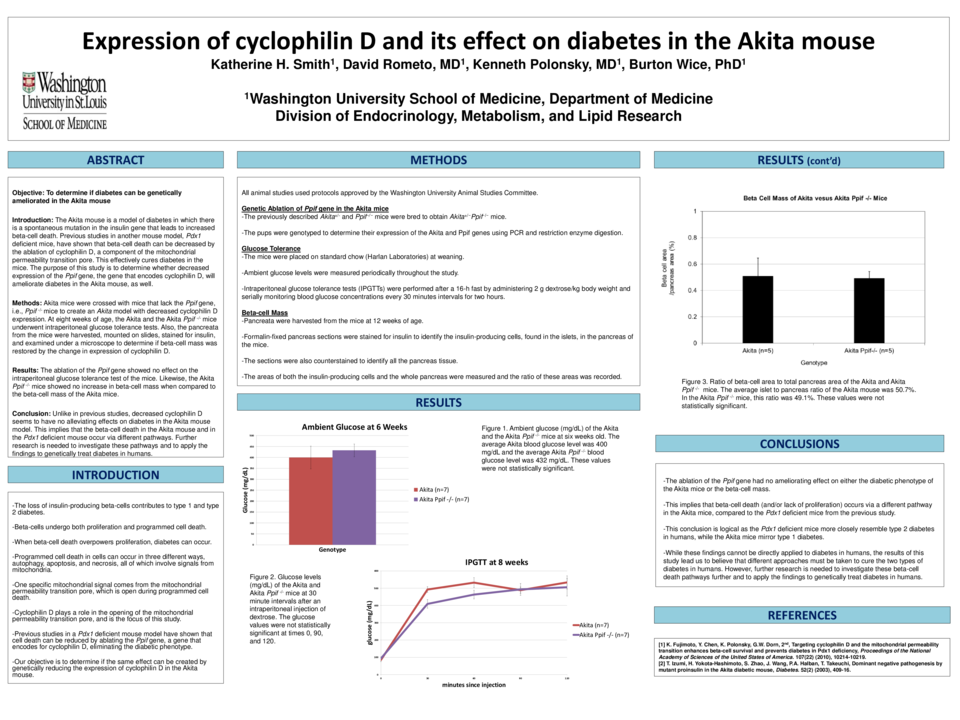
Expression of Cyclophilin D and its Effect on Diabetes in the Akita Mouse
Abstract
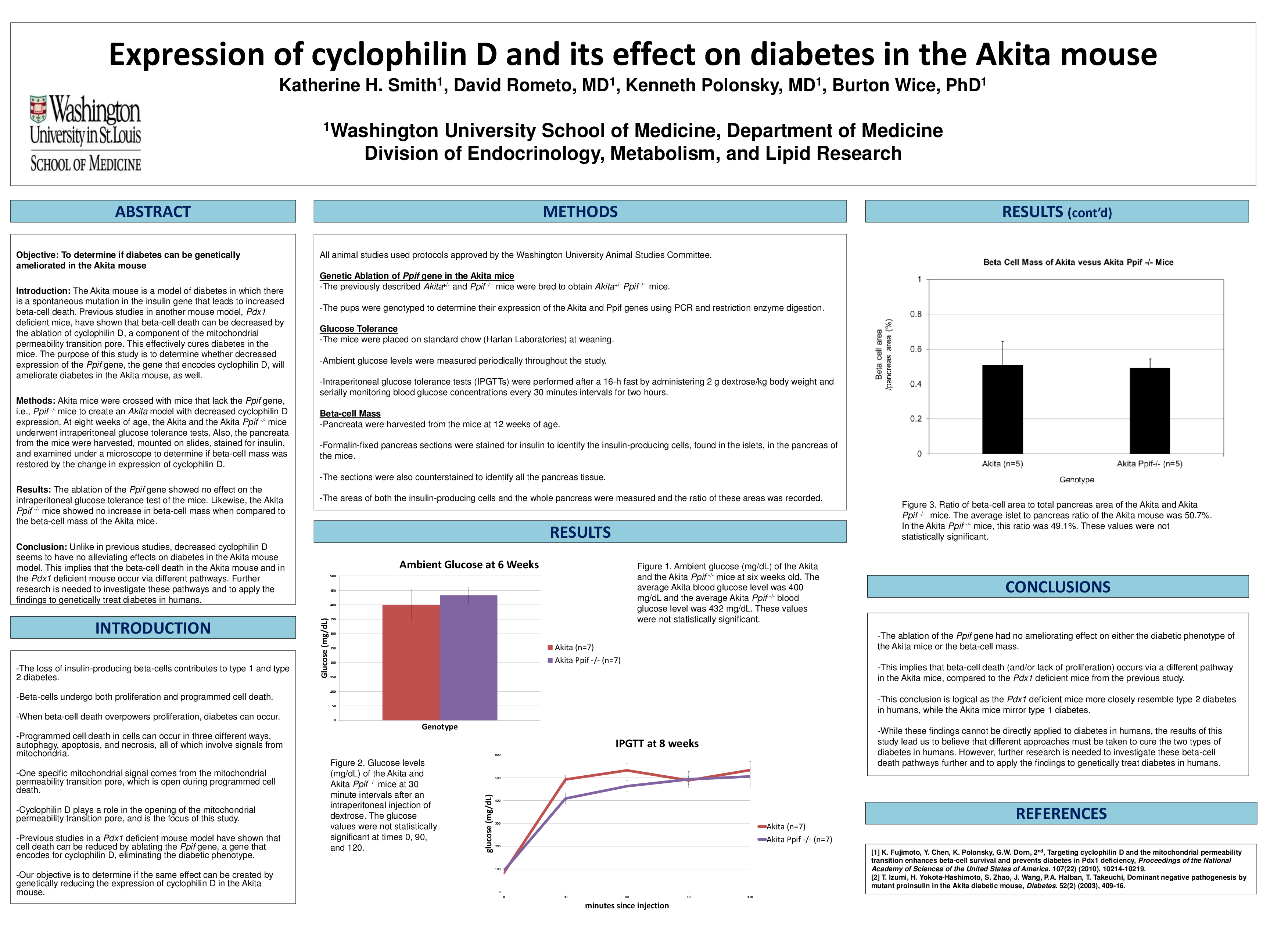
Introduction: The Akita mouse is a model of diabetes in which there is a spontaneous mutation in the insulin gene that leads to increased beta-cell death. Previous studies in another mouse model, Pdx1 deficient mice, have shown that beta-cell death can be decreased by the ablation of cyclophilin D, a component of the mitochondrial permeability transition pore. This effectively cures diabetes in the mice. The purpose of this study is to determine whether decreased expression of the Ppif gene, the gene that encodes cyclophilin D, will ameliorate diabetes in the Akita mouse, as well.
Methods: Akita mice were crossed with mice that lack the Ppif gene, i.e., Ppif -/- mice to create an Akita model with decreased cyclophilin D expression. At eight weeks of age, the Akita and the Akita Ppif -/- mice underwent intraperitoneal glucose tolerance tests. Also, the pancreata from the mice were harvested, mounted on slides, stained for insulin, and examined under a microscope to determine if beta-cell mass was restored by the change in expression of cyclophilin D.
Results: The ablation of the Ppif gene showed no effect on the intraperitoneal glucose tolerance test of the mice. Likewise, the Akita Ppif-/- mice showed no increase in beta-cell mass when compared to the beta-cell mass of the Akita mice.
Conclusion: Unlike in previous studies, decreased cyclophilin D seems to have no alleviating effects on diabetes in the Akita mouse model. This implies that the beta-cell death in the Akita mouse and in the Pdx1 deficient mouse occur via different pathways. Further research is needed to investigate these pathways and to apply the findings to genetically treat diabetes in humans.
Related articles