Abstract
Background:
Mucormycosis is a rare but serious fungal infection that typically affects immunocompromised individuals or those with uncontrolled diabetes, involving the sinuses, lungs, skin, and/or GI system. Presenting symptoms can be non-specific yet the clinical consequences can be severe, so it is critical to maintain a healthy degree of suspicion for invasive mucormycosis.
Case:
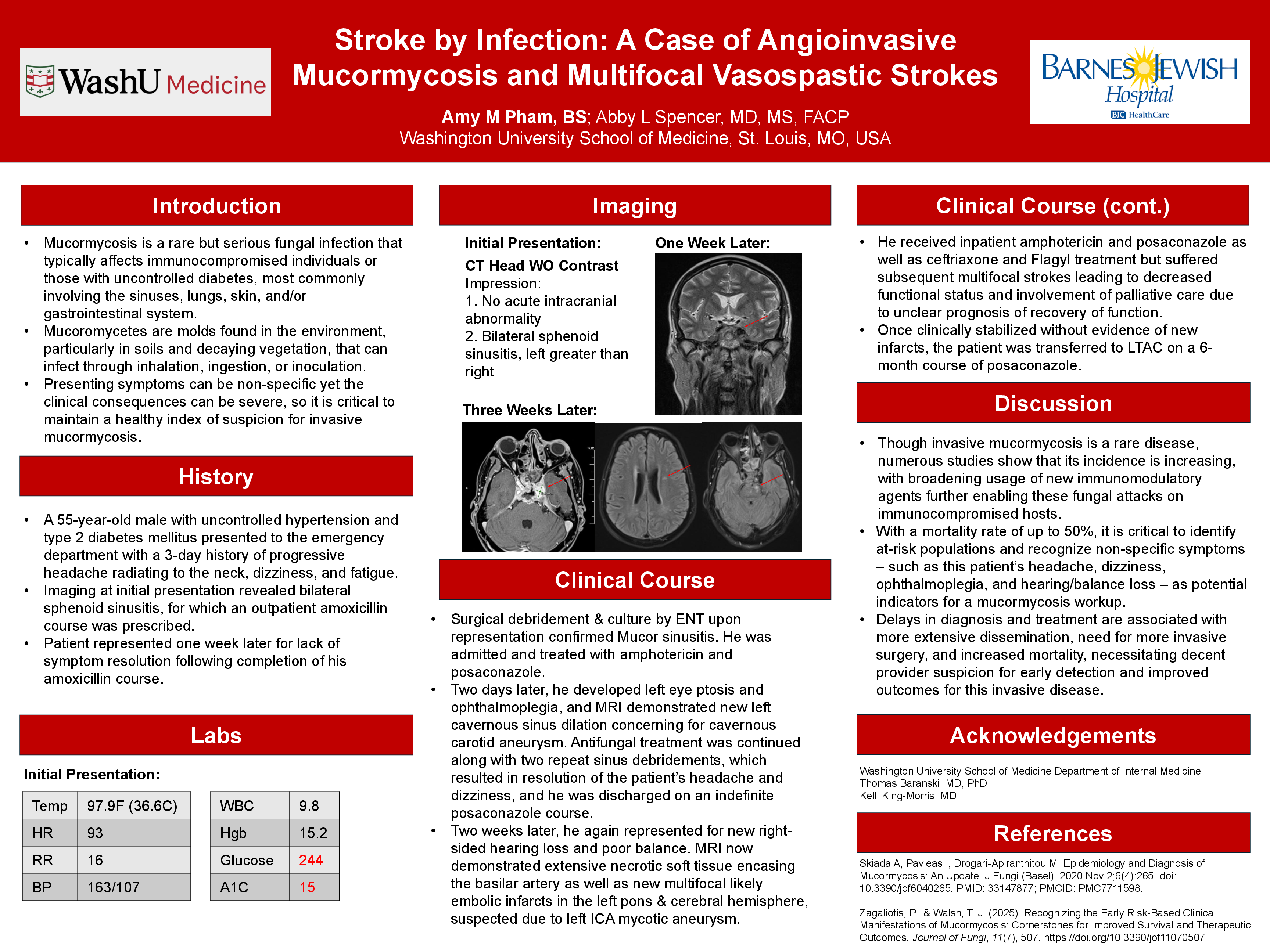
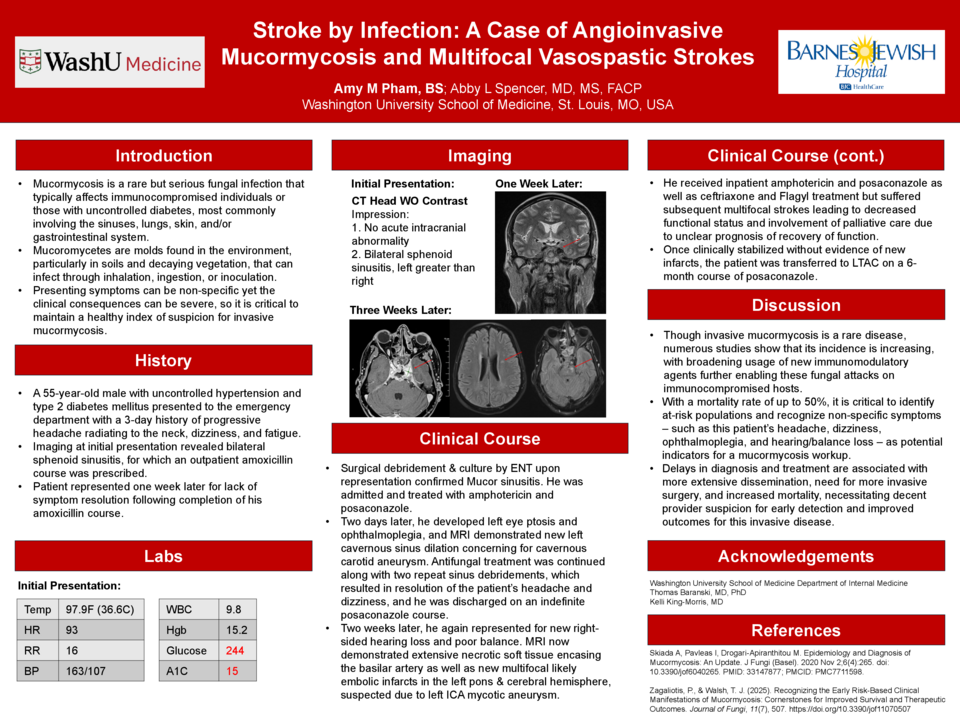
A 55-year-old male with uncontrolled hypertension and type 2 diabetes mellitus presented with a 3-day history of progressive headache, dizziness, and fatigue. The patient was afebrile with BP of 163/107, normal WBC, glucose 244, A1C 15. CT head revealed bilateral sphenoid sinusitis, for which amoxicillin was prescribed.
He represented one week later for lack of symptom resolution, and surgical debridement & culture confirmed Mucor sinusitis. He was admitted and treated with amphotericin and posaconazole. Two days later, he developed left eye ptosis and ophthalmoplegia, and MRI demonstrated new left cavernous sinus dilation concerning for cavernous carotid aneurysm. Antifungal treatment was continued along with repeat debridements.
Two weeks later, he again represented for new right-sided hearing loss and poor balance. MRI now demonstrated extensive necrotic soft tissue encasing the basilar artery as well as new multifocal likely embolic infarcts in the left pons & cerebral hemisphere, suspected due to left ICA mycotic aneurysm. He received extensive amphotericin and posaconazole as well as ceftriaxone and Flagyl treatment, but suffered subsequent multifocal strokes leading to decreasing functional status and involvement of Palliative Care. Once clinically stabilized with no evidence of further strokes, the patient was transferred to LTAC.
Discussion:
Though invasive mucormycosis is a rare disease, many studies show that its incidence is increasing. Mucoromycetes are commonly found in soil and decaying organic matter, but spore inhalation is rarely harmful in immunocompetent individuals. Broadening usage of new immunomodulatory agents are further leading to evolving epidemiology.
It is critical to recognize non-specific symptoms as possible indicators for a mucormycosis workup, with its mortality rate of up to 50%. This patient’s headache, dizziness, ophthalmoplegia, and hearing/balance loss exemplify the intracranial pressure or focal neurologic findings that can signify the infective sinusitis or its resultant vasospastic strokes. This case highlights the common symptoms that invasive mucormycosis can present with, necessitating a healthy degree of provider suspicion for this severe disease.
References:
Skiada A, Pavleas I, Drogari-Apiranthitou M. Epidemiology and Diagnosis of Mucormycosis: An Update. J Fungi (Basel). 2020 Nov 2;6(4):265. doi: 10.3390/jof6040265. PMID: 33147877; PMCID: PMC7711598.
Centers for Disease Control and Prevention. (n.d.). Data and statistics on mucormycosis. Centers for Disease Control and Prevention. https://www.cdc.gov/mucormycosis/data-research/index.html