Abstract
Introduction
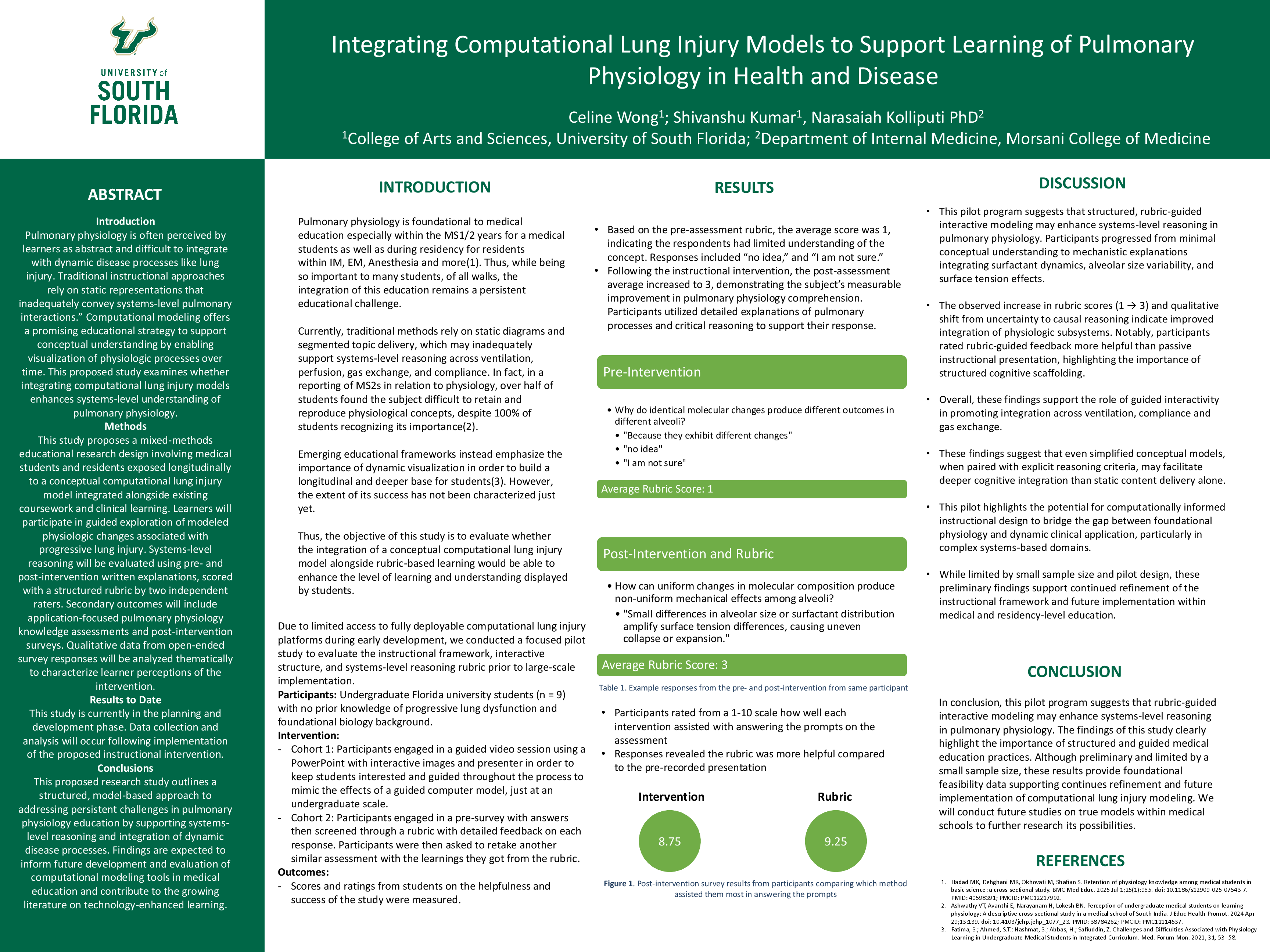
Pulmonary physiology is often perceived by learners as abstract and difficult to integrate with dynamic disease processes like lung injury. Traditional instructional approaches rely on static representations that inadequately convey systems-level pulmonary interactions.” Computational modeling offers a promising educational strategy to support conceptual understanding by enabling visualization of physiologic processes over time. This proposed study examines whether integrating computational lung injury models enhances systems-level understanding of pulmonary physiology.
Methods
This study proposes a mixed-methods educational research design involving medical students and residents exposed longitudinally to a conceptual computational lung injury model integrated alongside existing coursework and clinical learning. Learners will participate in guided exploration of modeled physiologic changes associated with progressive lung injury. Systems-level reasoning will be evaluated using pre- and post-intervention written explanations, scored with a structured rubric by two independent raters. Secondary outcomes will include application-focused pulmonary physiology knowledge assessments and post-intervention surveys. Qualitative data from open-ended survey responses will be analyzed thematically to characterize learner perceptions of the intervention.
Results to Date
This study is currently in the planning and development phase. Data collection and analysis will occur following implementation of the proposed instructional intervention.
Conclusions
This proposed research study outlines a structured, model-based approach to addressing persistent challenges in pulmonary physiology education by supporting systems-level reasoning and integration of dynamic disease processes. Findings are expected to inform future development and evaluation of computational modeling tools in medical education and contribute to the growing literature on technology-enhanced learning.