Abstract
Emergency Medicine residents participate in a variety of simulation cases in an immersive, high-fidelity environment. This particular module required performing an emergent ultrasound-guided pericardiocentesis in a decompensating patient with cardiac tamponade secondary to an aortic dissection.
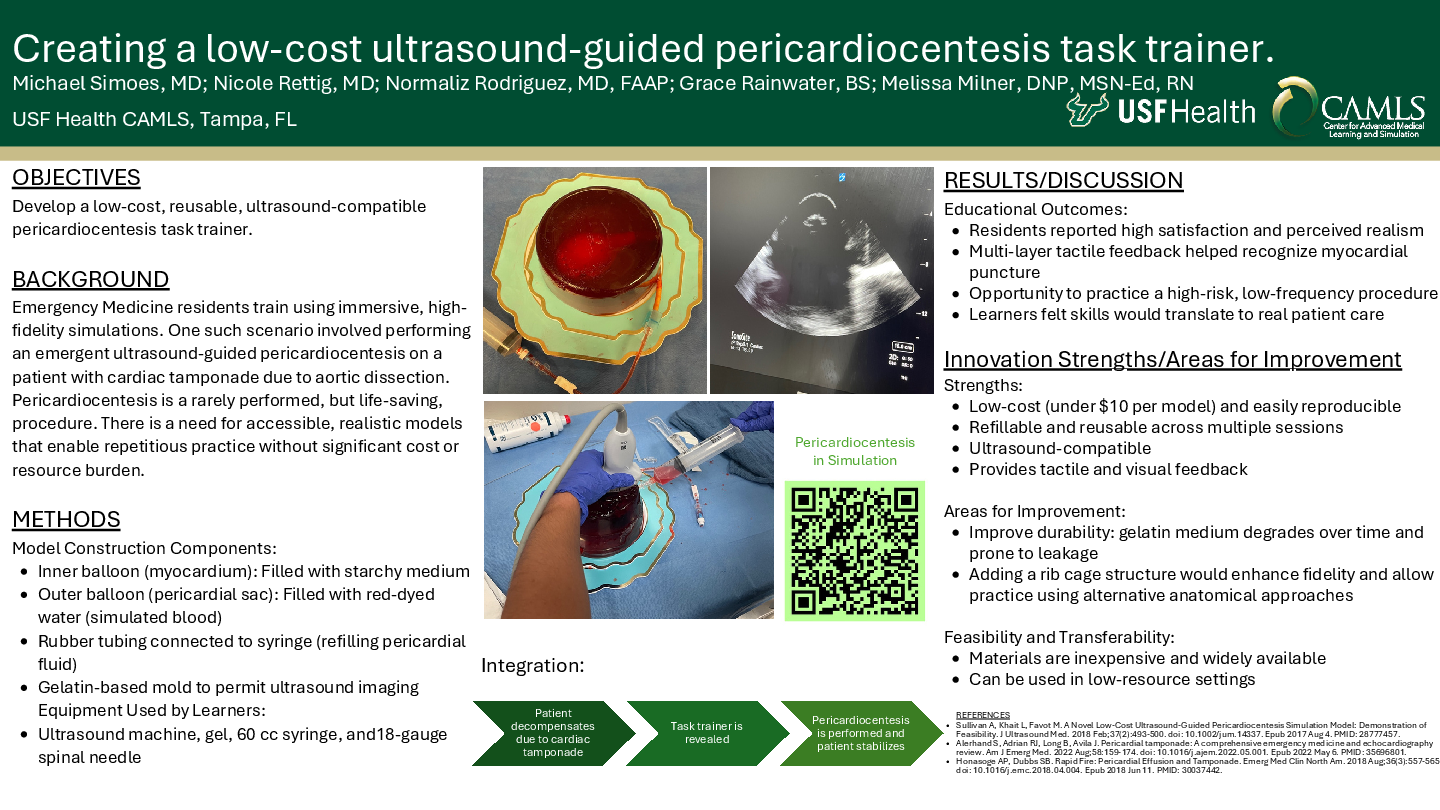
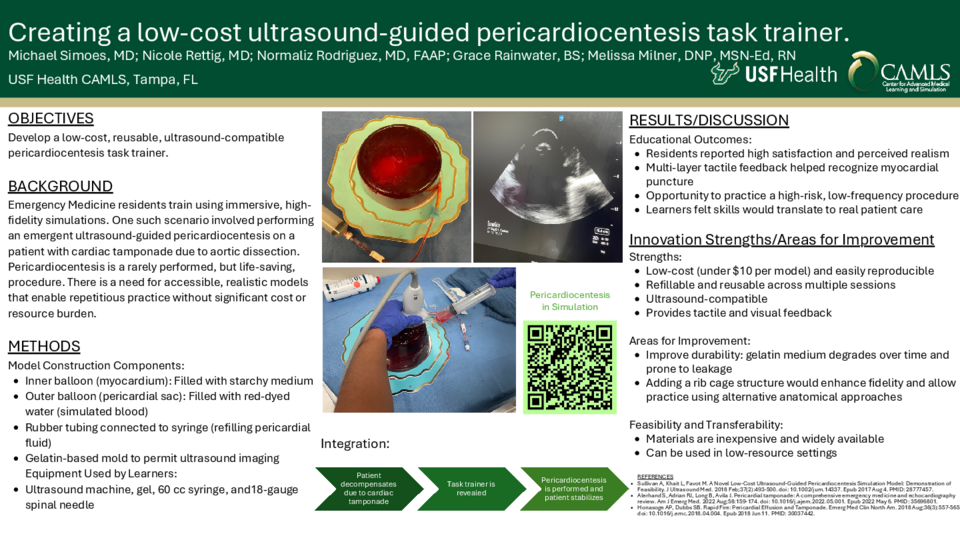
The pericardiocentesis task trainer was developed using multiple layers of balloons filled with separate media. The inner balloon (myocardium), which was filled with a starchy medium, was inserted into another balloon, which was filled with red-dyed water to simulate blood in the pericardial sac. Rubber tubing was inserted into this outer layer and connected to a syringe to allow for refilling of the pericardial fluid layer. Finally, the heart model was encased in a gelatin-based mold to allow for the use of ultrasound through this medium. For the procedure, residents were supplied with an ultrasound, gel, a 60cc syringe, and 18-gauge spinal needle.
During the debriefing session and evaluation surveys, residents gave positive feedback and appreciated the realism provided by having various media layers to provide feedback if the needle progressed into the myocardium. They found the opportunity to perform this procedure very helpful as this is a high-stakes, infrequent procedure, and they felt that this skill performed on this model will translate to a real patient encounter.
This is a low-cost, easily replicable model for practicing a pericardiocentesis and can be practiced over multiple sessions. Potential areas for improvement include making a more durable, long-lasting medium as the gelatin may leak fluid from multiple needle insertions, and the gelatin will degrade or become moldy after approximately two weeks. For increased fidelity, consider adding a ribcage structure to practice the procedure using different anatomical landmark approaches.
In addition, the required materials to create this model are low-cost, less than $10 to make, and easily attainable. The affordability and simplicity of materials make the innovation transferable across institutions, applicable in low-resource settings, and a valuable option to be used in medical education.