Treasure In The Attic: Drug Repurposing For Cryptosporidium Using High Throughput Techniques
Abstract
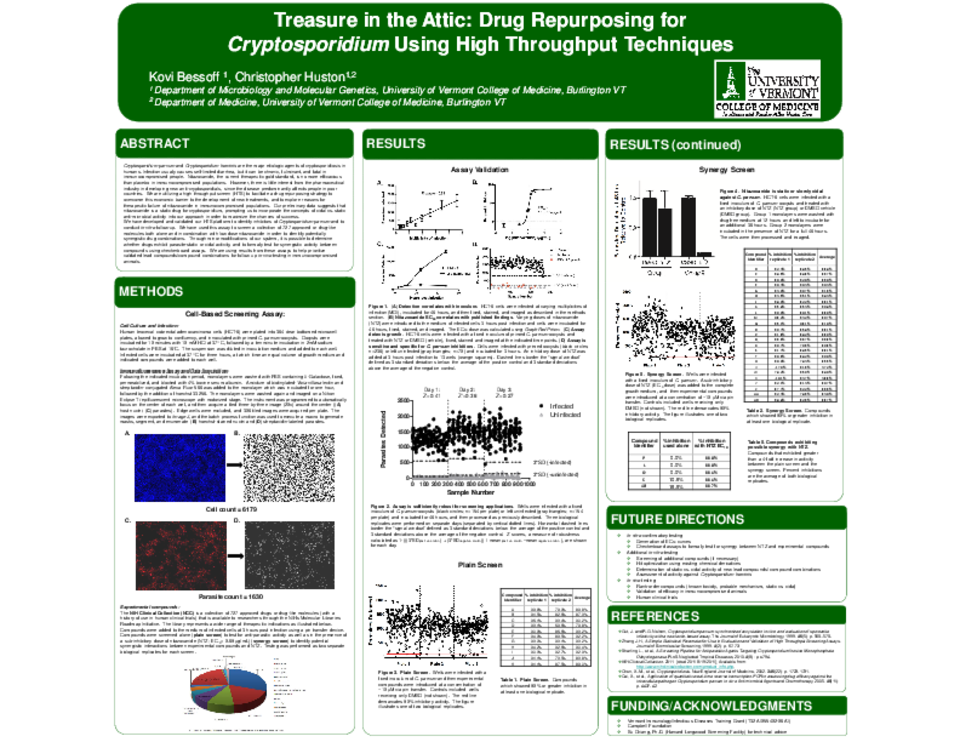
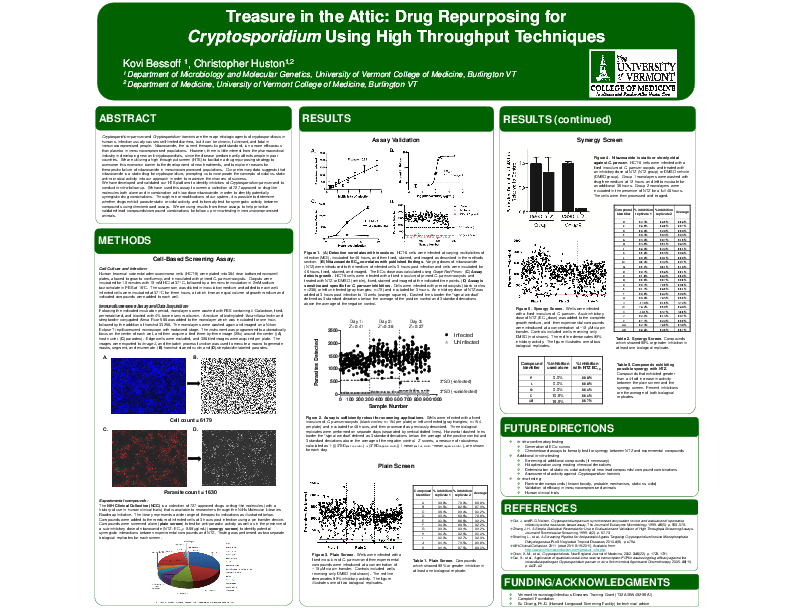
Cryptosporidium parvum and Cryptosporidium hominis are the major etiologic agents of cryptosporidiosis in humans. Infection usually causes self-limited diarrhea, but it can be chronic, fulminant, and fatal in immunocompromised people. Nitazoxanide, the current therapeutic gold standard, is no more efficacious than placebo in immunocompromised populations. However, there is little interest from the pharmaceutical industry in developing new anti-cryptosporidials, since the disease predominantly affects people in poor countries. We are utilizing a high throughput screen (HTS) to facilitate a drug repurposing strategy to overcome this economic barrier to the development of new treatments, and to explore reasons for therapeutic failure of nitazoxanide in immunocompromised populations. Our preliminary data suggests that nitazoxanide is a static drug for cryptosporidium, prompting us to incorporate the concepts of cidal vs. static anti-microbial activity into our approach in order to maximize the chances of success.
We have developed and validated our HTS platform to identify inhibitors of Cryptosporidium parvum and to conduct in vitro follow-up. We have used this assay to screen a collection of 726 approved or drug-like molecules both alone and in combination with low dose nitazoxanide in order to identify potentially synergistic drug combinations. Through minor modifications of our system, it is possible to determine whether drugs exhibit parasite-static or cidal activity, and to formally test for synergistic activity between compounds using checkerboard assays. We are using results from these assays to help prioritize validated lead compounds/compound combinations for follow up in vivo testing in immunocompromised animals.
Related articles