Abstract
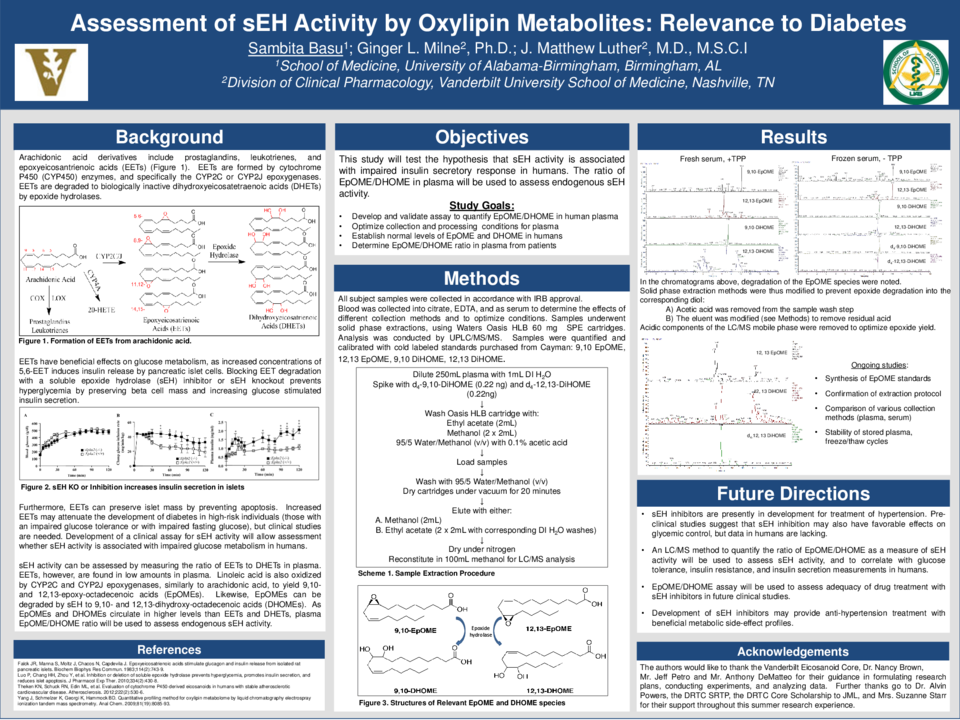
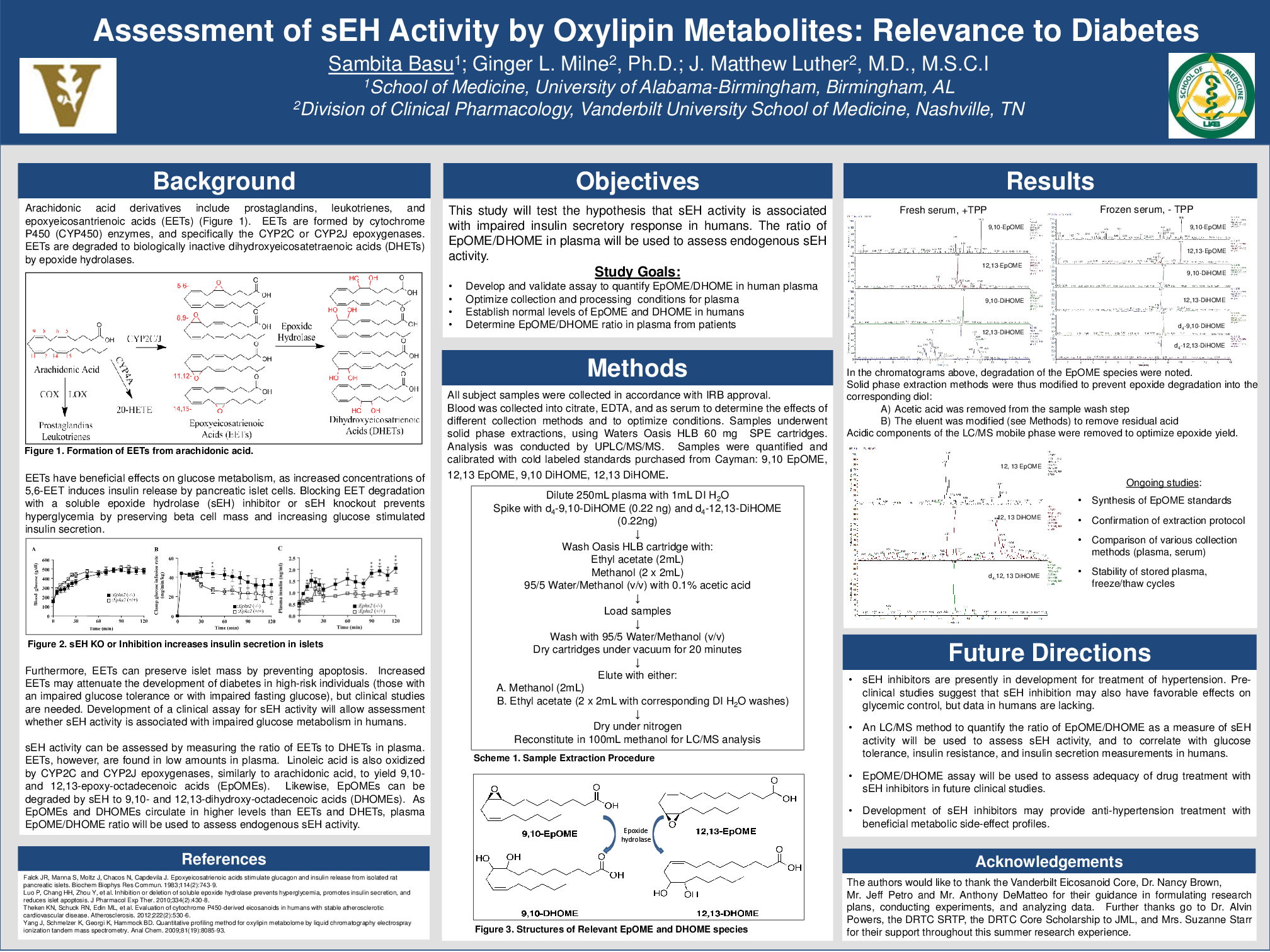
Arachidonic acid derivatives include prostaglandins, leukotrienes, and epoxyeicosantrienoic acids (EETs). EETs are formed by cytochrome P450 (CYP450) enzymes, specifically the CYP2C or CYP2J epoxygenases, and are degraded to biologically inactive dihydroxyeicosatetraenoic acids (DHETs) by epoxide hydrolases. EETs have beneficial effects on glucose metabolism in vitro and in vivo. Increased concentrations of 5,6-EET induces insulin release by isolated pancreatic islet cells. EETs also prevent hyperglycemia in vivo by preserving islet mass through prevention of apoptosis. Blocking EET degradation with a soluble epoxide hydrolase (sEH) inhibitor or sEH knockout increases glucose-stimulated insulin secretion. Therefore, EETs may attenuate the development of diabetes in high-risk individuals (those with an impaired glucose tolerance or with impaired fasting glucose). sEH activity can be assessed by measuring the ratio of EETs to DHETs in plasma. EETs, however, are relatively unstable and found in low amounts in plasma. CYP2C and CYP2J epoxygenases oxidize linoleic acid, yielding 9,10- and 12,13-epoxy-octadecenoic acids (EpOMEs), which sEH also degrades to dihydroxy-octadecenoic acids (DHOMEs). As EpOMEs and DHOMEs circulate in higher levels than EETs and DHETs, plasma EpOME/DHOME ratio has provided a more reliable measure of sEH activity in vivo. This study tested the hypothesis that sEH activity is associated with impaired insulin secretory response in humans, using the ratio of EpOME/DHOME in plasma to assess endogenous sEH activity. Development and validation of the assay to quantify EpOME/DHOME in human plasma was the primary focus of this research experience. Optimization of collection and processing conditions for plasma was performed in order to assess sEH activity across studies. Blood was collected into citrate, EDTA, and as serum and underwent solid phase extractions using Waters Oasis HLB 60 mg SPE cartridges. Analysis was conducted by UPLC/MS/MS by the Vanderbilt Eicosanoid Core. Samples were quantified and calibrated with deuterated standards (Cayman) for 9,10 EpOME, 12,13 EpOME, 9,10 DiHOME, 12,13 DiHOME. EpOME degradation into their corresponding DHOME species was noted using previously published methods; modification of the protocol by removal of acidic components in both the solid phase extraction and UPLC/MS/MS methods improved epoxide yield. Ongoing studies include synthesis of EpOME standards, optimization of the extraction protocol, optimization of various collection methods (plasma, serum), and determining the stability of stored plasma (freeze/thaw cycles). sEH inhibitors are presently in development for treatment of hypertension, and may provide additional beneficial metabolic side-effect profiles, including glycemic control. This LC/MS method to quantify the ratio of EpOME/DHOME as a measure of sEH activity will be used to assess sEH activity, and to correlate with glucose tolerance, insulin resistance, and insulin secretion measurements in humans.