Abstract
A Comprehensive Analysis: Incentive-Based Prenatal Smoking Cessation
The BABY & ME – Tobacco Free Program
Authors: Christina Ward1, BS, OMS-IV; Hannah Canil2, BS, OMS-IV; Debra Dougher2, HQUIP Director
Institutional Affiliations: Philadelphia College of Osteopathic Medicine; Healthcare Quality Improvement Platform
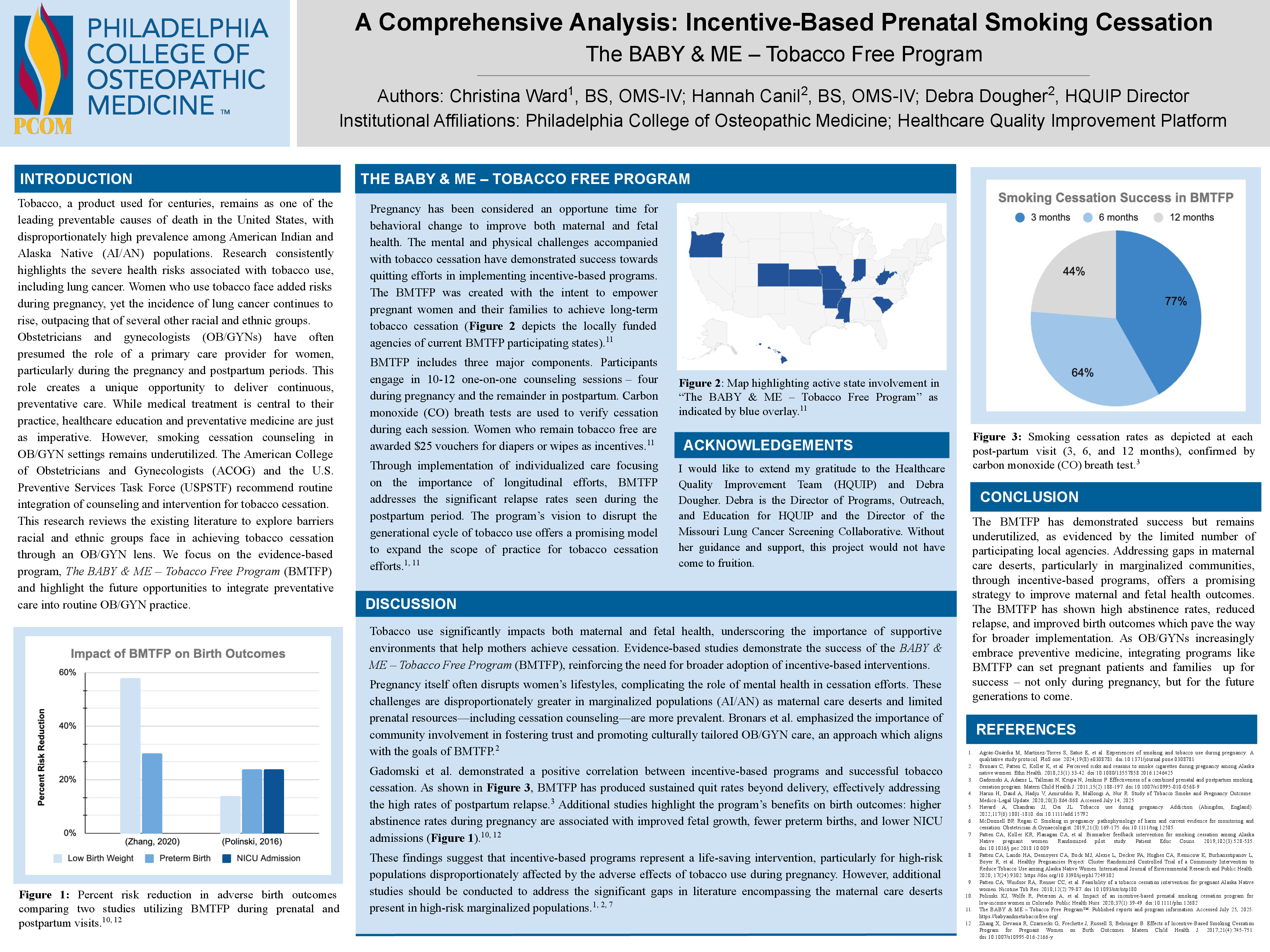
Introduction: Pregnancy provides a critical window for behavioral change, making it an ideal time to address tobacco use which remains as one of the leading preventable causes of death in the United States with a disproportionately high prevalence among marginalized populations. Obstetricians and gynecologists (OB/GYNs) serve a unique role in delivering continuous, preventive care, but tobacco cessation counseling is often underutilized. The BABY & ME –Tobacco Free Program (BMTFP) offers an opportunity to address this gap in preventative care through an incentive-based program. BMTFP reduces relapse rates and offers a promising model to break the generational cycle of tobacco use improving both maternal and fetal healthcare outcomes.
Methods: We conducted a comprehensive literature review focusing on the evidence-based The BABY & ME – Tobacco Free Program (BMTFP) to explore the barriers which racial and ethnic groups face in achieving tobacco cessation through an OB/GYN lens. Our analysis synthesized recent findings utilizing unbiased, high-quality resources.
Results: Incentive-based programs like BMTFP have demonstrated sustained quit rates, reduced postpartum relapse, and improved pregnancy outcomes—including fewer growth-restricted neonates, NICU admissions, and preterm births. Community-based, culturally tailored approaches further enhance effectiveness. Together, these findings highlight the potential of incentive-based programs as a life-saving intervention in OB/GYN care.
Conclusion: BMTFP is effective but underutilized, with limited reach in maternal care deserts. Expanding on such incentive-based tobacco cessation programs have the ability to strengthen preventive care in OB/GYN practice. Broader adoption of BMTFP has the potential to benefit mothers, infants, and future generations.