Abstract
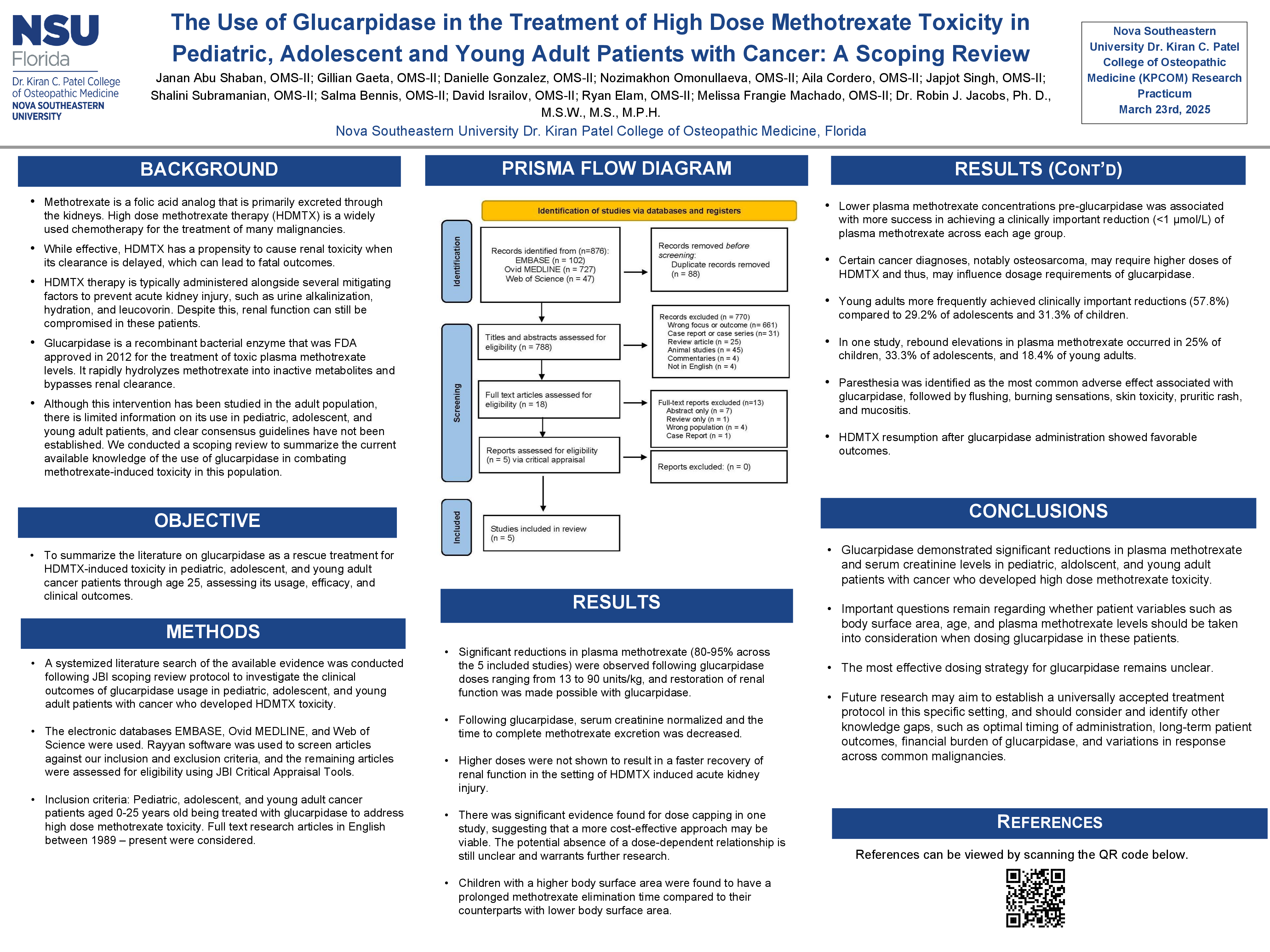
Background: High-dose methotrexate (HDMTX) is the standard treatment for pediatric and young adult cancers but increases the risk of renal dysfunction and MTX toxicity. Glucarpidase rapidly lowers MTX levels and supports renal recovery, making it an effective intervention.
Objective: To review the literature on glucarpidase as a rescue treatment for HDMTX-induced toxicity in pediatric, adolescent, and young adult cancer patients (ages 0-25), assessing its usage, efficacy, and clinical outcomes.
Methods: This scoping review followed PRISMA guidelines, searching EMBASE, Ovid MEDLINE, and Web of Science using key terms like “Pediatrics,” “Childhood cancer,” “Young Adults,” and “Carboxypeptidase.” Of 877 citations, 89 duplicates were removed, and 788 were screened by 10 reviewers in Rayyan. Eligible studies were peer-reviewed, full-text research, from 1989–2024 in English on patients aged 0–25 receiving HDMTX for cancer with glucarpidase rescue. Exclusions included patients over 25, non-cancer cases, non-HDMTX treatments, reviews, editorials, case reports, and grey literature. After screening, 18 articles remained, with 5 selected for analysis.
Results: Glucarpidase effectively reduced plasma MTX levels by 80–95% across 5 studies (Christensen, 2012; Janeway, 2023). One study found that higher glucarpidase doses did not increase renal recovery rate in HDMTX-induced acute kidney injury (Scott, 2015). While most patients experienced renal function restoration, rebound MTX elevation occurred in 25% of children, 33.3% of adolescents, and 18.4% of young adults (Christensen, 2012; Janeway, 2023). The most commonly reported adverse effect was paresthesias (Janeway, 2023). 3 of the 5 studies examined the feasibility of resuming HDMTX following glucarpidase administration, demonstrating successful renal recovery and treatment continuation without further toxicity (Christensen, 2012; Svahn, 2016; Vila, 2023). Dose-capping for cost-effectiveness and genetic polymorphisms require further investigation (Scott, 2015; Vila, 2023).
Conclusion: The studies reviewed consistently demonstrate rapid and significant reductions in plasma MTX concentrations, facilitating renal recovery and safe HDMTX resumption. Further research will enhance treatment protocols and improve outcomes for this patient population.