Abstract
Background
It has been observed that patients diagnosed with cardiovascular disease (CVD) often suffer from high levels of stress. Managing stress levels is crucial for reducing the risk of cardiovascular disease. Music interventions can act as an effective tool to alleviate their stress levels. This study explores the effectiveness of music interventions in reducing stress levels among CVD patients in India.
Methods
A group of CVD patients were selected for the study from Ashirwad Hospital in India. The study involved interviewing twenty patients using questions developed based on the transactional model of stress and coping, to identify their stressors and their coping mechanisms. Additionally, guidelines for music therapy practice were followed to explore their music preferences and perceptions. Interview transcripts were recorded, and patients were surveyed every two weeks about how their preferred music affects their stress levels.
Results
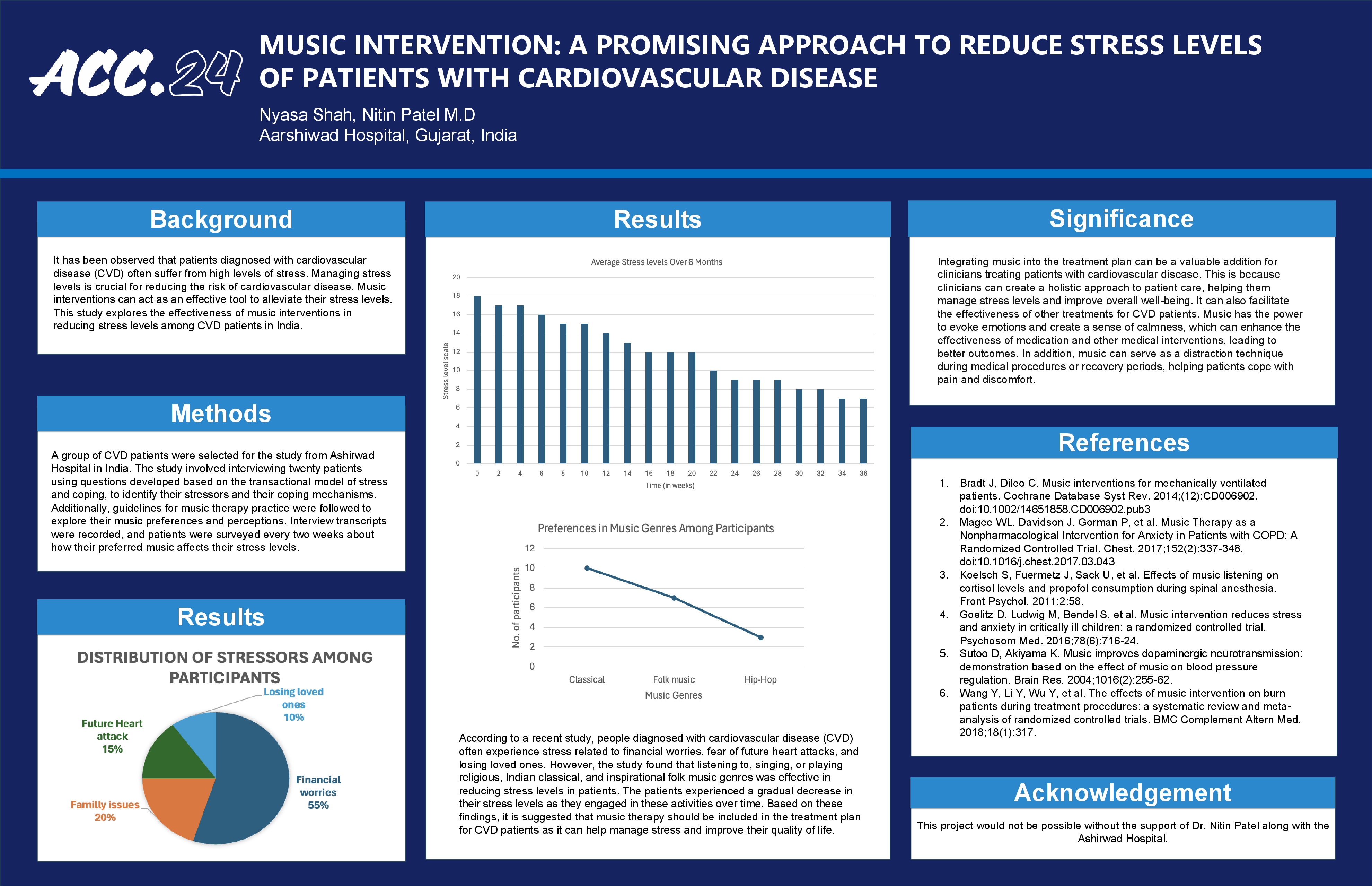
According to a recent study, people diagnosed with cardiovascular disease (CVD) often experience stress related to financial worries, fear of future heart attacks, and losing loved ones. However, the study found that listening to, singing, or playing religious, Indian classical, and inspirational folk music genres was effective in reducing stress levels in patients. The patients experienced a gradual decrease in their stress levels as they engaged in these activities over time. Based on these findings, it is suggested that music therapy should be included in the treatment plan for CVD patients as it can help manage stress and improve their quality of life.
Conclusion
Integrating music into the treatment plan can be a valuable addition for clinicians treating patients with cardiovascular disease. This is because clinicians can create a holistic approach to patient care, helping them manage stress levels and improve overall well-being. It can also facilitate the effectiveness of other treatments for CVD patients. Music has the power to evoke emotions and create a sense of calmness, which can enhance the effectiveness of medication and other medical interventions, leading to better outcomes. In addition, music can serve as a distraction technique during medical procedures or recovery periods, helping patients cope with pain and discomfort.