Abstract
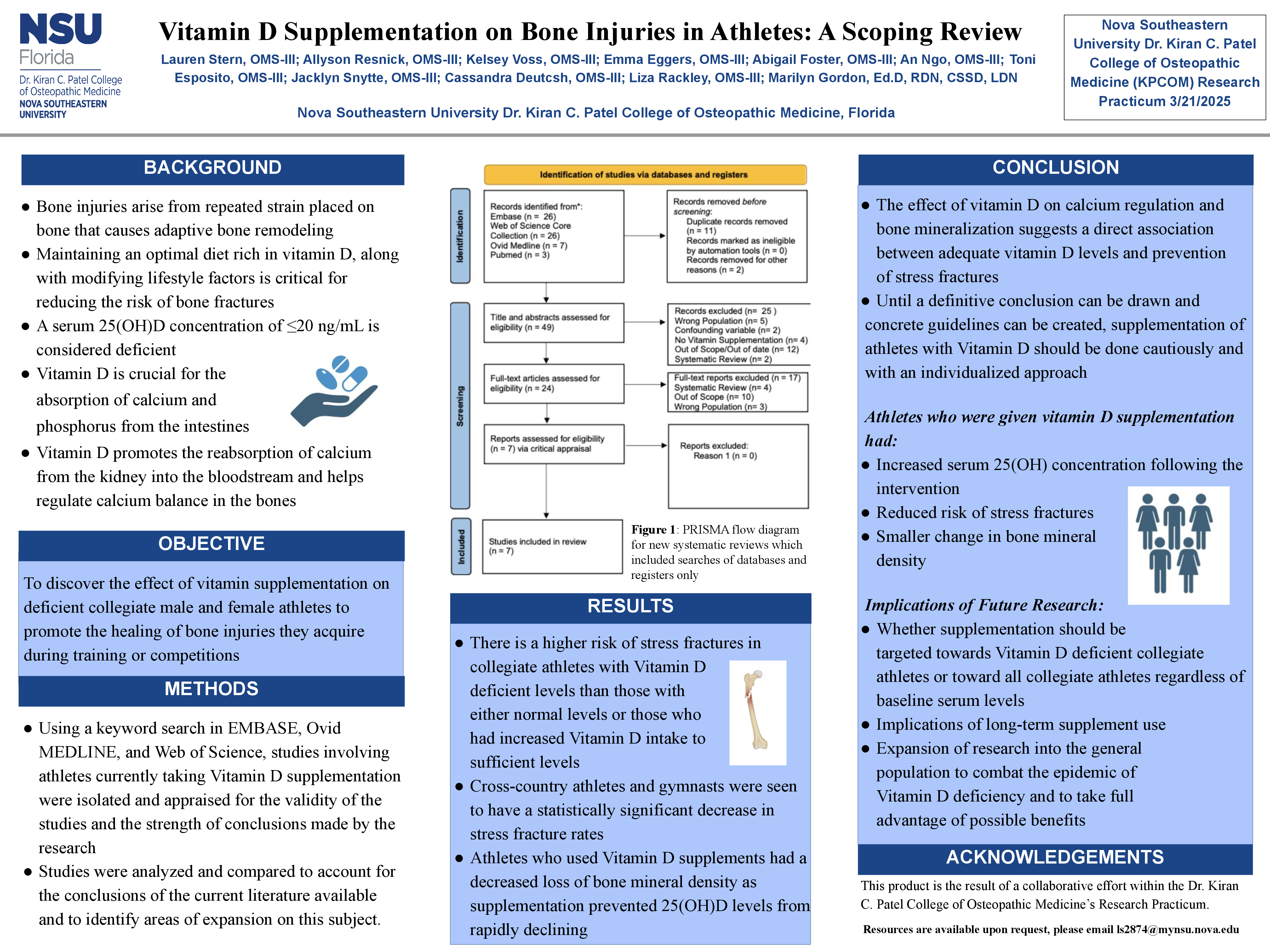
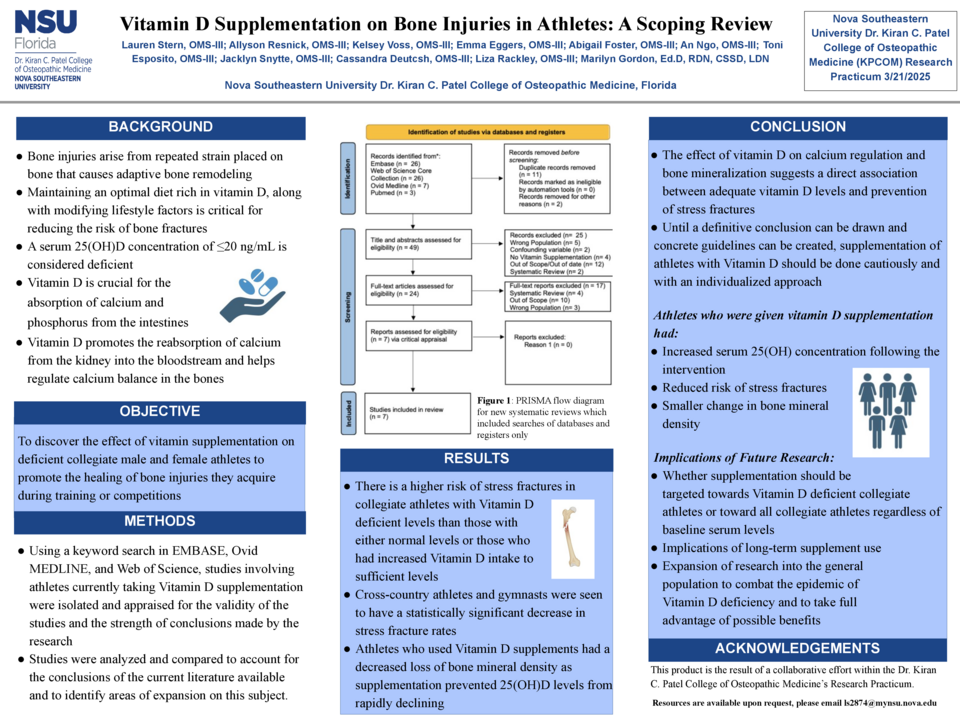
Athletes have an increased risk for bone injuries, mainly stress fractures, due to intensive training regimens. While these injuries can be associated with long and painful recovery times, they have been shown to be supported by supplementation of 25-hydroxyvitamin-D (vitamin D). Vitamin D has been shown to regulate calcium levels, which is associated with the promotion and maintenance of healthy bones, and could play a role in healthy bone remodeling. The objective of this scoping review is to gain insight into the effects of vitamin D supplementation on bone recovery in collegiate male and female, especially among athletes who have suffered stress fractures during training or competition. Using a keyword search in EMBASE, Ovid MEDLINE, and Web of Science, studies involving athletes currently taking Vitamin D supplementation were isolated and assessed for the validity and the strength of conclusions. The studies were analyzed and compared, taking into account the conclusions within the currently available literature and to identify areas of future study. Results revealed a higher risk of stress fractures among collegiate athletes with Vitamin D deficient levels as compared with those with either normal levels or those who had increased Vitamin D intake to sufficient levels. Amongst high-risk sports, such as basketball, cross country, and swimming, cross-country athletes experienced a statistically significant decrease in stress fracture rates following Vitamin D supplementation compared to athletes with deficient vitamin levels. In addition, athletes who used Vitamin D supplementation during their training season experienced decreased loss of bone mineral density, likely attributable to the prevention of vitamin D levels from rapidly declining. This scoping review highlighted the benefits of vitamin D supplementation among collegiate male and female athletes, especially those who have suffered stress fractures during training or competition. Based on these findings, further investigation into whether supplementation should be targeted towards Vitamin D deficient collegiate athletes or toward all collegiate athletes regardless of baseline serum levels as well as a need to consider the implications of long-term supplement use is warranted.