Abstract
Cancer Risks Among Firefighters: A Systematic Review
Introduction
Firefighters are routinely exposed to carcinogens such as polycyclic aromatic hydrocarbons (PAHs), benzene, and asbestos during fire suppression, overhaul operations, and even routine station activities. Numerous epidemiological studies have documented an increased cancer incidence in this population compared to the general public. This systematic review compiles current evidence on cancer risks among firefighters, identifying the most frequently reported malignancies, key trends, and areas requiring further investigation.
Methods
A systematic literature search was conducted in PubMed, using Medical Subject Headings (MeSH) terms related to “firefighters” and “cancer.” Studies published before November 2024 were screened based on predefined inclusion criteria. Eligible studies examined career, volunteer, or military firefighters and assessed occupational exposure in relation to cancer risk, reporting incidence, mortality, or key risk factors. After screening, 71 studies met the inclusion criteria. Findings were categorized by cancer type to evaluate trends and assess consistency across studies.
Results
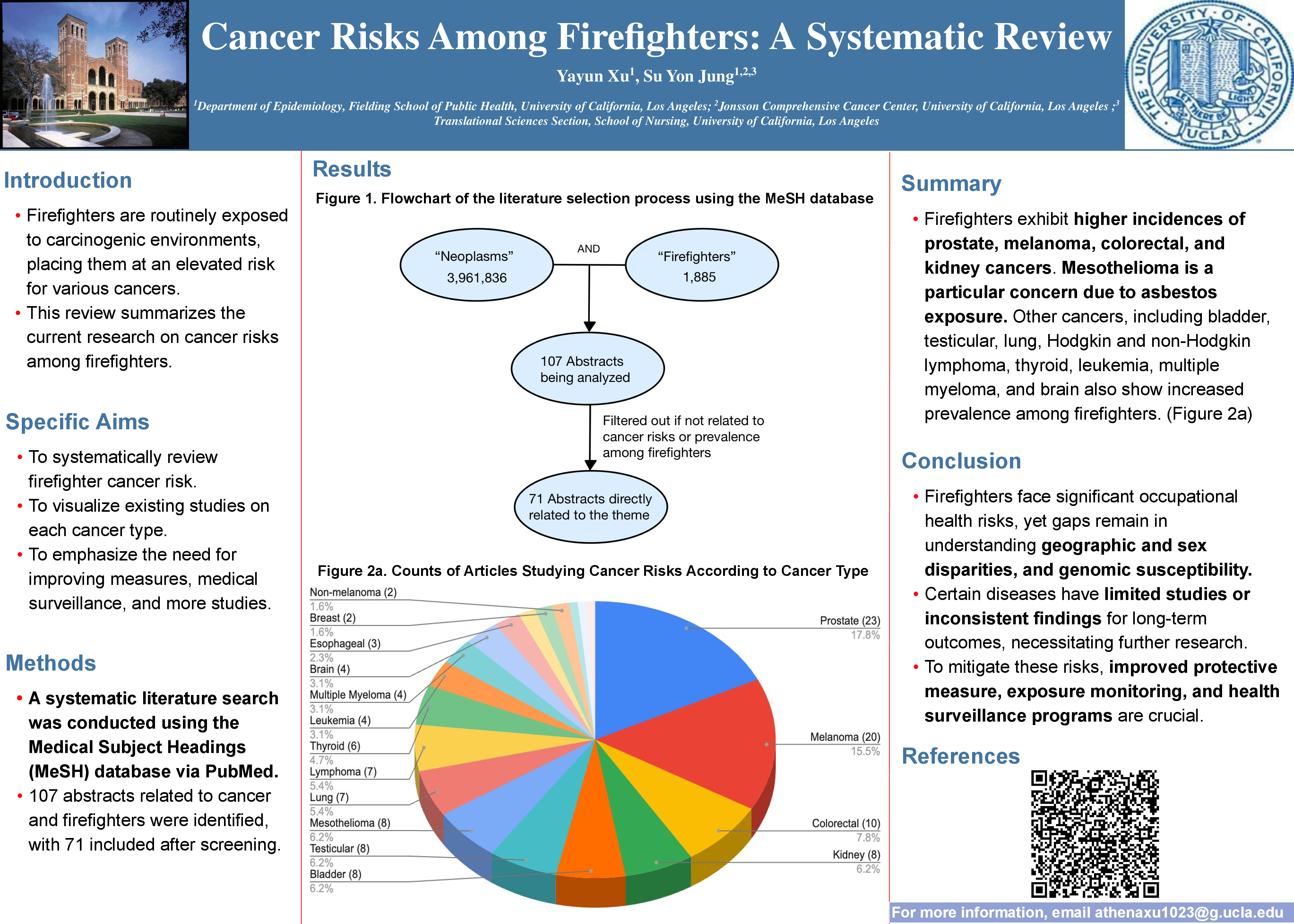
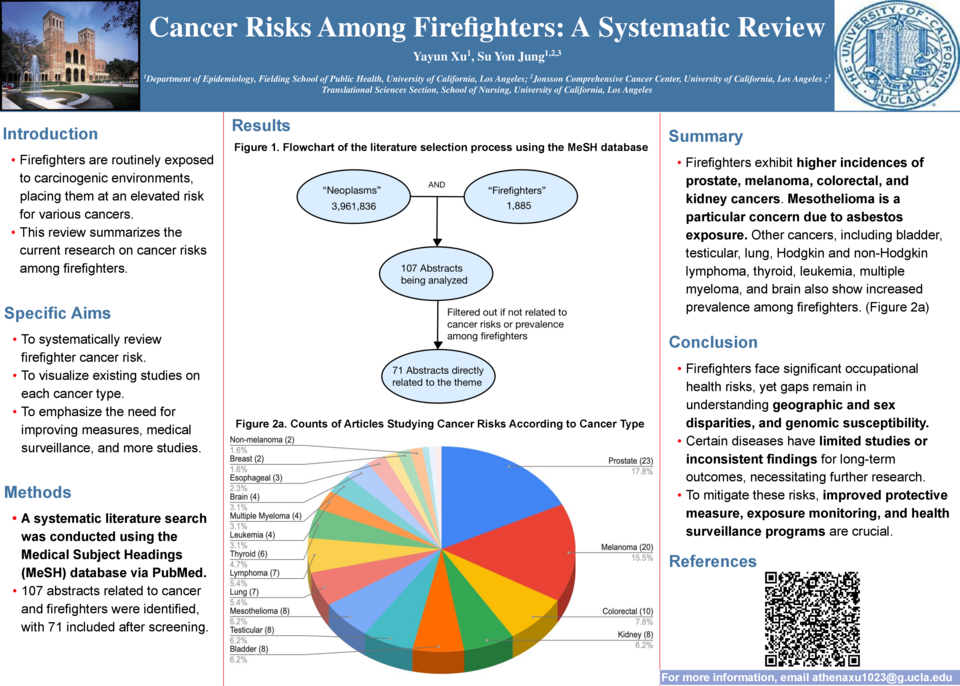
Prostate cancer was the most frequently reported, with 23 studies identifying an increased risk, ranging from 1.3 to 2.5 times higher than in the general population. Melanoma was the second most frequently reported, with 20 studies identifying an increased risk.
Colorectal, kidney, bladder, testicular, and thyroid cancers were also associated with increased risk. Mesothelioma, strongly associated with asbestos exposure, was highlighted in 8 studies, showing a higher incidence among firefighters.
Hematologic cancers, including leukemia, lymphoma, and multiple myeloma, were reported in several studies, with relative risk estimates ranging from 1.4 to 2.0 times higher than in non-firefighters.
Lung cancer findings were inconsistent; some studies identified an increased risk, while others found no significant difference or even lower incidence.
Breast cancer was mentioned in two studies, likely due to the male-dominated nature of the profession, leading to a limited sample size for female firefighters.
Conclusions
Firefighters face a clear occupational cancer burden, with elevated risks across multiple malignancies. Implementing preventive strategies such as routine health screenings, decontamination protocols, and proper use of personal protective equipment (PPE) may help reduce these risks. Long-term cancer surveillance and exposure tracking are essential for strengthening risk assessment and prevention efforts.
Future research should examine gender disparities and genetic susceptibility, while biological and epigenetic studies can provide deeper insights into the mechanisms driving increased cancer risks. Advancing these efforts will be critical for developing targeted interventions to protect firefighter health.