Abstract
Introduction and Objective
Pregnancy-related back/pelvic pain, hemodynamic changes, physiological function, as well as hormonal imbalances are common conditions that can impact a person’s overall pregnancy experience including their quality of life, day to day activities, and well-being. Osteopathic Manipulative Treatment (OMT) has been proposed as a safe and non-invasive approach to improving these conditions during pregnancy. This study aims to assess the role of OMT on prenatal care through past literature reviews.
Methodology
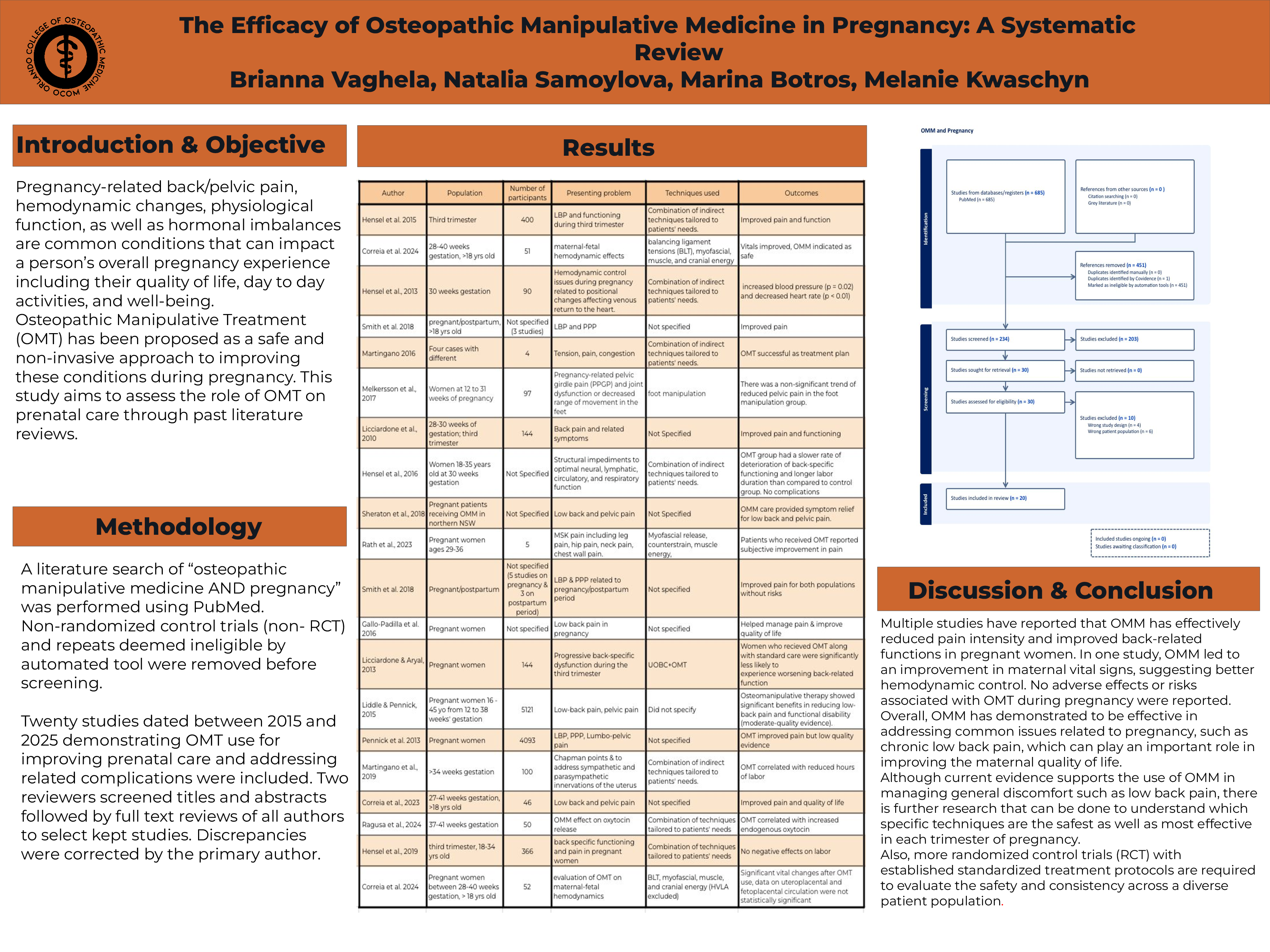
A literature search of "osteopathic manipulative medicine AND pregnancy" was performed using PubMed. Non-randomized control trials (non-RCT) and repeats deemed ineligible by automated tool were removed before screening. Twenty studies dated between 2015 and 2025 demonstrating OMT use for improving prenatal care and addressing related complications were included. Two reviewers screened titles and abstracts followed by full text reviews of all authors to select kept studies. Discrepancies were corrected by the primary author.
Discussion and Conclusion
Multiple studies have reported that OMM has effectively reduced pain intensity and improved back-related functions in pregnant women. In one study, OMM led to an improvement in maternal vital signs, suggesting better hemodynamic control. No adverse effects or risks associated with OMT during pregnancy were reported. Overall, OMM has demonstrated to be effective in addressing common issues related to pregnancy, such as chronic low back pain, which can play an important role in improving the maternal quality of life. Although current evidence supports the use of OMM in managing general discomfort such as low back pain, there is further research that can be done to understand which specific techniques are the safest as well as most effective in each trimester of pregnancy. Also, more randomized control trials (RCT) with established standardized treatment protocols are required to evaluate the safety and consistency across a diverse patient population.