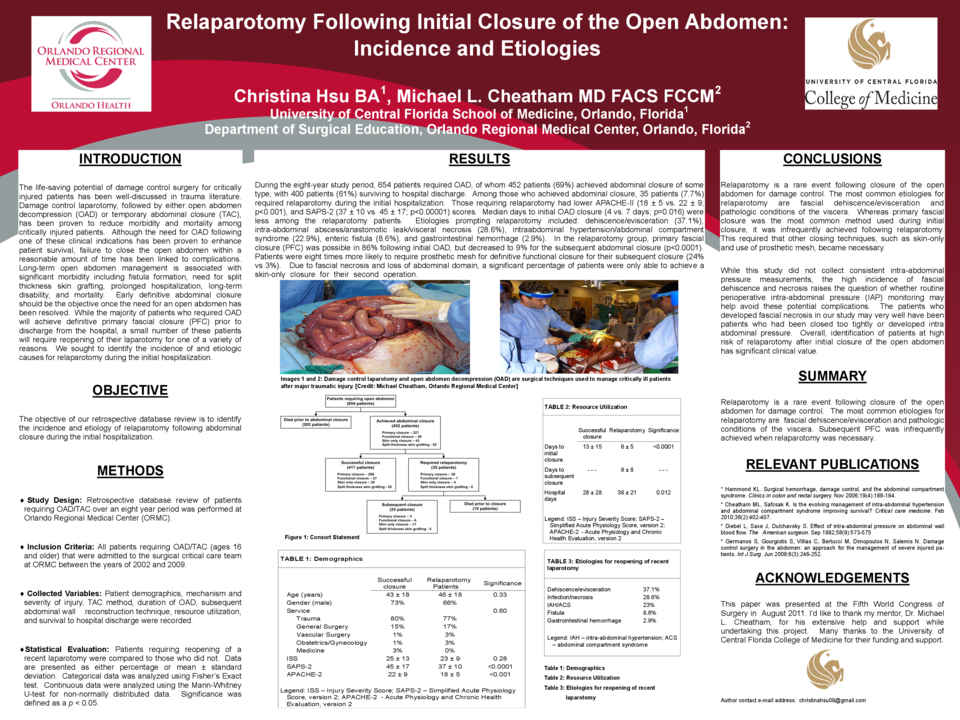
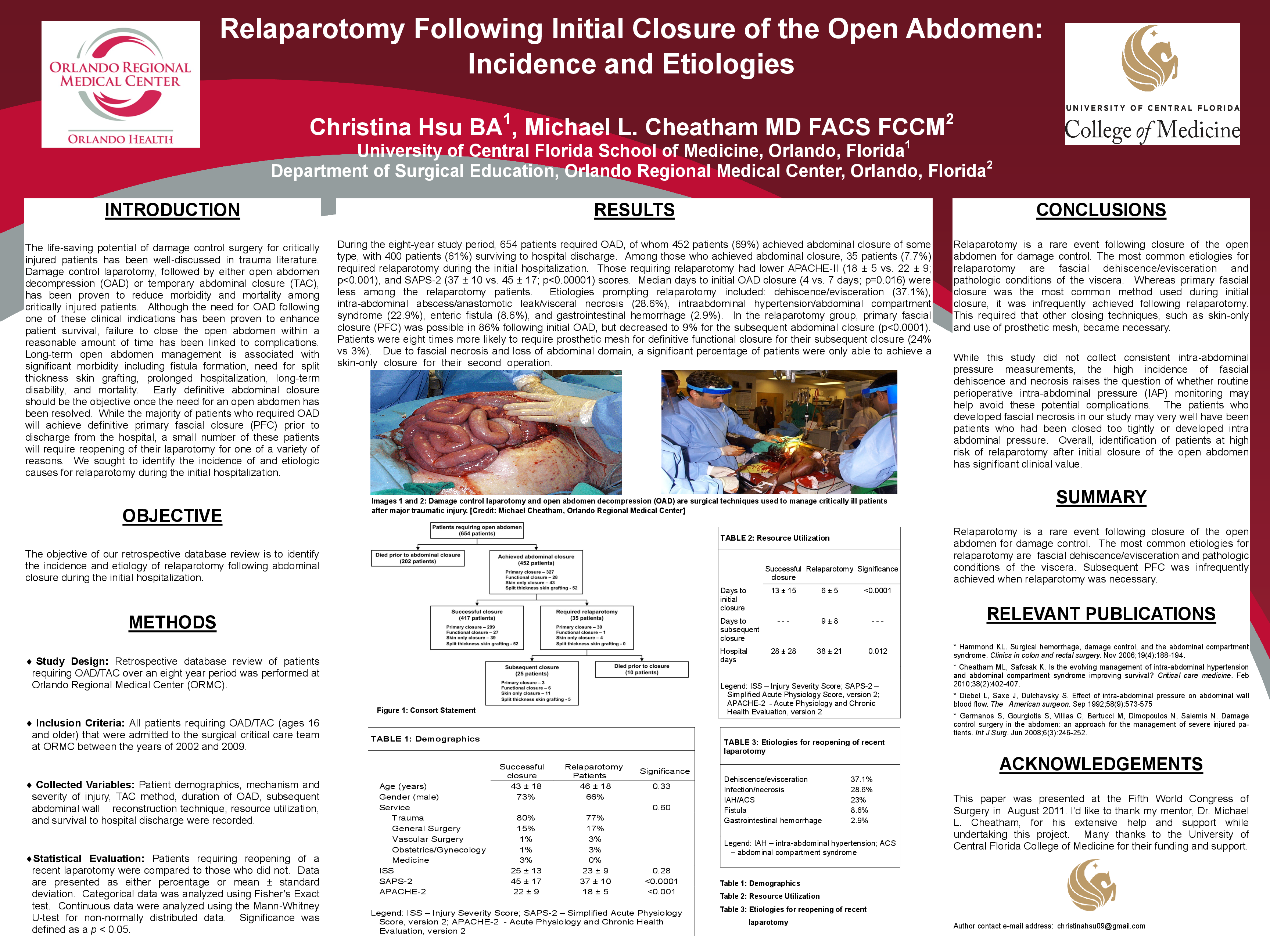
Relaparotomy Following Initial Closure of the Open Abdomen: Incidence and Etiologies
Abstract
Open abdominal decompression (OAD) and temporary abdominal closure (TAC) are commonly utilized following damage control laparotomy. Patients may require reopening of their abdomen for various reasons. This retrospective chart review attempted to identify the incidence of and etiologic causes for relaparotomy during the initial hospitalization. Patient demographics, mechanism and severity of injury, TAC method, duration of OAD, subsequent abdominal wall reconstruction technique, resource utilization, and survival to hospital discharge were recorded. Patients requiring reopening of a recent laparotomy were compared to those who did not. From 2002-2009, 654 patients required OAD/TAC with 452 (69%) surviving to achieve abdominal closure of some type. Of those patients who achieved abdominal closure, 35 (7.7%) required relaparotomy during the same hospitalization. Those requiring relaparotomy had lower APACHE-II (18 ± 5 vs. 22 ± 9; p<0.001), and SAPS-2 (37 ± 10 vs. 45 ± 17; p<0.00001) scores. Median days to initial OAD closure (4 vs. 7 days; p=0.016) were less among the relaparotomy patients. Etiologies prompting relaparotomy included: dehiscence/evisceration (37.1%), intra-abdominal abscess/anastomotic leak/visceral necrosis (28.6%), intraabdominal hypertension/abdominal compartment syndrome (22.9%), enteric fistula (8.6%), and gastrointestinal hemorrhage (2.9%). In the relaparotomy group, primary fascial closure (PFC) was possible in 86% following initial OAD, but decreased to 9% for the subsequent abdominal closure (p<0.0001). Relaparotomy is a rare event following closure of the open abdomen for damage control. The most common etiologies for relaparotomy are fascial dehiscence/evisceration and pathologic conditions of the viscera. Subsequent PFC was infrequently achieved when relaparotomy was necessary.
Related articles