Abstract
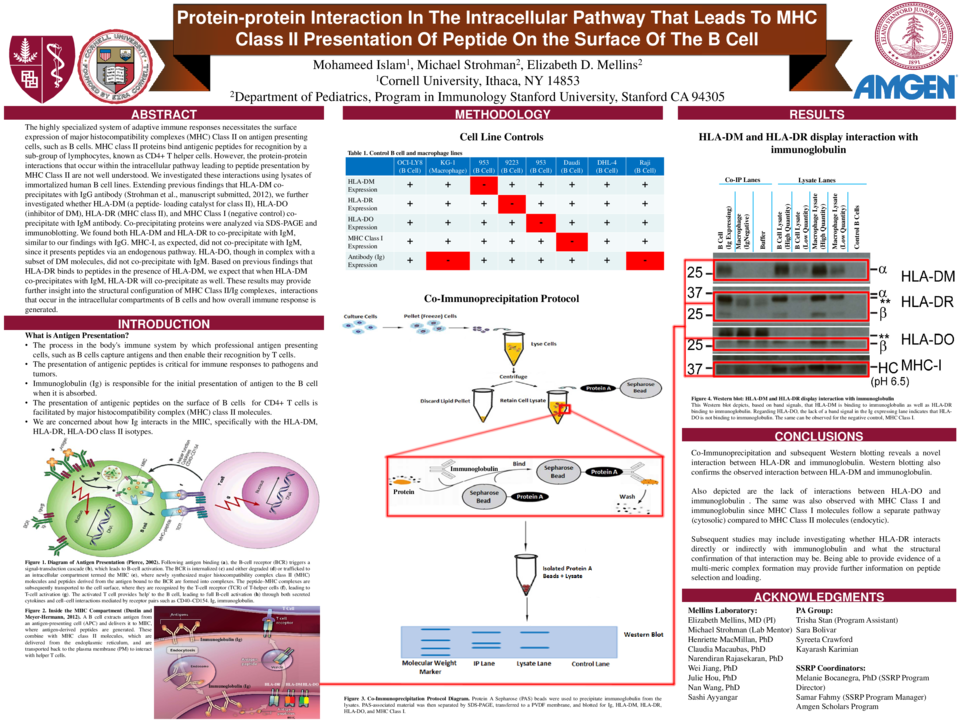
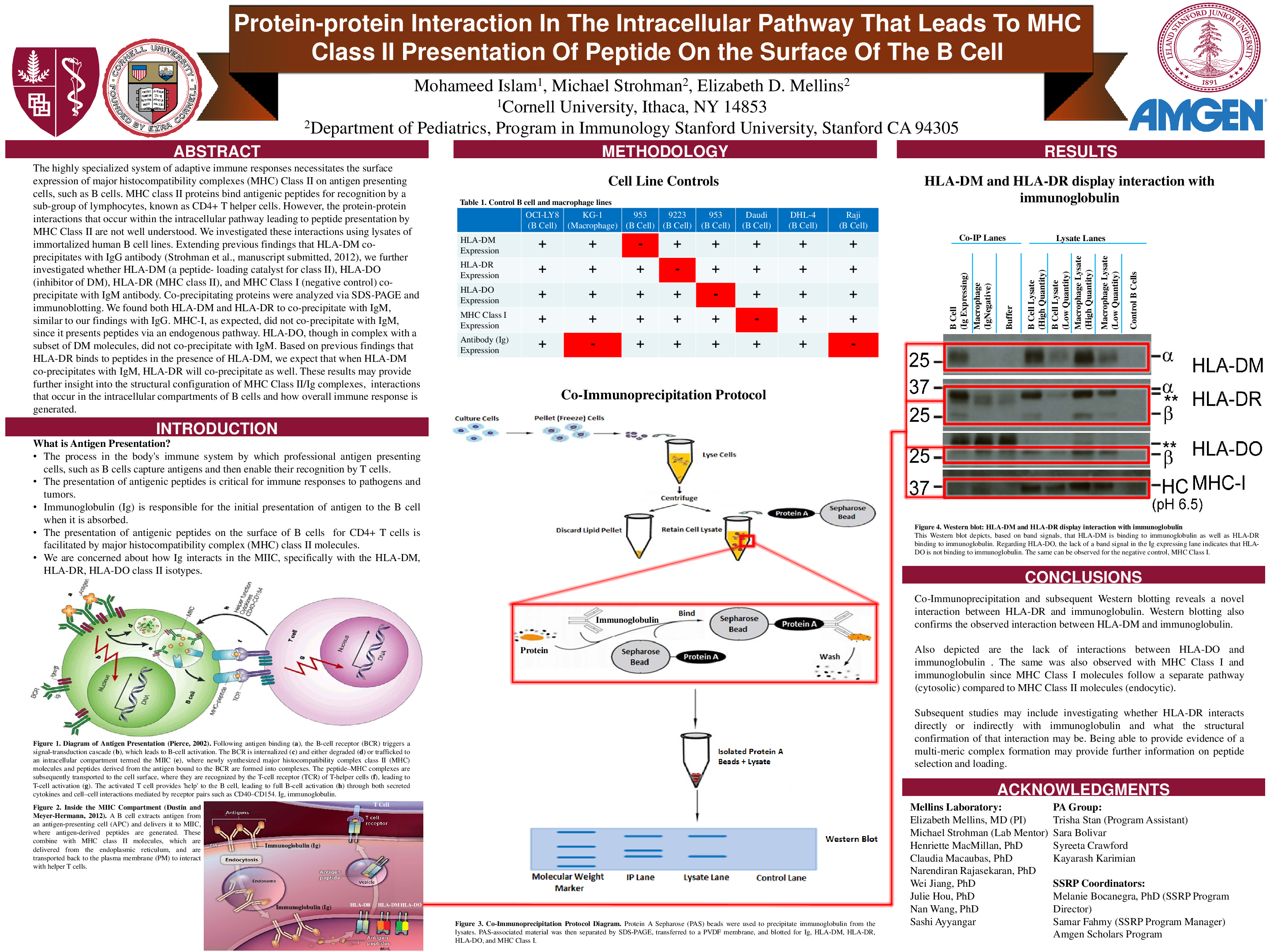
The highly specialized system of adaptive immune responses necessitates the surface expression of major histocompatibility complexes (MHC) Class II on antigen presenting cells, such as B cells. MHC class II proteins bind antigenic peptides for recognition by a sub-group of lymphocytes, known as CD4+ T helper cells. However, the protein-protein interactions that occur within the intracellular pathway leading to peptide presentation by MHC Class II are not well understood. We investigated these interactions using lysates of immortalized human B cell lines. Extending previous findings that HLA-DM co-precipitates with IgG antibody (Strohman et al., manuscript submitted, 2012), we further investigated whether HLA-DM (a peptide- loading catalyst for class II), HLA-DO (inhibitor of DM), HLA-DR (MHC class II), and MHC Class I (negative control) co-precipitate with IgM antibody. Co-precipitating proteins were analyzed via SDS-PAGE and immunoblotting. We found both HLA-DM and HLA-DR to co-precipitate with IgM, similar to our findings with IgG. MHC-I, as expected, did not co-precipitate with IgM, since it presents peptides via an endogenous pathway. HLA-DO, though in complex with a subset of DM molecules, did not co-precipitate with IgM. Based on previous findings that HLA-DR binds to peptides in the presence of HLA-DM, we expect that when HLA-DM co-precipitates with IgM, HLA-DR will co-precipitate as well. These results may provide further insight into the structural configuration of MHC Class II/Ig complexes, interactions that occur in the intracellular compartments of B cells and how overall immune response is generated.