Abstract
Background & Introduction
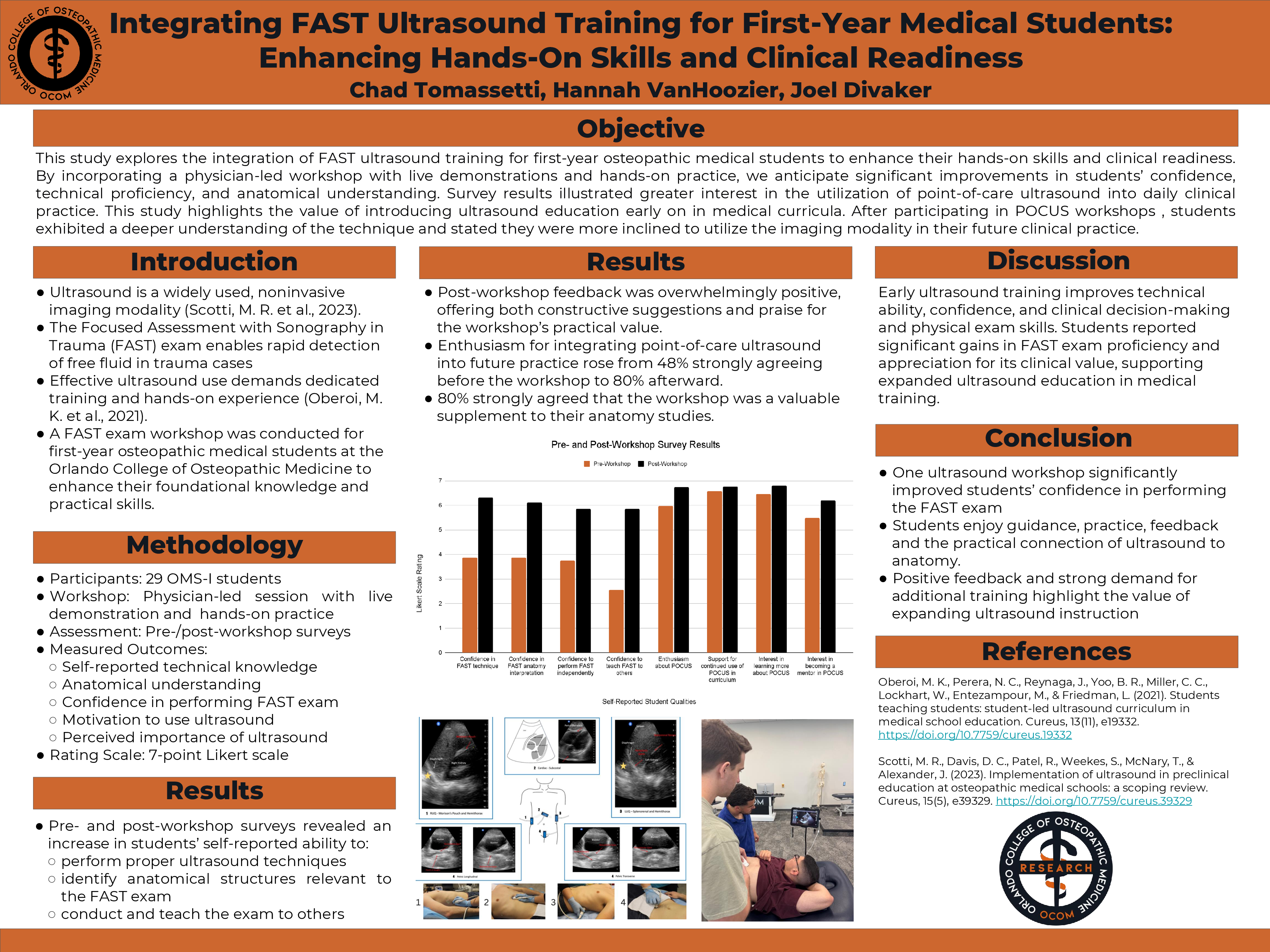
Ultrasound is a valuable, noninvasive imaging modality widely used to guide clinical decisions across various settings. The Focused Assessment with Sonography in Trauma (FAST) exam, in particular, enables rapid detection of free fluid in trauma cases, making it indispensable in emergent care. However, effective ultrasound use demands dedicated training and hands-on experience. Recognizing the growing importance of ultrasound in modern practice, a FAST exam workshop was conducted for first-year osteopathic medical students at the Orlando College of Osteopathic Medicine to enhance their foundational knowledge and practical skills.
Objective
The objective of this workshop was to introduce first-year osteopathic medical students to the fundamental principles and techniques of the FAST exam, thereby enhancing their proficiency in utilizing ultrasound for rapid, accurate assessment in trauma care.
Methods
Twenty-nine first-year osteopathic medical students participated in a FAST ultrasound workshop led by a physician certified in ultrasound. The workshop included a live demonstration of the four standard FAST views, followed by hands-on practice sessions in which students performed the exam on each other. Voluntary pre- and post-workshop surveys assessed self-reported technical knowledge, anatomical understanding, confidence in performing the FAST exam, motivation to use ultrasound, and perceived importance of ultrasound in medical education, all rated on a 7-point Likert scale.
Results
Comparisons of pre- and post-workshop surveys revealed a marked increase in students’ self-reported ability to perform proper ultrasound techniques, identify FAST-related anatomical structures, and confidently conduct and teach the exam. Enthusiasm for integrating point-of-care ultrasound into future practice rose from 48% strongly agreeing before the workshop to 80% afterward. Additionally, 80% strongly agreed that the workshop was a valuable supplement to their anatomy studies. Post-workshop feedback was overwhelmingly positive, offering both constructive suggestions and praise for the workshop’s practical value.
Conclusion
Introducing an ultrasound curriculum significantly enhanced students’ technical skills, anatomical understanding, and overall confidence in performing the FAST exam. The positive feedback and strong demand for additional training underscore the value of expanding ultrasound instruction throughout medical education, ultimately better preparing future clinicians.