Abstract
Background and Introduction:
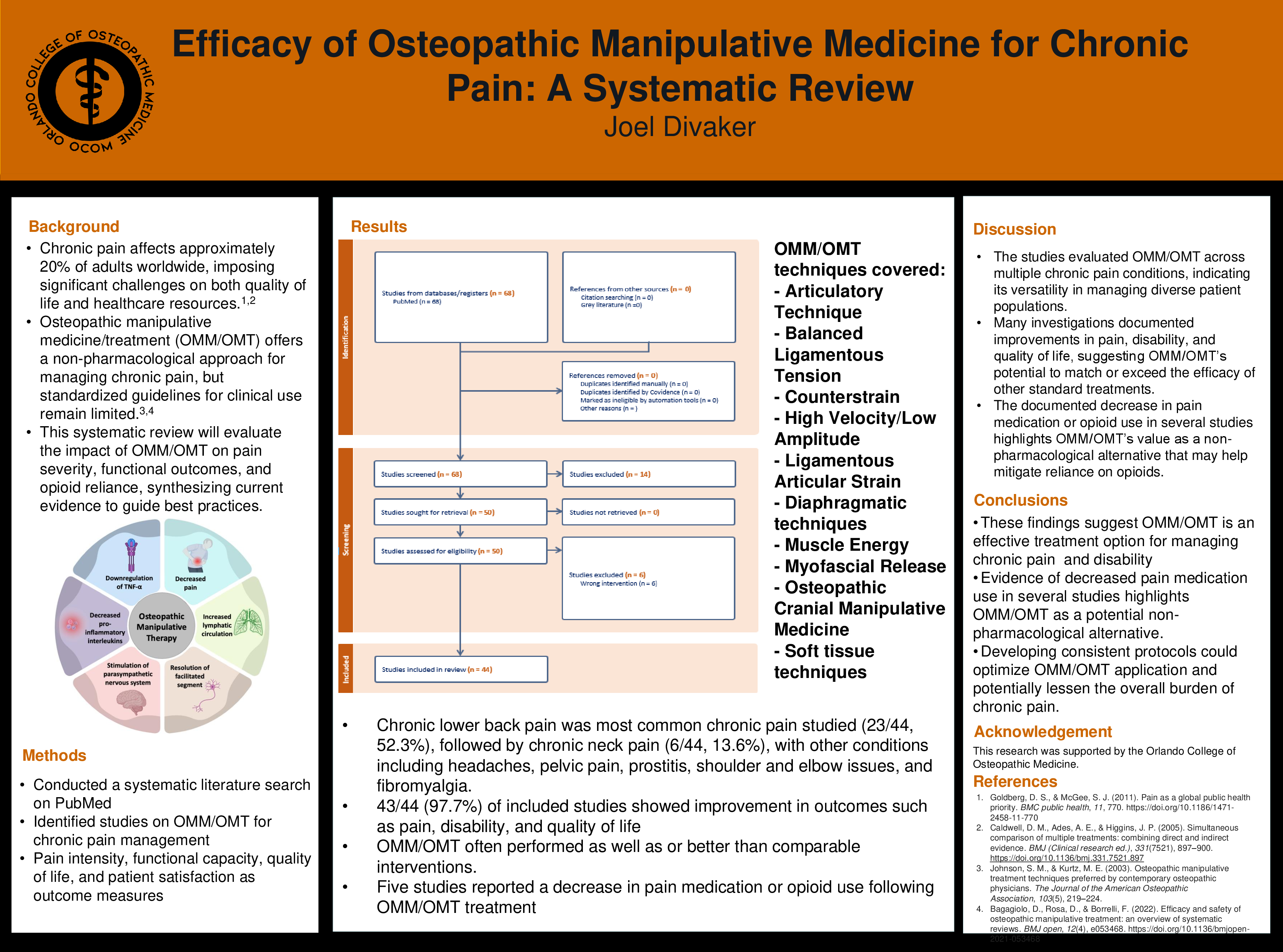
Chronic pain affects roughly 20% of adults worldwide, exacting a heavy toll on quality of life and healthcare resources. While opioids are often prescribed for relief, they come with heightened risks of misuse and dependence. Osteopathic manipulative medicine/treatment (OMM/OMT) offers a promising non-pharmacological approach, yet comprehensive guidelines remain limited. This systematic review will synthesize the current evidence on OMM/OMT’s impact on pain severity, function, and opioid reliance, ultimately informing best practices and future research in chronic pain management.
Objective:
The objective of this systematic review is to evaluate the existing literature on OMM/OMT in chronic pain management. Specifically, we aim to determine its impact on pain severity, functional outcomes, and opioid reliance, while identifying gaps that warrant further research.
Methods:
A systematic literature search was conducted on PubMed to identify articles evaluating the outcomes of OMM/OMT in managing chronic pain. Eligible studies included those measuring pain intensity, functional capacity, quality of life, and/or patient satisfaction in chronic pain populations. Only articles that met these inclusion criteria were selected for review.
Results:
Forty-four studies met the inclusion criteria, evaluating OMM/OMT in a variety of chronic pain conditions, including chronic low back pain, cervical pain, headaches, chronic prostatitis, and other persistent pain syndromes. Several investigations also focused on patients with comorbidities, comparing OMM/OMT to pharmacological treatments, sham interventions, and orthopedic or other therapeutic management approaches. Many studies reported significant improvements in pain, disability, and quality of life measures, with OMM/OMT often performing as well as or better than similar interventions. Additionally, combining OMM/OMT with exercise or pharmaceuticals yielded further benefits in managing chronic pain.
Conclusion:
These findings suggest that OMM/OMT is an effective treatment option for managing chronic pain and disability, offering a viable alternative or adjunct to pharmacological approaches. Developing standardized guidelines for OMM/OMT could enhance treatment efficacy and help reduce the overall burden of chronic pain.