Abstract
Background and Introduction:
Naegleria fowleri is a thermophilic, free-living amoeba that thrives in warm freshwater environments. Infection occurs when the organism enters the nasal passages and migrates through the cribriform plate into the central nervous system, leading to Primary Amebic Meningoencephalitis. Since its identification in 1965, more than 150 cases have been reported in the United States, predominantly in southern states. The disease progresses rapidly, with a median survival of five days post-symptom onset. Due to the low survival rate, early recognition and intervention are critical.
Objective:
This study emphasizes the need for early recognition, advances in diagnostic methods, and current treatment approaches to improve patient outcomes.
Methods:
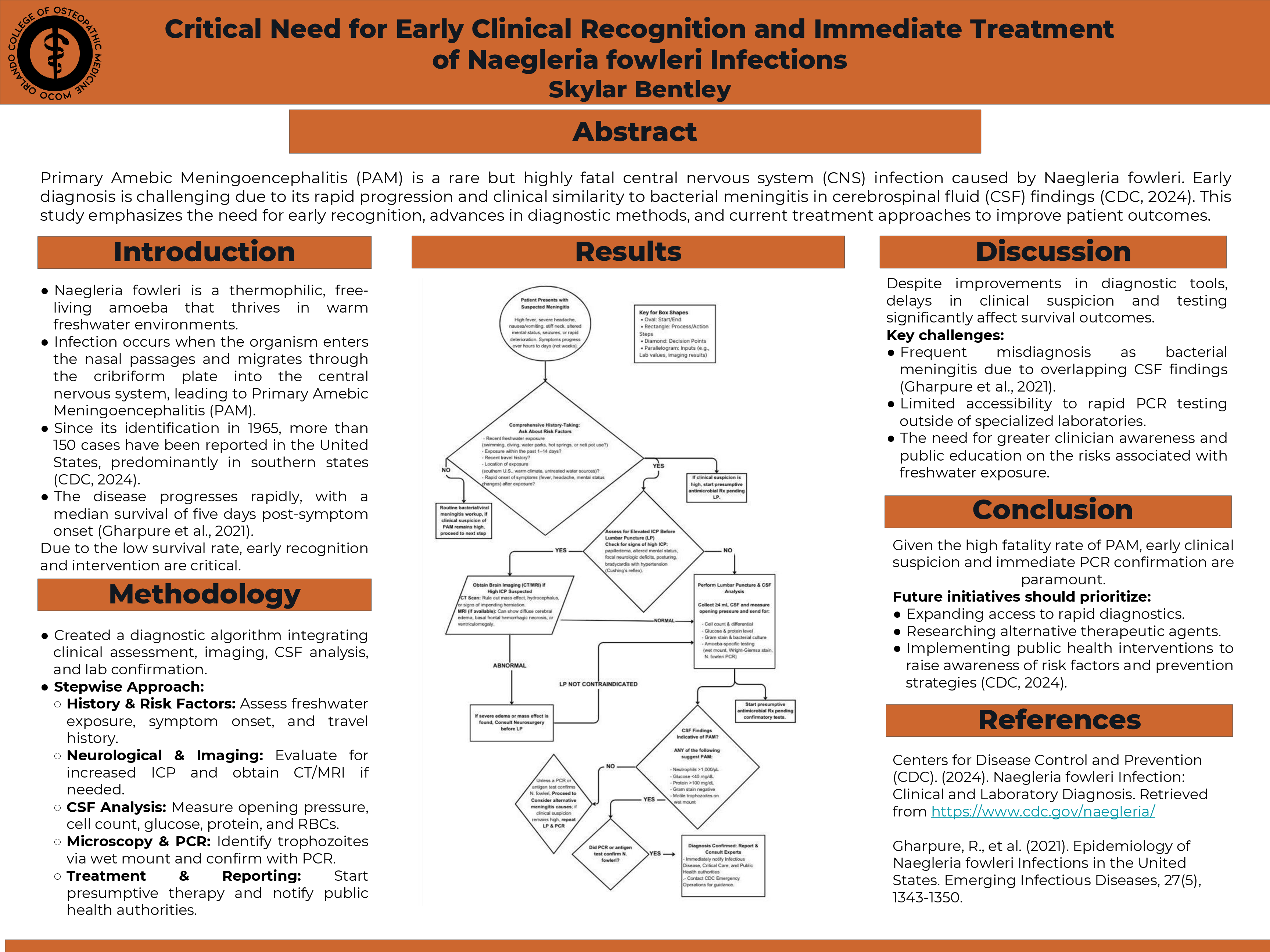
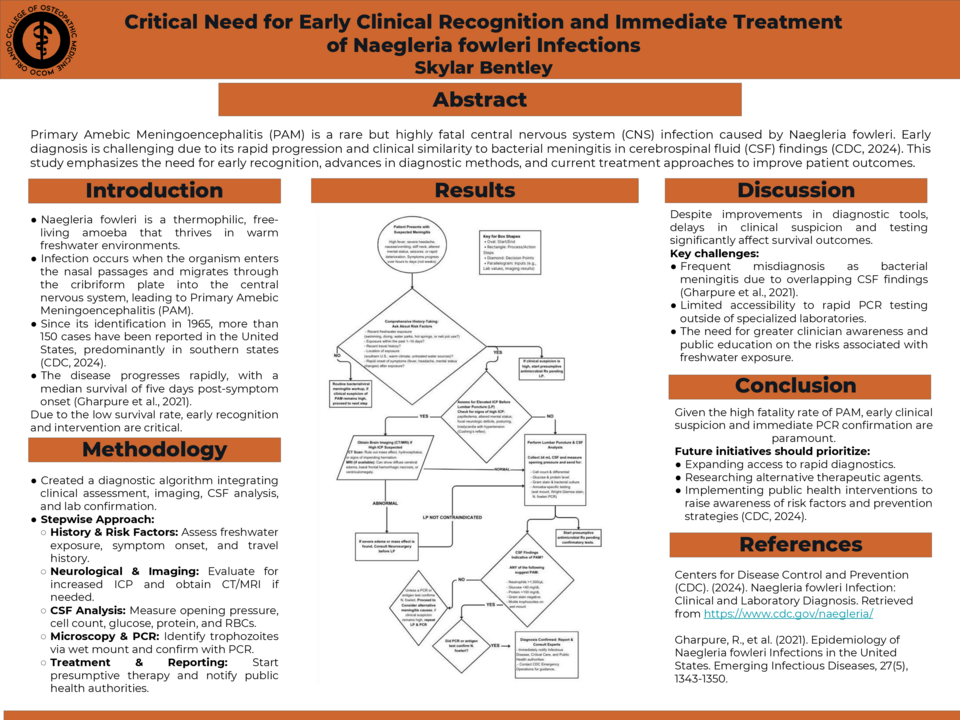
Created a diagnostic algorithm integrating clinical assessment, imaging, CSF analysis, and lab confirmation.
History & Risk Factors: Assess freshwater exposure, symptom onset, and travel history.
Neurological & Imaging: Evaluate for increased ICP and obtain CT/MRI if needed.
CSF Analysis: Measure opening pressure, cell count, glucose, protein, and RBCs.
Microscopy & PCR: Identify trophozoites via wet mount and confirm with PCR.
Treatment & Reporting: Start presumptive therapy and notify public health authorities.
Results:
Despite advances in diagnostic tools, delays in clinical suspicion and testing continue to negatively impact survival outcomes. Common challenges include frequent misdiagnosis due to overlapping cerebrospinal fluid findings, limited access to rapid PCR testing outside specialized labs, and a lack of clinician awareness and public education regarding risks associated with freshwater exposure.
Conclusion:
Given the high fatality rate of PAM, early clinical suspicion, thorough history taking and immediate PCR confirmation with initiation of antimicrobials are paramount. Future initiatives should prioritize:
- Expanding access to rapid diagnostics.
- Researching alternative therapeutic agents.
- Implementing public health interventions to raise awareness of risk factors and prevention strategies.