Abstract
Background and Introduction:
Osteopathic Manipulative Treatment (OMT) or Medicine (OMM) is a form of manual therapy performed by osteopathically trained physicians. OMM/OMT may be used with preterm neonates and infants for conditions like colic, feeding difficulties, torticollis, respiratory dysfunction, and recurrent otitis media. The osteopathic philosophy emphasizes the critical belief that structure and function are interrelated, drawing upon the body’s inherent capacity for self-healing and self-regulation. OMM techniques facilitate the restoration of the body’s natural and optimal state, the body’s physiological equilibrium, providing effective therapy to musculoskeletal and structural abnormalities. OMM is also beneficial for muscle, fascial, and ligamentous tension, impaired fluid flow, and other bodily stressors that may be subclinical. This study aims to demonstrate that OMM may serve as a valuable asset to pediatric infant care, in both inpatient and outpatient settings.
Methods:
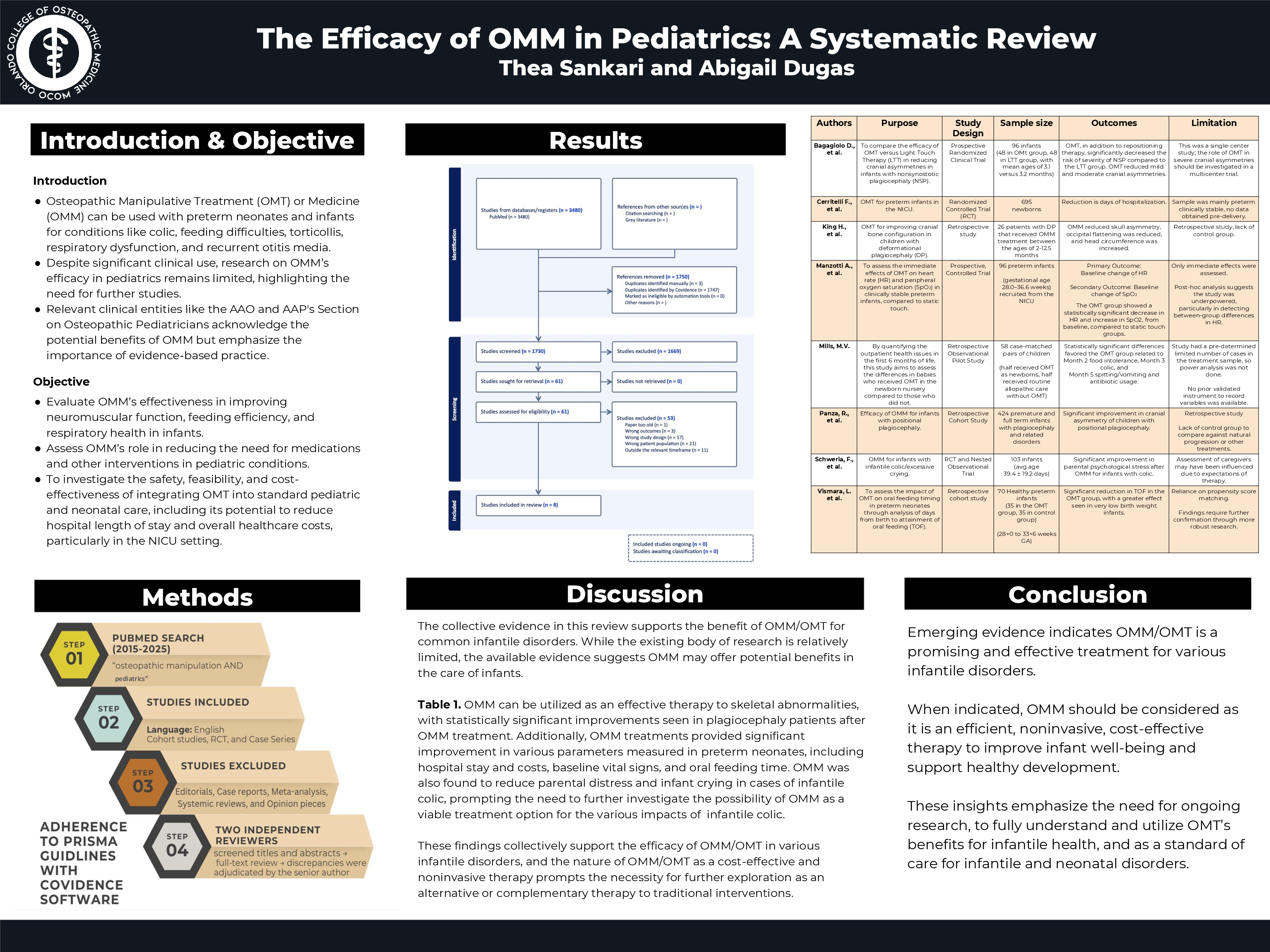
With a primary focus on PubMed, a search was conducted to identify all available published studies investigating the efficacy of OMM/OMT within pediatric populations (0-18 years old), specifically within premature neonates and infants (GA 28 weeks to 12 months of age). The search strategy was designed to capture a comprehensive range of studies focusing on the pediatric population. Keywords and terms related to osteopathic manipulation, manual medicine, and various infant health conditions were utilized to narrow the scope of the search. Following the initial search, the studies were screened in a rigorous two-stage screening process undertaken by two review authors to determine the eligibility of inclusion. Inclusion criteria were specifically designed to capture studies providing substantial evidence of OMM efficacy in infants. The included studies were Randomized Controlled Trials (RCTs) and case series published within the specific time frame of 2015-2025. Studies not meeting this criteria, such as reviews, commentaries, studies with non-significant findings or those focusing on older age groups, were excluded.
Results:
Out of the 3480 studies from PubMed searches, 1750 duplicates were removed. Out of the 1730 that remained for title and abstract screening, 1669 were excluded from the study. 61 studies were subjected to a full-text review, during which 53 were excluded. 12 were outside the relevant timeframe, 3 resulted in wrong outcomes, 17 had a wrong study design, and 21 had a wrong patient population. The result was 8 studies to be included in the review.
Conclusion:
Emerging evidence indicates OMM/OMT is a promising and effective treatment for various infantile disorders. When indicated, OMM should be considered as it is an efficient, noninvasive, cost-effective therapy to improve infant well-being and support healthy development. These insights emphasize the need for ongoing research, to fully understand and utilize OMT’s benefits for infantile health, and as a standard of care for infantile and neonatal disorders.