Abstract
Background and Introduction:
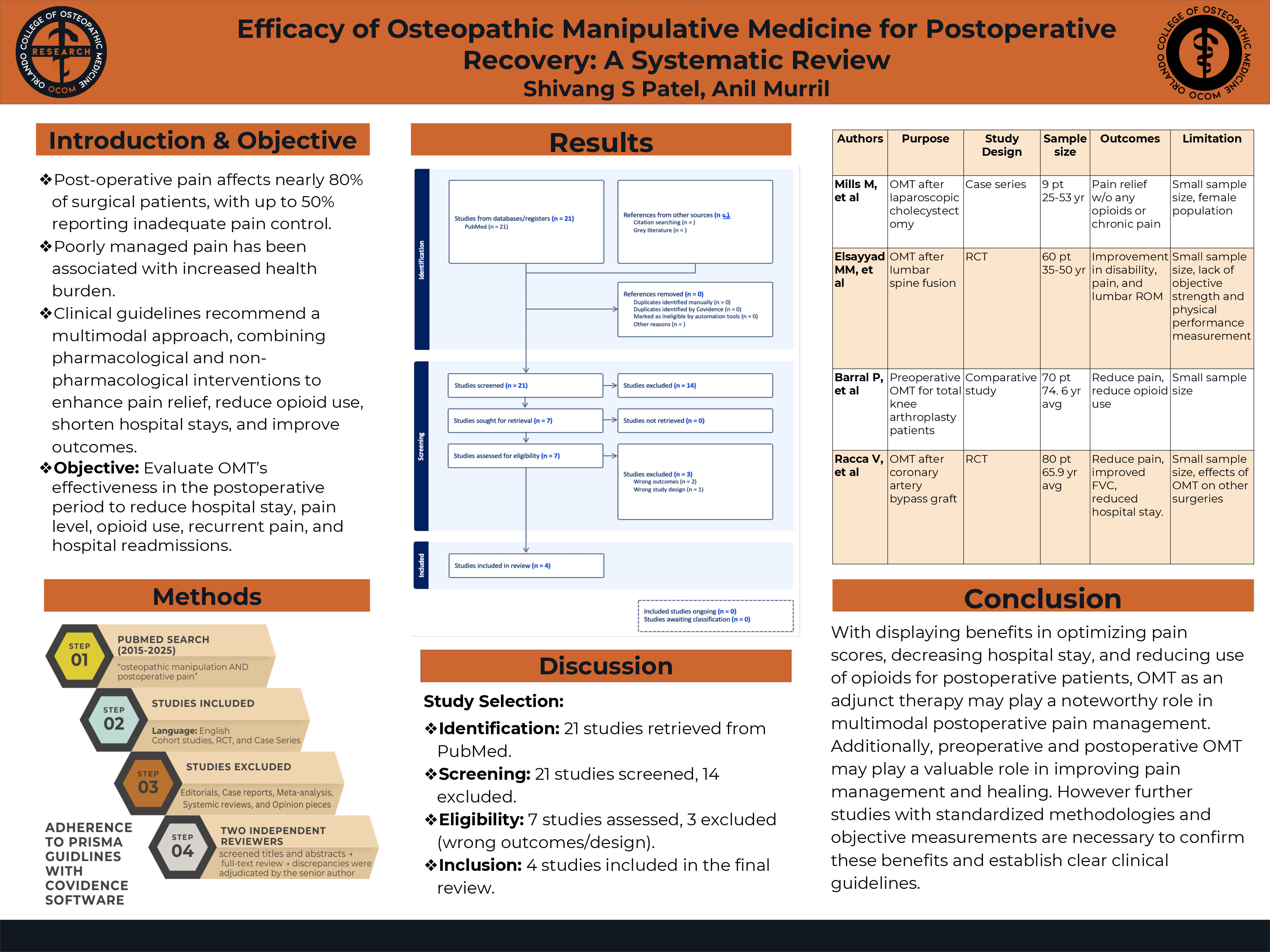
Post-operative pain is a significant clinical challenge that affects millions of patients worldwide. Poorly managed pain has been associated with increased morbidity, functional and quality-of-life impairment, delayed recovery time, prolonged duration of opioid use, and higher health-care costs. Despite advancements in anesthesia and analgesia, many patients continue to experience moderate to severe postoperative pain, which can lead to chronic pain syndromes, prolonged hospital stays, and increased healthcare costs. Furthermore, the widespread use of opioid analgesics for post-operative pain management has contributed to the ongoing opioid crisis. A multimodal approach to pain management has been increasingly recommended in clinical guidelines, combining pharmacological and non-pharmacological interventions to enhance pain relief while reducing opioid use. This approach aims to minimize associated side effects, shorten hospital stays, and improve patient outcomes. Osteopathic medicine, as part of multimodal analgesia, emphasizes the body's unity, self-healing ability, and the interrelation of structure and function. It promotes rational treatment, musculoskeletal health, and overall wellness to support recovery and prevent disease.
Methods:
This study followed the Preferred Reporting Items for Systematic Reviews and Meta-Analyses (PRISMA) guidelines to ensure transparency and methodological rigor. A comprehensive literature search was conducted using PubMed and the search strategy including “osteopathic manip AND postoperative pain” to capture a broad range of relevant studies. Eligible studies were limited to English-language randomized controlled trials (RCTs) and observational studies published within the last 10 years. Studies that did not meet this criteria were excluded. Covidence software was used to streamline the article selection process. Two independent reviewers screened the titles and abstracts, followed by a full-text review to determine final inclusion. Any conflicts were adjudicated by the senior author.
Results:
Pain reduction: All the studies showed significant postoperative pain reduction with OMT added to their pain management therapy. One study reported use of OMT as only pain management immediate post-surgery which resulted in significant immediate reduction of pain in patients.
Opioid use: Two studies noted the pharmacology intervention of pain management. The study of TKA showed significantly reduced consumption of morphine and opioids during postoperative week 1 with preoperative OMT. In contrast to heart surgery study which showed no significant difference between the consumption of analgesic and opioid.
Hospital stay: Adding OMT to current pain management protocol noted improved functional recovery and shorter hospital stay in heart surgery patients. TKA patients also had early pain control with preoperative OMT. No long-term differences were noted.
Conclusion:
With displaying benefits in optimizing pain scores, decreasing hospital stay, and reducing use of opioids for postoperative patients, OMT as an adjunct therapy may play a noteworthy role in multimodal postoperative pain management. Additionally, preoperative and postoperative OMT may play a valuable role in improving pain management and healing. However further studies with standardized methodologies and objective measurements are necessary to confirm these benefits and establish clear clinical guidelines.