Abstract
Background:
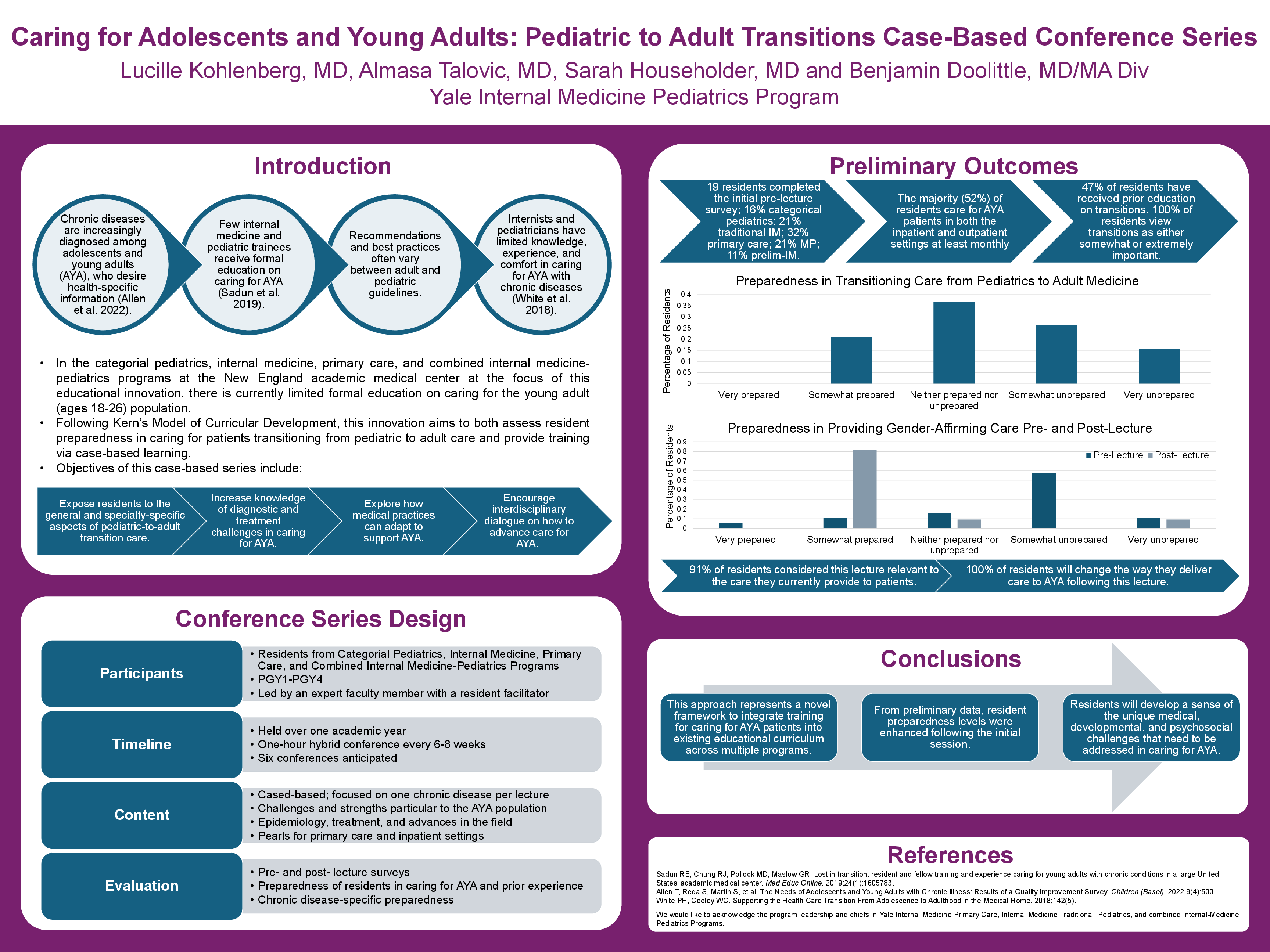
Due to the acceleration of metabolic disorders in adolescence and the improved survival of children with congenital conditions, chronic diseases are increasingly represented among adolescents and young adults (AYA). Despite this, few resident physicians receive education on how to care for AYA patients and address their unique developmental and psychosocial challenges. In the pediatrics, internal medicine, and internal medicine-pediatrics programs at the academic medical center at the focus of this initiative, there is limited formal education on caring for AYA. This educational series aims to: 1. Expose residents to the general and specialty-specific aspects of pediatric-to-adult transitions through case-based learning; 2. Increase knowledge of diagnostic and treatment challenges in caring for AYA patients; 3. Explore how practices can adapt to support AYA patients; and 4. Encourage interdisciplinary dialogue on advancing care for AYA.
Methods:
This educational series is in progress. Content is delivered during one-hour lectures, with five sessions planned throughout the year. Pediatrics, internal medicine, and internal medicine-pediatrics residents attend jointly. During each session, an expert faculty member presents on a chronic condition relevant to AYA and an internal medicine-pediatrics resident facilitates. Residents complete pre- and post-surveys to assess attitudes and comfort in caring for AYA patients. Conferences on gender-affirming, palliative, and sickle cell care have been held to date.
Results:
Only 47% of respondents received education on pediatric-to-adult transitions prior to these sessions, while all participants rated transitioning patients from pediatric to adult care as somewhat or extremely important (n = 19). Only 26% of participants felt very prepared or somewhat prepared to deliver gender-affirming care before the session compared to 91% following the session (n = 11), with similar percentages pre- and post- the palliative care lecture (13% pre; 67% post; n = 3). All participants responded that this learning would impact how they delivered care to AYA (n = 14).
Conclusions:
This approach represents a novel framework to integrate training in caring for AYA patients into existing educational curriculum, with resident comfort in caring for AYA enhanced following one session. Ultimately, we aim to target future resident education and patient care, including creating clinical pathways.