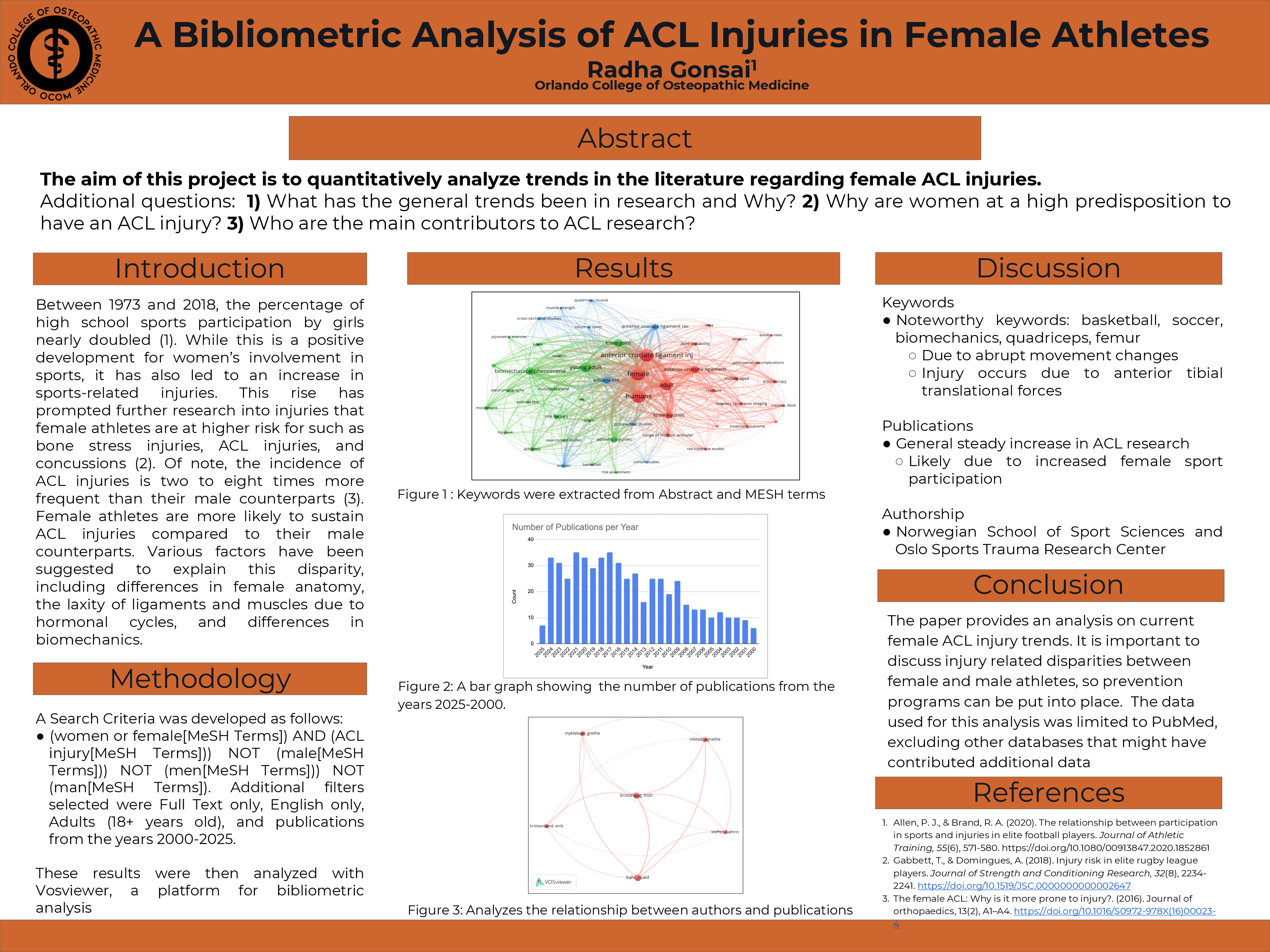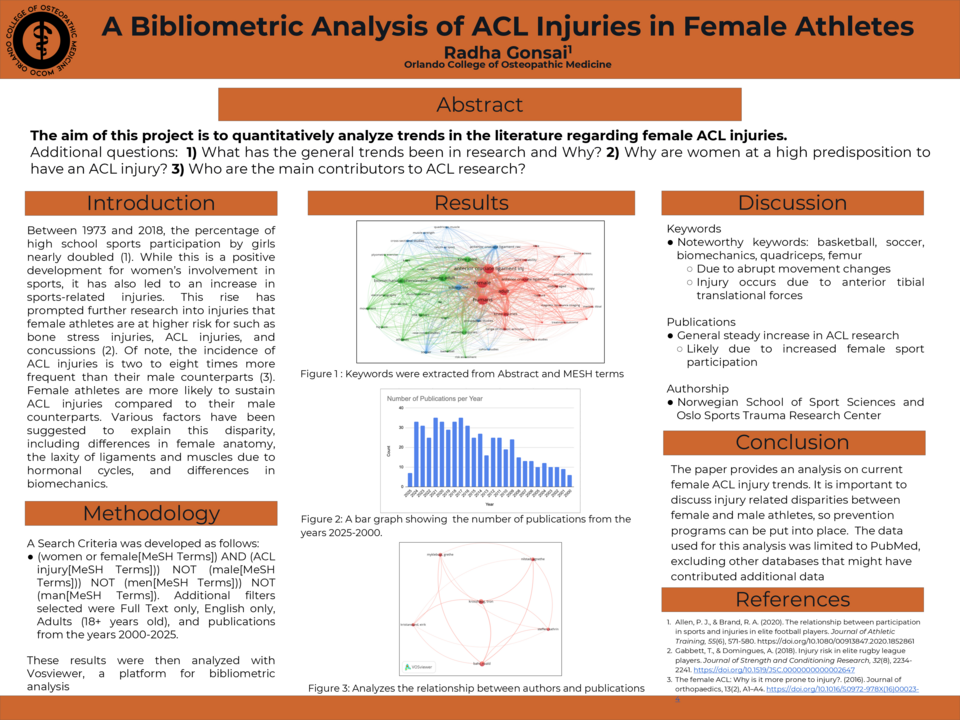
Abstract
Background and Introduction
Between 1973 and 2018, the percentage of high school sports participation by girls nearly doubled (2). While this has been a positive development for women’s involvement in sports, it has also led to an increase in sports-related injuries. This rise has prompted further research into injuries that female athletes are at higher risk for such as bone stress injuries, ACL injuries, and concussions (3). Of note, the incidence of ACL injuries is two to eight times more frequent than their male counterparts (4). Female athletes are more likely to sustain ACL injuries compared to their male counterparts. Various factors have been suggested to explain this disparity, including differences in female anatomy, the laxity of ligaments and muscles due to hormonal cycles, and differences in biomechanics.
Objective
The aim of this project is to quantitatively analyze trends in the literature regarding female ACL injuries.
Methods
A Search Criteria was developed as follows: (women or female[MeSH Terms]) AND (ACL injury[MeSH Terms])) NOT (male[MeSH Terms])) NOT (men[MeSH Terms])) NOT (man[MeSH Terms]). Additional filters selected were Full Text only, English only, Adults (19+ years old), and publications from the years 2000-2025. These results were then analyzed with Vosviewer, a platform for bibliometric analysis.
Results
Keywords Noteworthy keywords: basketball, soccer, biomechanics, quadriceps, femur Due to abrupt movement changes Injury occurs due to anterior tibial translational forces Publications General steady increase in ACL research Likely due to increased female sport participation Authorship Norwegian School of Sport Sciences and Oslo Sports Trauma Research Center.
Conclusion
The paper provides an analysis on current female ACL injury trends. It is important to discuss injury related disparities between female and male athletes, so prevention programs can be put into place. The data used for this analysis was limited to PubMed, excluding other databases that might have contributed additional data.