Abstract
Background and Introduction
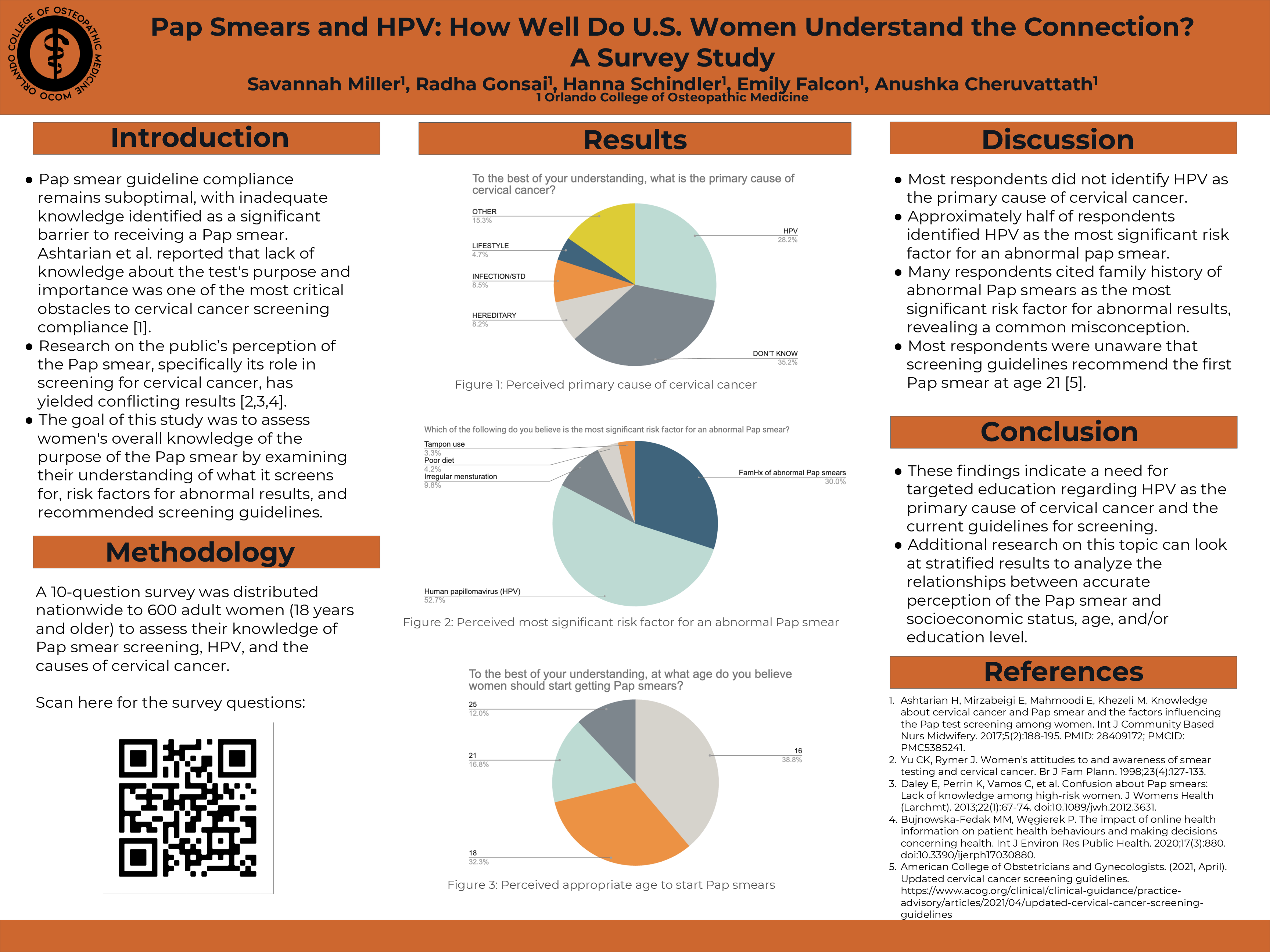
Pap smear guideline compliance remains suboptimal, with inadequate knowledge identified as a significant barrier to receiving a Pap smear. Ashtarian et al. reported that lack of knowledge about the test's purpose and importance was one of the most critical obstacles to cervical cancer screening compliance [1] Research on the public’s perception of the Pap smear, specifically its role in screening for cervical cancer, has yielded conflicting results [2,3,4]
Objective
The goal of this study was to assess women's overall knowledge of the purpose of the Pap smear by examining their understanding of what it screens for, risk factors for abnormal results, and recommended screening guidelines.
Methods
A 10 Question Survey was sent to adult women (18 and older) around the United States to collect their knowledge on the purpose of Pap smear screening, the HPV virus, and the causes of cervical cancer
Results
While many respondents understood that the pap smear screens for cervical cancer, most did not identify HPV as the primary risk factor. Many respondents cited family history of abnormal pap smears as the most significant risk factor for developing cervical cancer, which is a misconception. Most respondents were unaware that screening guidelines recommend the first Pap smear at age 21.
Conclusion
These findings indicate a need for targeted education regarding HPV as the primary cause of cervical cancer and the current guidelines for screening. Additional research on this topic can look at stratified results to analyze the relationships between accurate perception of the Pap smear and socioeconomic status, age, and/or education level.