Abstract
Background & Introduction
Cauda equina syndrome (CES) is an infrequent yet serious condition that results from compression of the cauda equina nerve roots in the lumbar-sacral spinal canal (Lapolla et al., 2024). Large disc herniation, tumor, injury, infection, and spinal stenosis are some of the causes. CES is characterized by a cluster of symptoms such as low back pain, lower limb weakness, sensory changes, bowel and bladder incontinence, and saddle anesthesia. The condition is a neurosurgical emergency and if surgery is not done, the patient is likely to have paralysis or incontinence later on. There is significant amount of information available on CES in medical literature, specific case studies help in understanding diagnosis, management, and prognosis while also raising awareness of the importance of early treatment to avoid the development of neurological sequelae.
Objective
Importance of early diagnosis and surgical intervention in managing Cauda Equina Syndrome (CES) secondary to L4-L5 disc herniation.
Methods
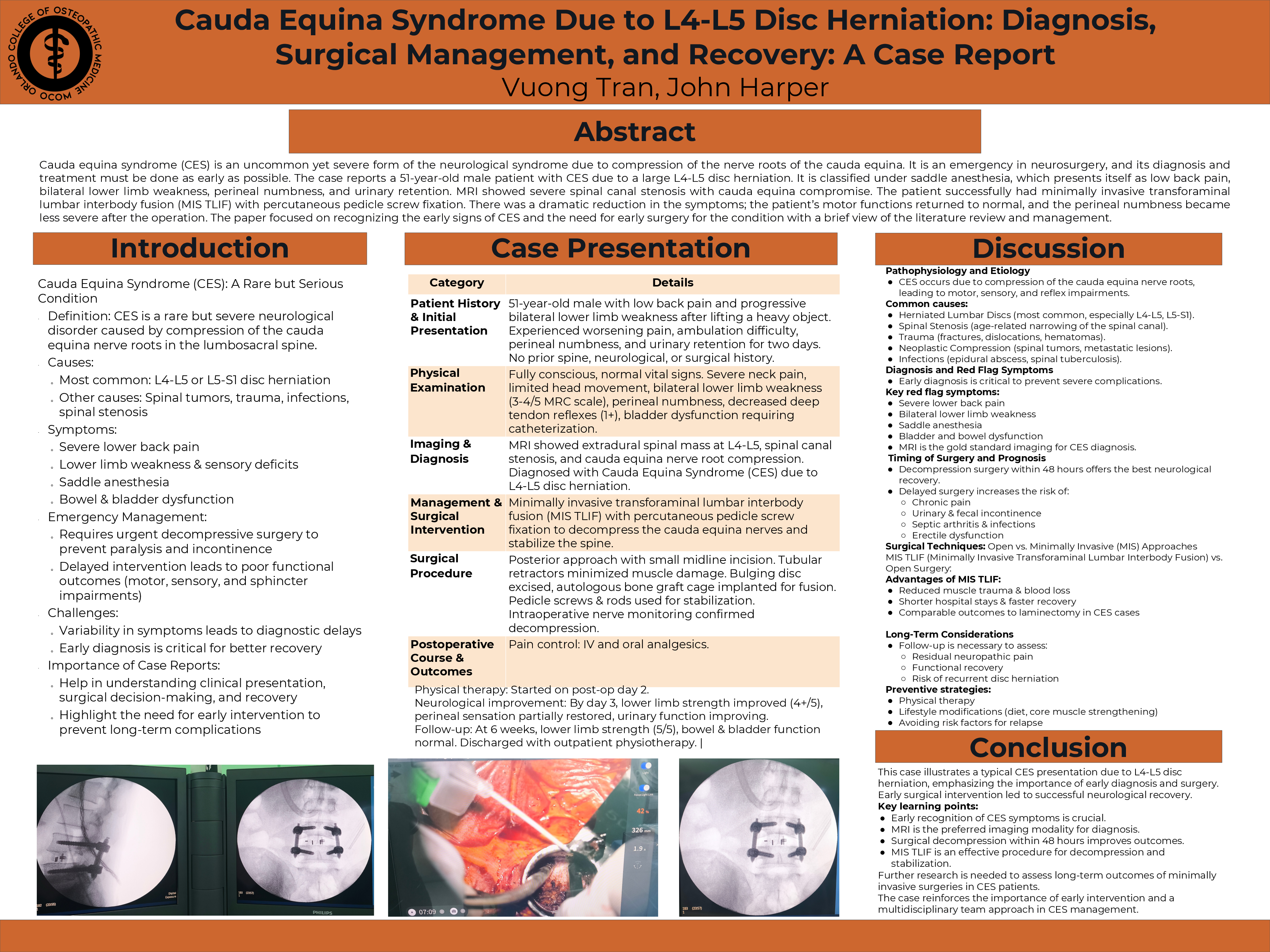
The study follows a case report design. The study includes a single patient, a 51-year-old male, who presented with CES symptoms, including low back pain, bilateral lower limb weakness, perineal numbness, and urinary retention. Data were collected through: Patient History & Physical Examination, Imaging (MRI), Surgical Observations, Postoperative Monitoring. The study qualitatively evaluates preoperative and postoperative neurological function to assess recovery. Comparative Literature Review: Findings were compared with existing literature on CES management, surgical timing, and MIS TLIF outcomes. Follow-up Evaluation: The patient’s functional improvements (muscle strength, bladder control) were tracked postoperatively and at a six-week follow-up to determine treatment effectiveness.
Results
The case highlights the importance of recognizing red flag symptoms of Cauda Equina Syndrome (CES) (e.g., saddle anesthesia, lower limb weakness, and bladder dysfunction) to ensure timely surgical decompression within 48 hours for optimal neurological recovery. All the while the MIS TLIF procedure with percutaneous pedicle screw fixation successfully relieved nerve root compression, stabilized the spine, and improved patient outcomes.
Conclusion
Along with summarized findings of our study, the patient experienced dramatic improvement in motor function, recovery of bladder control, and reduction in perineal numbness, demonstrating the effectiveness of early surgical decompression. Contributions to the field Enhances Awareness of CES Red Flag Symptoms: Encourages early recognition and urgent referral for neurosurgical evaluation, reducing the risk of permanent disability. Supports the Use of MIS TLIF in CES Management: Adds to existing literature by demonstrating favorable outcomes with minimally invasive techniques, reinforcing its role as an effective alternative to traditional open surgery. Highlights the Importance of Multidisciplinary Care: Emphasizes collaboration among neurosurgeons, radiologists, physiotherapists, and rehabilitation specialists for optimal patient recovery.